
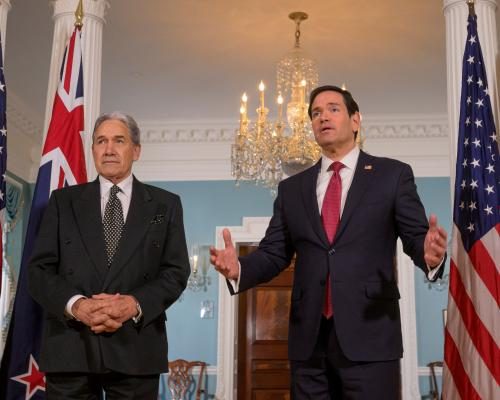
In a significant diplomatic move, New Zealand has requested the United States to deploy fuel tankers to the Pacific region to mitigate the economic strain resulting from ongoing conflicts in the Middle East, particularly the war in Iran. This appeal was made by New Zealand's Foreign Minister, Winston Peters, during a meeting with US Secretary of State Marco Rubio in Washington on Tuesday.
Peters emphasized the serious economic ramifications that the conflict has imposed not only on New Zealand but also on neighboring Pacific nations. "We made sure the US understood the significant economic impacts on New Zealand and Pacific arising from the war," Peters stated, highlighting the urgent need for action. He spoke to the national broadcaster RNZ about the discussions they held, underscoring the responsibility New Zealand has towards the economies of Pacific island nations. Originally reported by The Guardian.
Urgent Call for Tankers
During the meeting, Peters pushed for the US to prepare ancillary fuel tankers that could be dispatched to New Zealand, facilitating distribution across the Pacific swiftly in case of a fuel supply crisis. "We asked them: don't leave it to when it happens, get ready just in case it's going to happen. We had a very positive discussion on that basis," he noted.
This request comes amid rising fuel prices and supply chain issues exacerbated by the war. The Pacific islands, heavily reliant on imported fuels, are particularly vulnerable to disruptions. Leaders from these nations have previously expressed concerns about potential shortages, leading to calls for proactive measures from allies such as New Zealand and Australia.
Pacific Nations Seek Support
In March, leaders from various Pacific nations joined forces to seek assistance in securing oil supplies. For instance, Samoan Prime Minister La'aulialemalietoa Leuatea Schmidt approached New Zealand to explore the possibility of diverting fuel supplies to his country in the event of a crisis. Likewise, Tongan Prime Minister Lord Fakafanua acknowledged that New Zealand and Australia were collaborating on intelligence-sharing initiatives to bolster his nation's preparedness for potential shortages.
The ongoing discussions reflect the interconnectedness of the Pacific region, where economic stability and energy security are paramount. The reliance on imported fuels means that even minor disruptions can lead to significant consequences for these island nations, making Peters' appeal to the US particularly timely and relevant.
US-Iran Relations and Broader Implications
The meeting between Peters and Rubio coincides with heightened tensions between the US and Iran, which recently agreed to a two-week ceasefire following a diplomatic intervention led by Pakistan. This ceasefire came in the wake of a series of threats from former President Donald Trump, who had warned of severe consequences should Iran fail to reopen the Strait of Hormuz.
When asked about Trump's aggressive rhetoric, Peters refrained from commenting directly. "I don't make comments on what presidents and prime ministers say.. It's time for cool heads and not make a rush to judgment we will regret," he stated, emphasizing the need for measured responses in international relations.
Strengthening Bilateral Ties
Peters characterized New Zealand's relationship with the US as "excellent," yet acknowledged the complexity of their diplomatic ties. When pressed on whether the two nations are close friends, he humorously replied that "respectful understandings amongst each other is more important, and we've got that." This sentiment reflects a nuanced view of international relations, where mutual respect and cooperation are key to addressing global challenges.
As the situation in the Middle East evolves, the economic ripple effects are likely to continue impacting the Pacific region. New Zealand's proactive stance in seeking US support for fuel distribution underscores the critical nature of energy security in a region already facing numerous challenges. The outcome of these diplomatic efforts could shape not only New Zealand's economic landscape but also the stability of its Pacific neighbors.
Originally reported by The Guardian. View original.