
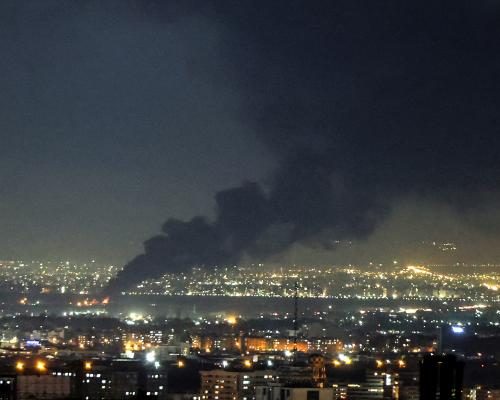
As the deadline imposed by President Donald Trump nears, Iranian officials are urging the nation's youth to form human chains around power plants in a show of solidarity and resistance. Reports indicate that citizens in Tehran and other cities are stocking up on essential supplies, bracing for potential conflict. With Trump's ultimatum for Iran to reopen the Strait of Hormuz looming, tensions are at an all-time high.
Urgent Call to Action from Iranian Leadership
In a dramatic appeal, Iranian officials have called on young people to participate in forming human chains around the country's power plants. This initiative aims to protect crucial infrastructure amid escalating threats from the United States. The call comes in the wake of reported preparations by the U.S. and Israel for potential strikes against Iranian civilian infrastructure if Iran does not comply with demands to reopen the strategic Strait of Hormuz. Originally reported by The Guardian.
Alireza Rahimi, secretary of the Supreme Council of Youth and Adolescents, released a video message urging young Iranians, including students and artists, to gather at power plants on Tuesday at 2 p.m. "I invite all young people, athletes, artists, students and university students and their professors," he stated. The demonstrations are seen as a crucial step in rallying public support and showcasing national unity during a time of crisis.
Public Response and Preparations in Tehran
As the political situation intensifies, residents in Tehran are taking precautions by hoarding essential provisions. Reports suggest that many families are acquiring basic supplies and charging equipment for mobile phones, preparing for potential evacuations if the situation deteriorates further. One Tehran resident expressed skepticism about the U.S. and Israel's intentions, stating, "No good can come out of this, since obviously the US and Israel don't give a damn about Iranian people."
Meanwhile, Iranian media has documented gatherings at various electricity stations across the country. Demonstrators have been spotted waving Iranian flags and displaying banners at significant sites, including the largest power plant near Tehran and another in Tabriz, located in the northwest. In Dezful, citizens gathered on a bridge believed to be 1,700 years old, emphasizing the historical significance of their efforts to protect national assets.
Escalating Military Tensions and International Reactions
President Trump's threats have intensified tensions, with reports indicating that he warned, "a whole civilization will die tonight." The U.S. and Israel have conducted a series of airstrikes targeting key Iranian infrastructure, including railways, bridges, and oil export facilities. Legal experts have condemned these actions, stating that attacks on civilian infrastructure could amount to war crimes.
While Trump maintains that there's still time for negotiations, the airstrikes seem to have strengthened hardline factions within Iran, complicating efforts for a diplomatic resolution. Diplomatic channels remain open, with intermediaries reportedly communicating through Pakistan, but concerns are mounting that these military actions might sabotage potential agreements.
Iran's Response and Future Outlook
In a firm statement, Iran's Revolutionary Guards declared that "restraint is over," signaling a shift toward a more aggressive posture. They warned of retaliatory actions that could significantly disrupt U.S. and allied oil and gas supplies in the region for years. Iran's leadership is seeking not just a ceasefire but a comprehensive end to hostilities, fearing a prolonged conflict akin to the situations in Gaza or Lebanon.
Additionally, the military implications of these events extend beyond Iran's borders. Saudi Arabia has threatened to enter the conflict if attacks continue, raising the stakes for regional stability. Iran's recent strikes on an industrial complex in Saudi Arabia have been described by Pakistan's military as an "unnecessary escalation," complicating ongoing efforts for peaceful resolution.
As the clock ticks down toward the deadline set by Trump, the situation remains fluid and precarious. The potential for conflict looms large, with both sides entrenched in their positions. With public sentiment rallying around national pride and the government's call to action, Iran is at a critical juncture that could define its future in a highly volatile region.
Originally reported by The Guardian. View original.