
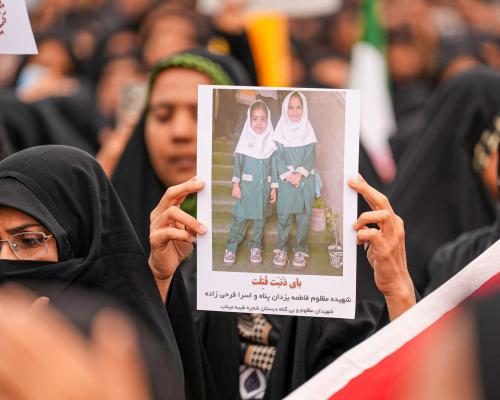
On a tragic morning in Minab, southern Iran, a missile strike devastated the Shajareh Tayyebeh school, resulting in the deaths of dozens of young girls aged seven to twelve. The attack occurred during school hours, between 10 a.m. and 10:45 a.m., amidst a barrage of bombs unleashed by U.S. and Israeli forces. Reports indicate up to 168 fatalities and 95 injuries, marking this event as the worst mass casualty incident in the ongoing conflict.
Devastation and Despair at the School
The aftermath of the bombing paints a harrowing picture. Black smoke billows above the school, where once vibrant murals of trees and crayons adorned the walls. The explosion shattered the glass windows and left curtains in tatters. A playground, once filled with laughter, now lies in ruins, with a red plastic slide and child-sized chairs scattered among the debris. A pair of pink sandals, covered in dust, rests atop an overturned bookshelf, a haunting reminder of the innocent lives affected by this Tragedy. Originally reported by The Guardian.
Eyewitness accounts describe the chaos that ensued. Rescuers, working tirelessly to sift through the rubble, were met with the anguished cries of distraught parents. One man, visibly shaken, held up textbooks and worksheets, exclaiming, "These are the schoolbooks of the children who are under these ruins, under this rubble here. You can see the blood of these children on these books. These are civilians, who are not in the military. This was a school and they came to study."
Details of the Attack
The missile strike on Shajareh Tayyebeh school coincided with a coordinated assault by U.S. and Israeli forces targeting a nearby Islamic Revolutionary Guard Corps (IRGC) complex. This complex includes a medical clinic and other buildings associated with the IRGC, which have been under scrutiny due to their military significance. However, independent investigations reveal no evidence that the school itself served any military purpose. According to Shiva Amelirad, a representative from the Coordinating Council of Iranian Teachers' Trade Associations, the school primarily catered to local families, particularly those unable to afford private education.
Early reports from the scene indicated that the school was not the only structure impacted; thick smoke was observed rising from a nearby building, suggesting that the attack was part of a broader military operation. The U.S. military is currently reviewing the incident, with spokesperson Capt. Tim Hawkins stating, "We take these reports seriously and are looking into them." U.S. Secretary of State Marco Rubio also commented on the situation, emphasizing that the Department of War would investigate and that the U.S. "would not deliberately target a school."
International Response and Repercussions
The international community has reacted with horror to the bombing, with UNESCO labeling the attack a "grave violation" of international law. As reports of civilian casualties continue to emerge, the Iranian government has increased calls for accountability, urging international bodies to respond. The lack of reliable independent reporting from Iran complicates the situation, as the ongoing internet blackouts hinder communication and information dissemination.
Despite these challenges, verified video footage and satellite imagery have brought some clarity to the incident. Analysis confirms the school's location and the nature of the surrounding structures, further establishing its role as a civilian educational facility. The distressing images of blood-stained backpacks and the sight of young lives lost have sparked outrage, highlighting the urgent need for accountability and a reevaluation of military tactics in conflict zones.
Looking Ahead: The Impact of the Bombing
The tragic events in Minab serve as a poignant reminder of the human cost of war. As families mourn the loss of their children, questions arise about the future of education and safety in conflict zones. The bombing has not only claimed lives but has instigated a broader conversation about civilian protection in military operations.
In the wake of the attack, the Iranian government has begun implementing measures to close schools in the region, emphasizing the immediate need for safety amidst ongoing conflict. The devastating impact on the community will likely resonate far beyond this single incident, shaping the lives of countless families and the educational landscape in Iran for years to come.
Originally reported by The Guardian. View original.