
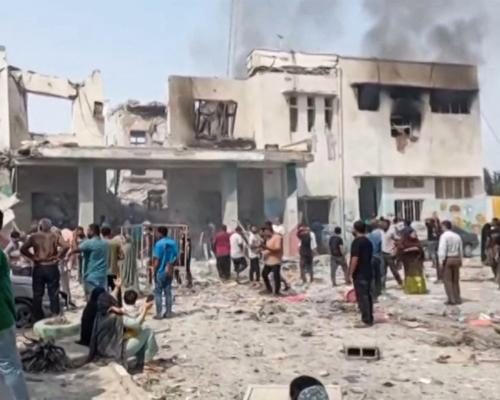
In a devastating turn of events, over 100 children were reportedly killed when bombs struck the Shajareh Tayyebeh girls' school in Minab, southern Iran. The attack, part of a broader offensive involving the United States and Israel, has left the nation in shock and mourning. Parents who had just dropped their children off for class found themselves rushing back to the school gates amid chaos and destruction.
Parents in Despair as Bombs Fall
On Saturday morning, as children began their school day, parents found themselves caught in a sudden onslaught of airstrikes. Eyewitness accounts described scenes of panic as families raced to the school, only to find devastation. Reports from Iran's state-controlled media, specifically the Mizan news agency, indicated that at least 100 children perished in the bombing. The situation remains dire, with dozens more unaccounted for. Originally reported by The Guardian.
A video shared on social media allegedly captured the aftermath of the bombing, showing billowing smoke rising from the school and debris littering the streets. Hundreds of onlookers gathered, many visibly distressed, with screams echoing in the background. Though the authenticity of the video was initially uncertain, it has since been verified by both the Persian fact-checking service Factnameh and Reuters, confirming the tragedy at the school.
Health Ministry's Heartfelt Response
Hossein Kermanpour, spokesperson for Iran's health ministry, characterized the bombing as "the most bitter news" of the ongoing conflict. He expressed deep sorrow over the situation, acknowledging the grim reality of more children potentially trapped under the rubble. The school, located adjacent to a Revolutionary Guards barracks, has now become the site of one of the deadliest incidents in the current military escalation.
If the death toll is confirmed, this bombing would mark the largest mass casualty event associated with the US-led attacks so far. Across the country, residents grapple with a blend of fear and hope. Many felt a sense of relief that the anticipated strikes had finally begun, while others expressed concern that these actions would lead to greater civilian casualties amidst a backdrop of ongoing violence in Iran.
Public Reaction: A Mix of Fear and Defiance
In Tehran, the atmosphere was tense. Some residents chose to stay indoors, while others navigated through congested streets to find their children as schools were hurriedly shut. Amir*, a 37-year-old bakery owner, expressed a sense of relief upon hearing that the initial strikes seemed to target government facilities, but he remained anxious about the potential for collateral damage. "My worry is that innocent people will be killed," he stated, reflecting the sentiments of many who have already endured significant trauma from the regime's recent crackdown on protests.
Amid the turmoil, voices of defiance emerged. Mohsen*, a 25-year-old IT worker, conveyed a sense of resilience, saying, "We do fear that compatriots will be killed [by the US/Israeli strikes], but I have witnessed friends gunned down by the regime." The stark contrast between the fear of external attacks and the internal violence perpetrated by the government reveals a complex emotional landscape.
Context of Ongoing Conflict and Civil Unrest
The bombings come at a critical juncture in Iran's political landscape, occurring just weeks after the Iranian government violently quelled nationwide protests. These demonstrations, which saw government forces open fire on unarmed citizens, have led to widespread casualties, with over 7,000 confirmed dead according to the US-based Human Rights Activist news agency (HRANA). The ongoing conflict between Iran and the US has intensified following this period of domestic upheaval.
As the attacks progressed, some citizens remarked on the paradox of their situation. Moein*, a 21-year-old university student, noted the lack of bomb shelters for ordinary people while they prepared for war. His comments highlight the precarious state of civilian life amid military actions. "When weapons come from the US, do they strike us more gently than when they come from the regime's killing machines?" he questioned, encapsulating a sentiment of frustration and resignation.
As the situation continues to unfold, Iranians remain on high alert, grappling with the dual threats of foreign military action and internal oppression. With families mourning their lost children and communities bracing for further violence, the broader implications of this conflict remain uncertain.
Originally reported by The Guardian. View original.