
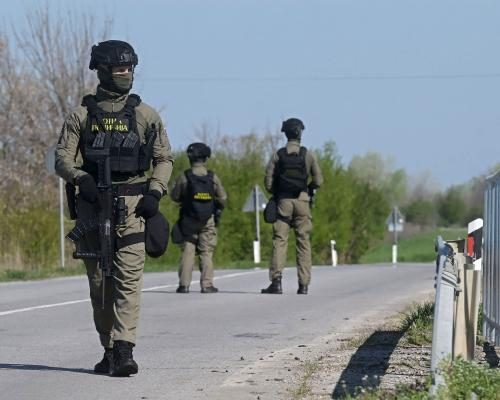
A military expert has suggested that the recent discovery of explosives near the Balkan Stream gas pipeline in Serbia is likely a Russian intelligence provocation aimed at influencing Hungary's upcoming elections. The explosive material, totaling 4 kilograms, was found by Serbia's military security agency in Kanjiža, but experts assert this amount is insufficient to cause significant damage to the critical infrastructure.
Insufficient Explosives for Sabotage
Mykola Zentsev, a former Ukrainian major general and munitions specialist, analyzed the explosives and determined that the quantity recovered would not have been capable of inflicting serious damage on the Balkan Stream pipeline. His firm, Andromeda, conducted calculations on the steel and polypropylene connection that transports Russian gas through Turkey, Bulgaria, and Serbia to Hungary. Zentsev indicated that a much larger quantity of explosives would be required to effectively disrupt the gas flow. Originally reported by The Guardian.
"Four kilograms is not sufficient to put the gas pipeline to a standstill," Zentsev stated. He elaborated that, even if optimally placed, such a small amount of plastic explosive would likely result only in localized damage, easily repaired within a few days, and would not cause a long-term disruption of supply. This conclusion indicates that the incident may not align with the typical objectives of sabotage, which usually aims to disable infrastructure for extended periods.
Political Context and Implications
On Sunday, Hungarian Prime Minister Viktor Orbán revealed that he had been informed by Serbia's President Aleksandar Vučić about the explosives found. Hungary's Foreign Minister, Péter Szijjártó, insinuated that Ukraine could be behind what he termed an "attack on our sovereignty." The timing of the incident is notable, occurring just before Hungary's elections, where Orbán, known for his pro-Russian stance, is reportedly under pressure as he trails in the polls.
Péter Magyar, the leader of Hungary's opposition, accused Orbán of attempting to instill fear in the populace through what he described as false-flag operations, suggesting that the prime minister is being guided by Russian agents. Ukraine has denied any involvement in the incident, a stance that aligns with the findings of Serbia's Military Security Agency, which is responsible for the ongoing investigation.
Russia's Role and Strategic Interests
Zentsev posited that the primary beneficiaries of the incident are likely the Hungarian government, which stands to gain a political edge ahead of the elections, and Russia, which could use such provocations to tarnish Ukraine's reputation internationally. Under Orbán's leadership, Hungary has maintained close ties with Russia, continuing to purchase gas and oil despite pressures from other EU nations.
Budapest's relationship with Ukraine has been strained, particularly after Hungary blocked a €90 billion loan to Ukraine in March, following a dispute over repairs to a section of the Druzhba oil pipeline that runs through Ukraine into Eastern Europe. This geopolitical context adds layers of complexity to the recent explosive discovery.
Concerns Over Safety and Security
Serbia's Vučić expressed that the explosives found could have endangered many lives and posed a significant threat to the Balkan Stream pipeline. The explosives were uncovered in two backpacks located just a few hundred meters from the gas pipeline. However, Zentsev emphasized that, based on publicly available evidence, there appeared to be no attempt to position the explosives directly on the pipeline itself.
Given the military dimensions of this incident, Zentsev suggested a possibility of Russian involvement, citing the modus operandi of the GRU, Russia's military intelligence agency. This perspective echoes concerns raised by Magyar last month, who accused Orbán of collaborating with GRU agents to bolster his chances for re-election.
The Russian embassy in Budapest has dismissed claims of GRU involvement, labeling such suggestions as "openly false information." The situation remains fluid as Serbia and Hungary navigate the geopolitical ramifications of the incident while election day approaches in Hungary.
The discovery of explosives in Serbia raises significant questions about regional security and the potential for foreign influence in domestic politics. As Hungary's election approaches, the implications of this incident could shape voter perceptions and political outcomes, further complicating an already tense geopolitical landscape.
Originally reported by The Guardian. View original.