
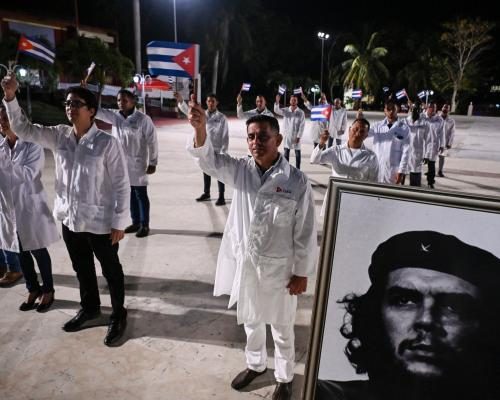
The Caribbean is witnessing a troubling trend as countries across the region expel Cuban doctors, long regarded as essential healthcare providers. This shift, largely influenced by U.S. political pressure, threatens to dismantle decades-long health programs, leaving vulnerable populations without necessary medical care. Cuban Foreign Minister Bruno Rodríguez has accused the U.S. of extorting nations into terminating agreements with Havana that have historically provided crucial medical assistance.
U.S. Influence and Expulsions
In recent months, several Caribbean nations have succumbed to U.S. pressure, resulting in the termination of contracts with Cuban medical professionals. The U.S. government has branded these arrangements as "forced labor" and "human trafficking," despite the fact that Cuban doctors have been trained at no cost to them, unlike their counterparts burdened by student debt in places like the United Kingdom. Countries such as Guatemala, Honduras, Jamaica, and Antigua and Barbuda have all withdrawn from agreements that once provided healthcare to millions. Originally reported by The Guardian.
This trend began to accelerate during Donald Trump's presidency, particularly following the exit of 8,300 Cuban doctors from Brazil in 2018. The then-president-elect, Jair Bolsonaro, aligned closely with U.S. Interests, raised doubts about the qualifications of Cuban medical professionals, which undermined their credibility. Since then, the U.S. has relentlessly pressured nations in the region to dismantle these life-saving programs.
The Human Cost of Medical Withdrawal
The ramifications of these expulsions are severe. Millions across the Caribbean and Latin America risk losing access to basic healthcare services. Vulnerable groups, especially Indigenous communities, stand to suffer the most as healthcare systems, already stretched thin, struggle to cope without Cuban support. Cuban doctors have been instrumental in addressing various health crises, from maternal care to chronic illnesses. Their absence will likely lead to untreated conditions and increased mortality rates.
Cuba has long prioritized healthcare as a major aspect of its foreign policy, dispatching medical brigades to countries in need. In 2014, during the Ebola epidemic, Cuban healthcare workers were among the first responders. Similarly, they have rushed to aid during natural disasters in the Caribbean and provided essential medical care in countries like Haiti and Nepal. The withdrawal of these professionals signifies not just a loss of personnel but also a loss of a humanitarian commitment.
Historical Solidarity Undermined
For over six decades, Cuba has been synonymous with healthcare solidarity, sending thousands of medical personnel abroad while suffering under a U.S. economic embargo. This unique approach has benefitted many nations, fostering goodwill and cooperative relationships. However, as U.S. sanctions tighten, Cuba's economy faces significant strain, impacting its capacity to maintain these programs.
Cuba's Latin American School of Medicine has trained tens of thousands of foreign students, including many from the Caribbean, for free, helping to build a network of healthcare professionals dedicated to improving health outcomes in their home countries. Despite this, the current geopolitical climate has prompted Caribbean nations to distance themselves from Cuba, betraying a historical ally in favor of compliance with U.S. interests.
A Shift in Caribbean Leadership
The shift in tone among Caribbean leadership is stark. In the 1970s, Jamaican Prime Minister Michael Manley hailed Cuba as fundamental to regional solidarity against imperialism. Today, Prime Minister Andrew Holness has acknowledged the contributions of Cuban doctors but emphasizes legality and compliance, reflecting a broader trend of pragmatism overshadowing principles of solidarity.
Trinidad and Tobago, once a strong supporter of Cuban healthcare initiatives, now echoes criticisms similar to those made by U.S. officials. Prime Minister Kamla Persad-Bissessar, who once lauded Fidel Castro, has shifted her stance, signaling a worrying trend towards acquiescence rather than solidarity. The Caribbean's decision to sever ties with Cuba represents not just a political maneuver but a moral failing as vulnerable populations face the fallout.
As the region grapples with the consequences of these actions, the need for solidarity and support is more critical than ever. The expulsion of Cuban doctors marks a significant turning point in Caribbean healthcare, one that could redefine the region's commitment to its most vulnerable citizens.
Originally reported by The Guardian. View original.