
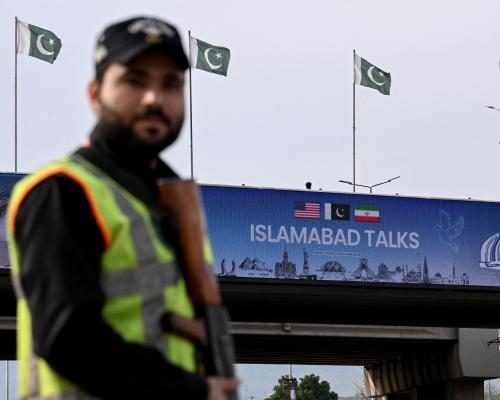
As tensions escalate in the Middle East, a high-stakes diplomatic mission commenced today with the arrival of an Iranian delegation in Islamabad. Led by parliamentary speaker Mohammad Bagher Ghalibaf, the team is set to engage in conditional peace negotiations with U.S. officials aimed at establishing a ceasefire amid ongoing violence, particularly in Lebanon and Israel.
These talks, described by Pakistani Prime Minister Shehbaz Sharif as a "make or break" moment, come at a critical juncture, with both sides expressing deep mutual mistrust. Ghalibaf articulated this skepticism, stating, "We have good intentions but we do not trust," reflecting Iran's cautious approach based on past experiences of negotiations with the U.S. that have often ended in disappointment. Originally reported by The Guardian.
U.S. and Israeli Positions Highlight Tensions
The U.S. delegation, led by Vice President JD Vance, echoes a similar sentiment of caution. Vance emphasized that if Iran attempts to manipulate the discussions, they would find the U.S. negotiating team unyielding. His comments come in the context of former President Donald Trump's assertion that preventing Iran from acquiring nuclear weapons remains a top priority for the U.S. Trump further underscored the importance of addressing ongoing Israeli strikes on Lebanon, a significant demand from Iran as part of any ceasefire agreement.
While Iran insists that negotiations cannot proceed without assurances regarding Lebanon and the unblocking of its seized assets, the U.S. and Israel maintain that the situation in Lebanon is not a part of the ceasefire discussions. Trump characterized Iran's position as weak, stating that they have "no cards" other than using international waterways for leverage.
Security Measures Heighten in Islamabad
In preparation for the talks, Islamabad has implemented extensive security measures. All routes leading to the Serena Hotel, where negotiations are being held, are heavily fortified, and banners proclaiming the "Islamabad Talks" line the expressway. The Iranian delegation includes not only Ghalibaf but also key figures such as Foreign Minister Abbas Araghchi and members of the Iranian Parliament, indicating the high stakes of these discussions.
As the situation unfolds, many in Iran remain skeptical about the potential for successful negotiations. A 30-year-old Iranian citizen expressed doubts to Agence France-Presse, labeling much of Trump's rhetoric as "pure noise and nonsense." Such sentiments highlight the broad public skepticism regarding the effectiveness of U.S.-Iran talks.
Ongoing Violence in Lebanon Raises Stakes
The backdrop of these negotiations is marked by escalating violence in Lebanon, where the health ministry reported a staggering death toll of 357 from Israeli attacks, with over 1,953 fatalities since the onset of renewed hostilities on March 2. As the conflict continues, the humanitarian situation deteriorates, with more than 6,000 reported injuries. Lebanese President Joseph Aoun condemned the ongoing Israeli strikes, which have resulted in casualties among state security personnel, further complicating the regional landscape.
In a related development, Lebanese and Israeli officials are scheduled to meet in Washington, D.C., this Tuesday to discuss a potential ceasefire and work towards setting a date for future talks, mediated by U.S. officials. This meeting is part of a broader diplomatic effort to stabilize the region amid rising tensions.
As the clock ticks down to the commencement of negotiations in Islamabad, both sides remain poised for discussions that could have significant implications for the future of peace in the region. The outcome is uncertain, but the stakes could not be higher, with the potential for either a breakthrough or further escalation of conflict.
Originally reported by The Guardian. View original.