
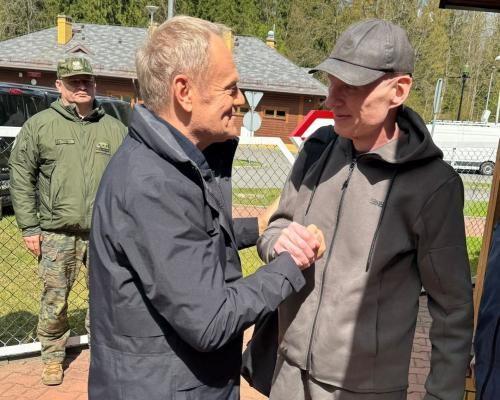
Andrzej Poczobut, a Polish-Belarusian journalist and 2025 Sakharov Prize laureate, has been freed from a Belarusian penal colony after five years of imprisonment. His release is part of a significant multi-country swap deal brokered by the United States. Poland's Prime Minister Donald Tusk confirmed Poczobut's freedom through a heartfelt social media post that welcomed him back to Poland.
Details of the Prisoner Swap
Poczobut's release marks a crucial moment in the ongoing diplomatic efforts to bridge relations between Belarus and Western nations. The prisoner exchange involved multiple countries, including Belarus, Kazakhstan, Moldova, Poland, Romania, Russia, and Ukraine. Tusk characterized this event as "the finale of a two-year complicated diplomatic game, full of dramatic twists and turns." Originally reported by The Guardian.
The negotiations leading to Poczobut's release were spearheaded by John Coale, the U.S. special envoy to Belarus. He confirmed that alongside Poczobut, three other Poles and two Moldovans were also released. Coale emphasized the ongoing challenges in Belarus, noting, "If Belarus wants to join the family of nations, this kind of thing has to stop." He plans to return to Belarus for further discussions, citing that there are still approximately 800 to 900 political prisoners remaining in the country.
Poczobut's Imprisonment and Health Concerns
Andrzej Poczobut was detained by Belarusian authorities in 2021, sentenced to eight years in a penal colony under charges widely regarded as politically motivated. This conviction was perceived as an attempt to silence dissent against the Belarusian regime. Poczobut has been a prominent advocate for the Polish community in Belarus and has served as a journalist for the Polish newspaper Gazeta Wyborcza.
In recent years, alarming reports regarding his health surfaced, particularly concerning his treatment while incarcerated. A UN-mandated report released last month highlighted the "prolonged solitary confinement" and "denial of essential medical care" that Poczobut experienced. This context heightened the urgency surrounding his release.
Impact on U.S.-Belarus Relations
The release of Poczobut is not just a personal victory; it also reflects a broader strategy by the U.S. to engage Belarus in dialogue and potentially reform its international standing. The lifting of certain sanctions, including those on Belarusian potash-an essential export-was part of the negotiations, indicating a willingness to improve relations in exchange for political progress.
Poland's President Karol Nawrocki expressed gratitude for U.S. President Donald Trump's involvement, crediting him for facilitating the release of Poczobut. Foreign Minister Radosław Sikorski described the journalist's freedom as a symbol of Poland's dedication to protecting its citizens abroad and upholding media freedom, emphasizing the crucial role the U.S.-Polish alliance played in this situation.
Reactions to Poczobut's Freedom
The announcement of Poczobut's release was met with widespread acclaim. Roberta Metsola, President of the European Parliament, expressed her joy, calling it "wonderful news" to see a Sakharov Prize laureate free once again. She acknowledged the risks Poczobut took in his journalism, stating that he, along with co-winner Mzia Amaglobeli, represents the fight for democracy and freedom of expression.
Gazeta Wyborcza celebrated his release with a triumphant message on their website: "Andrzej Poczobut is finally free! The dictator has released our colleague from the penal colony." Bartosz Wieliński, the newspaper's deputy editor-in-chief, shared a photo with Poczobut, captioning it, "The first kilometres of freedom. We're heading to Warsaw." This sentiment encapsulates the relief and hope felt by many in the Polish media community.
Poczobut's release and the broader implications for Belarusian politics signal a potential shift in regional dynamics. The U.S. continues to assert its influence, advocating for the release of political prisoners and the promotion of human rights. As Andrzej Poczobut returns to his homeland, the international community watches closely, hopeful for further progress in the fight for freedom and democracy in Belarus.
Originally reported by The Guardian. View original.