
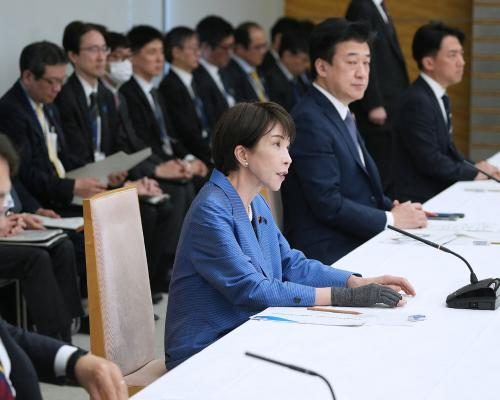
In a historic move, Japan will initiate its largest-ever release of oil from national reserves this week, as the nation prepares for potential supply shortages stemming from escalating tensions in the Middle East, specifically the ongoing conflict involving the US and Israel against Iran. Prime Minister Sanae Takaichi announced the measure, which will see the government release 15 days' worth of private-sector oil reserves to mitigate the impact of uncertainties surrounding the Strait of Hormuz, a vital shipping route for the global oil supply.
The decision follows government approval last week and is set to commence on Thursday. Japan, heavily reliant on the Middle East for its energy needs-over 90% of its crude oil imports-faces significant vulnerabilities should disruptions occur in this region. Takaichi emphasized the importance of stability in the Middle East, stating, "Peace and stability in the Middle East are extremely important for Japan and the international community." Originally reported by The Guardian.
Massive Release to Secure Domestic Supply
In total, around 80 million barrels of oil will be provided to domestic refiners, equivalent to approximately 45 days of Japan's crude oil consumption. This release is notable, being 1.8 times the quantity made available following the Fukushima Daiichi nuclear disaster in March 2011, when Japan faced a severe energy crisis due to the shutdown of its nuclear power facilities. As of the end of 2022, Japan's strategic reserves stood at about 470 million barrels, enough to meet 254 days of domestic demand.
Additionally, the Japanese government has introduced subsidies aimed at capping gasoline prices at around ¥170 ($1.10) per liter after retail prices surged to a record ¥190.8 per liter. The initial subsidy is set to be reviewed weekly, reflecting fluctuations in oil prices. This strategic move aims to alleviate the financial burden on consumers amid rising costs associated with crude oil.
Public Concerns Sparked by Social Media
Amid these developments, there have been increasing concerns among Japanese consumers about potential shortages of essential goods, particularly toilet paper. Social media posts have heightened anxieties, prompting the trade and industry ministry to issue a public advisory against hoarding items such as toilet paper. The ministry urged citizens to make "rational decisions about toilet paper purchases based on accurate information," in an effort to prevent a panic similar to that experienced during the early days of the COVID-19 pandemic.
Interestingly, the Japan Household Paper Industry Association has reassured the public that approximately 97% of toilet paper sold in Japan is produced domestically using recycled materials, indicating that the sector is not reliant on imports from the Middle East. Morio Ishizuka, the association's head, emphasized, "Please buy only the usual amount you need," and encouraged calmness in public discourse to avoid unnecessary panic buying.
Geopolitical Tensions and Energy Security
Japan's vulnerabilities in energy security have been laid bare by the ongoing geopolitical tensions in the Middle East. The Strait of Hormuz, a critical chokepoint for oil transport, has been a focal point of concern, particularly in light of the recent escalation in hostilities involving Iran. Prime Minister Takaichi has faced pressure, including from former US President Donald Trump, to enhance Japan's military presence in the region. However, Takaichi has maintained that Japan's postwar constitution restricts the deployment of its maritime self-defense forces to the strait.
During a summit in Washington, Takaichi reiterated Japan's commitment to pursuing diplomatic efforts to ensure stability in the Middle East. She acknowledged that closing the Strait of Hormuz would have dire consequences for Japan's economy, given its heavy reliance on imported energy.
As Japan embarks on this unprecedented oil release, the nation is not only addressing immediate energy needs but also navigating the complex interplay of national security, economic stability, and public sentiment. The government's proactive measures signify a commitment to ensuring that Japan can weather the storm of uncertainty that the current geopolitical landscape presents.
Originally reported by The Guardian. View original.