
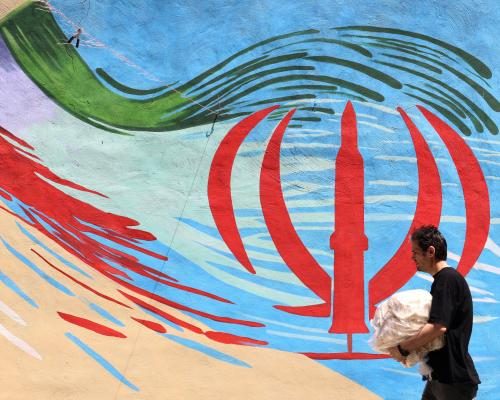
The escalating tensions in the Middle East have reached a critical point, with Iran warning it could enrich uranium to 90% purity if attacked. This declaration by Iranian officials comes amid renewed military activity and threats from the United States, raising fears of a broader conflict in the region.
Iran's Nuclear Program Under Scrutiny
Amidst rising geopolitical tensions, Iran's nuclear ambitions are once again at the forefront of international concern. Ebrahim Rezaei, the spokesperson for Iran's parliamentary National Security and foreign policy commission, stated that Tehran could increase its uranium enrichment to weapons-grade levels if it faces military aggression. Iran currently has more than 400 kg of uranium enriched up to 60%, just a technical step away from the 90% threshold classified as weapons-grade. Originally reported by The Guardian.
Former U.S. President Donald Trump originally justified military actions against Iran by claiming they were necessary to prevent the development of nuclear weapons. However, Iran maintains that its nuclear program is solely for peaceful purposes. The backdrop of these statements is a complex interplay of military and diplomatic maneuvers, with the U.S. contemplating a significant escalation following recent tensions.
Israel's Stance and Ongoing Military Actions
Israeli Prime Minister Benjamin Netanyahu has voiced his country's commitment to continuing military operations against Iran to ensure the dismantling of its nuclear capabilities. In a recent interview on CBS's 60 Minutes, Netanyahu emphasized that the conflict would persist until all enriched uranium is removed from Iran. He stated, "It's not over, because there's still nuclear material - enriched uranium - that has to be taken out of Iran."
These comments coincide with increasing Israeli military operations in southern Lebanon, where recent airstrikes have killed six people, according to Lebanon's National News Agency (NNA). The Israeli military has ordered evacuations in multiple towns along the border, citing violations by Hezbollah, the Iran-backed militant group, of a ceasefire agreement established earlier this year. The situation has drawn international scrutiny, with experts questioning the legality and consistency of Israel's military warnings.
Humanitarian Impact of Renewed Conflict
The ongoing hostilities have had devastating humanitarian consequences. Since the escalation of conflict on March 2, which was sparked by Hezbollah's missile attacks on Israel, the Lebanese health ministry reported at least 2,869 casualties, including many women and children. Over one million people have been displaced as a result of the fighting, exacerbating an already dire humanitarian situation.
Despite a ceasefire that came into effect in April, designed to foster dialogue between the U.S. and Iran, there have been intermittent exchanges of fire and military strikes, particularly in strategic locations like the Strait of Hormuz, which remains under a blockade. The strait's limited traffic has contributed to rising global energy prices, affecting markets around the world, including in the United States.
Stalled Negotiations and Rising Tensions
The diplomatic landscape has become increasingly fraught, with recent U.S. peace proposals described as inadequate by Iranian officials. Trump dismissed Iran's counter-offer, which called for the lifting of sanctions and an end to military actions against the country, as "totally unacceptable." He criticized the ceasefire, deeming it "on life support," expressing frustration over the stalled negotiations that have failed to yield tangible results.
Iranian parliamentary speaker Mohammad Ghalibaf has responded to these developments by asserting that the nation's armed forces stand ready to retaliate against any aggression. As military posturing intensifies on both sides, the potential for miscalculation remains high, keeping the specter of conflict alive.
With Trump reportedly considering a resumption of major military strikes due to the ongoing impasse in negotiations, the situation remains precarious. As tensions mount, the international community watches closely, aware that any misstep could precipitate a broader regional conflict. The coming days will be crucial in determining whether diplomatic efforts can stabilize the situation or if military action will reignite the turmoil.
Originally reported by The Guardian. View original.