
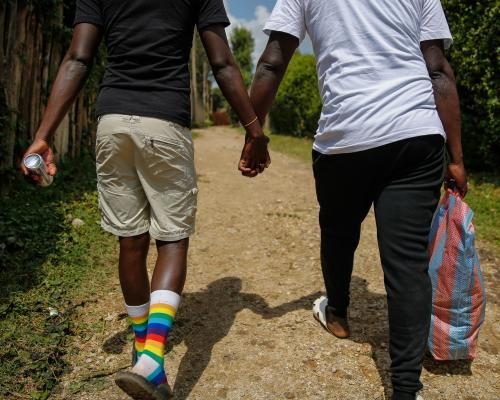
In a landmark ruling, two men were sentenced to 15 years in prison for violently attacking and robbing two gay men in Kenya, a decision hailed by LGBTQ+ advocates as a significant step forward for the nation's queer community. The ruling was delivered on March 3 at the Milimani Law Courts in Nairobi, marking a rare instance of justice for victims of anti-LGBTQ+ violence in the country.
A Breakthrough in a Hostile Environment
The sentencing of Abel Meli and another accomplice is viewed as a breakthrough by LGBTQ+ rights advocates who often face a hostile environment in Kenya. Njeri Gateru, the executive director of the National Gay and Lesbian Human Rights Commission, expressed cautious optimism, stating, "A lot is going against [the queer community] with the existence of the criminal laws and prevailing homophobic attitudes, but some of us still trust that we can find justice, so this case encourages us." This ruling stands in stark contrast to the prevailing legal landscape where homosexuality remains criminalized, with penalties reaching up to 14 years in prison. Originally reported by The Guardian.
Kenya is one of 31 African nations where same-sex relations are illegal, creating a climate where many LGBTQ+ individuals remain in the shadows, fearful of societal rejection and legal repercussions. Increasing hostility toward queer individuals has compounded this fear, driven by a combination of legal setbacks and a marked reduction in funding for organizations advocating for LGBTQ+ rights.
Escalating Violence and Extortion
The violent incident involving the victims, Eric Anyango and Joe Ochieng, illustrates the dangers faced by Kenya's LGBTQ+ community. In April 2023, the two men were attacked after meeting a man Ochieng had connected with on Facebook. What followed was a harrowing experience of violence and extortion lasting four hours, during which the attackers physically assaulted them and seized their belongings.
They were coerced into transferring 100,000 Kenyan shillings (approximately £576) to their assailants under the threat of being outed to their families, who were unaware of their sexual orientation. "I tried to resist and I wanted to fight back," Anyango recalled. "That's when one of them took a knife, held it at me and said: 'If you don't cooperate now, I will stab you and throw you out the window.'"
After the ordeal, Anyango reached out to a friend who directed him to Ishtar, a community-based organization advocating for men who have sex with men. Lucas Wafula, a paralegal from Ishtar, accompanied the victims to the police station, where they faced the additional challenge of discrimination from law enforcement, a common barrier for LGBTQ+ individuals seeking justice in Kenya.
Organized Crime and Police Involvement
Gateru highlighted that the two men sentenced were part of a larger criminal gang that allegedly includes members of the police force, perpetuating a cycle of violence against queer individuals. "We had so many files against them.. We've had cases where these two men were arrested for other cases and later released," Gateru noted. The existence of criminal gangs targeting LGBTQ+ individuals adds another layer of danger to an already precarious situation.
Reported cases of blackmail and extortion have surged, with Ishtar documenting 226 incidents in 2025 alone, and 61 in just the first two months of 2026. The rise of these crimes is exacerbated by an anti-rights movement in Kenya, fueled by certain religious institutions educating congregations on how to profile and target queer individuals.
"The political climate is changing and there is an anti-rights movement in the country," said Kelly Kigera, Ishtar's programs manager. This hostile environment has made it increasingly difficult for victims to report crimes, as fear of self-incrimination looms large.
Hope Amidst Challenges
Despite the grim backdrop, the recent sentencing has ignited a flicker of hope within the LGBTQ+ community. The judgment not only brings a measure of justice for Anyango and Ochieng but also sends a message to potential perpetrators that the law can indeed intervene. The ruling has been viewed as a possible deterrent to other criminal gangs operating in the shadows.
However, many challenges remain. Gateru emphasizes the pervasive fear of self-incrimination that prevents many cases from being reported. "If I say that I met with a man on Grindr and I was hoping to engage in a romantic or an intimate relationship with this man, then obviously I'm evidence against myself," she explained.
As the LGBTQ+ community in Kenya grapples with increasing violence and systemic discrimination, the hope for justice remains fragile but essential. The recent ruling may mark a turning point, but sustained advocacy and support are crucial for ensuring the safety and rights of all individuals, regardless of their sexual orientation.
Originally reported by The Guardian. View original.