
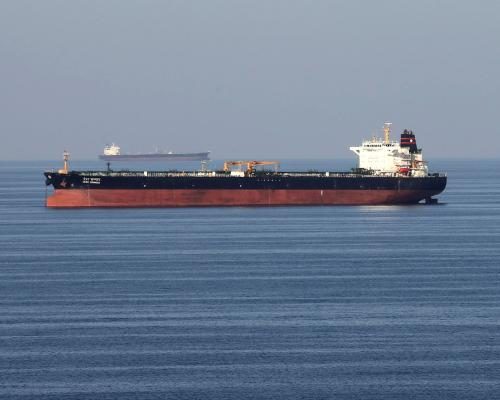
Amid escalating tensions over oil shipments, the US military has targeted and destroyed 16 Iranian mine-laying vessels near the strategically crucial Strait of Hormuz. This action comes in response to reports indicating that Iran has been actively laying explosive devices in the waterway, through which approximately one-fifth of the world's oil transits.
Intelligence sources, as reported by CNN, suggest that Iran has laid dozens of mines in the strait in recent days and possesses the capability to lay hundreds more. The situation escalated further when the Islamic Revolutionary Guard Corps (IRGC) of Iran stated earlier this week that it would not permit "even one litre of oil" to exit the region if US-Israeli attacks continued. This stark warning underscores the volatile environment surrounding oil transport in the area. Originally reported by The Guardian.
Trump Calls for Immediate Action Against Mines
On Tuesday, former President Donald Trump took to Truth Social, declaring, "If Iran has put out any mines in the Hormuz Strait, and we have no reports of them doing so, we want them removed, IMMEDIATELY!" His statement came shortly before the US military released unclassified footage of the attacks on Iranian vessels, emphasizing the urgency of the situation.
As oil shipments from the Middle East have been halted since US-Israeli strikes on Iran 11 days prior, global oil prices have seen significant spikes, creating turmoil in international markets. The delicate nature of oil pricing was evident when a quickly deleted post by US Energy Secretary Chris Wright erroneously suggested that the US Navy had successfully escorted an oil tanker through the Strait of Hormuz. The post led to a dramatic plunge in benchmark US crude futures by up to 19%, before officials confirmed that no such escort had taken place.
Iran's Response and Military Readiness
In response to Wright's misleading post, Ali Mohammad Naini, a spokesperson for Iran's Revolutionary Guards, asserted that any movement by the US fleet and its allies would be intercepted by Iranian missiles and drones. "Any movement of the US fleet and its allies will be stopped by our missiles and drones," he stated, reflecting Iran's readiness to defend its interests in the region.
At a Pentagon briefing, General Dan Caine discussed the potential for the US Navy to escort oil vessels through the strait, stating, "We're looking at a range of options there, and we'll figure out how to solve problems as they come to us." Meanwhile, Pentagon chief Pete Hegseth warned that if Iran attempted to disrupt the flow of oil through the Strait of Hormuz, the US would respond with force, stating, "They will be hit by the United States of America 20 times harder than they have been hit thus far."
Global Oil Market Reaction and Strategic Implications
The implications for global oil markets are profound, as tanker rerouting has already begun. Amin Nasser, CEO of Saudi Arabia's oil giant Aramco, noted that tankers are being redirected to bypass the strait, while the company's east-west pipeline is set to reach its full capacity of 7 million barrels per day, transporting oil to the Red Sea port of Yanbu.
In response to soaring crude prices, the International Energy Agency (IEA) has proposed its largest-ever release of oil reserves, aiming to stabilize the market. This release would exceed the 182 million barrels that IEA member countries put on the market following Russia's invasion of Ukraine. Emergency meetings among energy officials from the IEA's 32 member countries have been convened, with a decision expected soon.
The Strait of Hormuz, only 34 kilometers wide at its narrowest point and with a shipping lane of just 3.2 kilometers in either direction, remains a critical chokepoint for global oil traffic. The ongoing tensions and military maneuvers highlight the fragility of this vital route, reminiscent of the Iran-Iraq tanker war in the 1980s when Iran also mined the strait.
The situation remains fluid, and as military operations evolve, the international community watches closely. With both sides signaling readiness to escalate, the risk of further conflict looms large, potentially impacting global energy supplies and prices.
Originally reported by The Guardian. View original.