
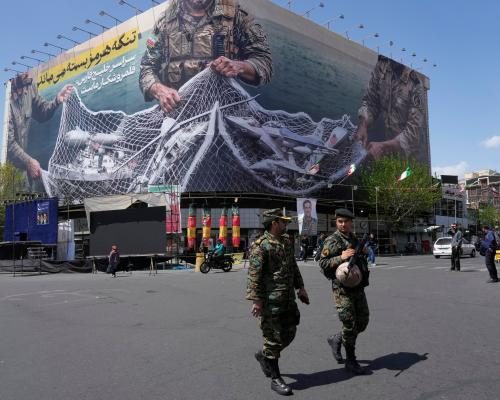
In a significant escalation of tensions in the Middle East, Iran's Foreign Minister Abbas Araqchi announced that the Strait of Hormuz would be closed again if the U.S. naval blockade of Iranian ports continues. This warning comes in the wake of a temporary truce agreement between Israel and Lebanon, which briefly reopened the vital maritime route for commercial vessels. The Strait of Hormuz is crucial for global oil and gas supplies, handling approximately one-fifth of worldwide energy transportation.
International Military Mission to Secure Shipping
As concerns mount over the stability of shipping routes in the region, Britain has pledged a "wide-ranging military contribution" to an international mission aimed at protecting vessels navigating the Strait of Hormuz. Christian Turner, the UK ambassador to the U.S., emphasized the importance of this multinational effort, which is being led by the UK and France. The initiative was unveiled during talks in Paris attended by nearly 50 countries, underscoring a global commitment to ensuring safe passage through this critical waterway. Originally reported by The Guardian.
Turner noted that the mission seeks to reassure shipping companies as tensions ease following the Iran conflict. Approximately 12 nations have already agreed to participate, even as questions linger about the adequacy of Britain's armed forces amid ongoing concerns over funding. The initiative has drawn criticism from former U.S. President Donald Trump, who took the opportunity to label NATO as "useless" for not backing his aggressive stance on Iran.
Truce Agreement and Its Implications
Following a truce brokered by the U.S., the Strait of Hormuz reopened Temporarily, offering a glimmer of hope for regional stability. Araqchi confirmed that the passage was available for all commercial vessels during the 10-day ceasefire, which began on Thursday. While this development was welcomed by world leaders, including UN Secretary-General António Guterres, who called it "a step in the right direction," uncertainties remained regarding the long-term implications for shipping traffic.
Despite the reopening, several ships faced challenges navigating the strait, with some vessels attempting but failing to cross on Friday. Economic ramifications were immediate; Brent crude oil prices fell below $90 per barrel, marking a significant 10% drop as markets reacted to the potential resumption of energy supplies after weeks of disruption.
Ongoing U.S.-Iran Tensions
The situation remains precarious, with President Trump reiterating that the U.S. blockade would persist until a complete agreement with Iran is reached. Trump's comments included a warning that military action might resume if a long-term deal is not achieved by the impending Wednesday deadline, when the current truce expires. Iranian parliamentary speaker Mohammad Bagher Ghalibaf countered Trump's assertions, declaring that without an end to the blockade, the Strait of Hormuz "will not remain open."
Furthermore, Trump indicated that the U.S. would not allow Israel to engage in military actions against Lebanon, a stance that was quickly contradicted by Israeli Prime Minister Benjamin Netanyahu, who stated that operations against Hezbollah would continue. This juxtaposition highlights the complex and often contradictory narratives emerging from the ongoing conflict.
Humanitarian Crisis and International Response
As military tensions escalate, humanitarian issues also loom large. The UN's children's agency expressed outrage over the deaths of two truck drivers delivering clean water in Gaza, killed by Israeli fire. The ongoing violence has resulted in over 2,100 fatalities in Lebanon and displaced more than a million people since the conflict reignited in early March.
In a related development, the USS Gerald R. Ford, the largest aircraft carrier in the world, has re-entered the waters of the Middle East, reinforcing the U.S. military presence in the region. This move reflects the broader strategy of the U.S. to maintain a robust naval capability amidst rising tensions in the Strait of Hormuz.
The situation in the Middle East remains fluid, with diplomacy and military maneuvers shaping the landscape. As nations rally to protect shipping routes and respond to humanitarian crises, the geopolitical stakes continue to rise. The possibility of renewed hostilities and the fate of critical shipping lanes hang in the balance, emphasizing the need for ongoing international engagement.
Originally reported by The Guardian. View original.