
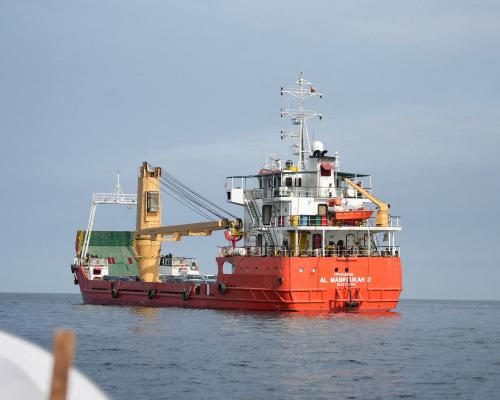
Iranian Foreign Minister Abbas Araghchi has announced that the Strait Of Hormuz is now completely open to commercial vessels, a statement that has sparked hopes for a potential resolution to the ongoing conflict in the Middle East. This declaration comes as oil prices plummeted, despite analysts cautioning that a swift return to normal shipping traffic through the vital waterway remains unlikely. Former President Donald Trump took to social media, asserting that Iran had committed to never closing the strategic strait again, celebrating what he called 'A GREAT AND BRILLIANT DAY FOR THE WORLD!'
Mixed Responses from Iranian Authorities
While Araghchi's statement was bold, it received only qualified support from the Islamic Revolutionary Guard Corps (IRGC), which maintains significant influence in Tehran amidst the ongoing war. Trump's assertion that Iran has agreed to suspend its nuclear program indefinitely, along with the promise of not receiving any frozen U.S. funds, has added layers of complexity to the situation. In a recent Bloomberg interview, Trump indicated that discussions regarding a deal to end the conflict could take place as soon as this weekend. Originally reported by The Guardian.
Separately, in comments to Reuters, he noted that the United States would engage with Iran to recover enriched uranium-described as 'nuclear dust'-at a leisurely pace. This claim has not been officially addressed by Iranian officials, who have consistently emphasized their right to enrich uranium within their borders.
Ceasefire and Ongoing Tensions in Lebanon
Araghchi's announcement coincided with a new 10-day truce in Lebanon, which temporarily paused hostilities between Israel and the Iran-backed Hezbollah militant group. This ceasefire provides a fragile respite for civilians following weeks of Israeli airstrikes that have resulted in significant civilian casualties. Trump indicated that Israel would halt its attacks on Lebanon, asserting, 'They are PROHIBITED from doing so by the U.S.A.' However, Israeli Prime Minister Benjamin Netanyahu quickly countered, declaring in a YouTube video that Israel's operations against Hezbollah were far from over. 'We have not yet finished the job. There are things we plan to do to address the remaining rocket threat and the drone threat,' he stated.
Shortly after Netanyahu's comments, reports surfaced of an Israeli drone strike in southern Lebanon, which resulted in one fatality. Israel's Defense Minister reiterated that the Israel Defense Forces (IDF) were not withdrawing from Lebanon and that military actions could resume if deemed necessary.
International Responses and Market Reactions
Iranian state media reported that commercial vessels would now be permitted to navigate through the Strait of Hormuz, albeit along a designated route and with the approval of the IRGC navy. Despite this proclamation, Trump noted that the U.S. blockade of Iranian ports and shipping would remain in force for the time being, warning that few vessels would risk sailing through the strait under such uncertain conditions. 'The naval blockade will remain in full force and effect as it pertains to Iran, only, until such time as our transaction with Iran is 100% complete,' Trump stated on his Truth Social network.
A conference held in Paris, attended by representatives from around 40 countries and co-chaired by France and the UK, focused on an international plan to ensure the security of the Strait of Hormuz, a crucial passage for about a fifth of the world's oil and gas supplies. The closure of the strait by Iran following the onset of conflict has contributed to rising oil prices, intensified inflation, and raised concerns of a looming economic crisis that could trigger global recessions.
French President Emmanuel Macron welcomed Araghchi's remarks and called for a 'full, unconditional reopening by all parties,' while UK Prime Minister Keir Starmer emphasized that any proposal to reopen the strait must be 'lasting and workable.'
The Role of Regional Diplomacy
Trump also revealed that he had turned down an offer from NATO for assistance, characterizing the alliance as 'useless when needed.' He expressed gratitude to Saudi Arabia, the United Arab Emirates, Pakistan, and Qatar for their support. Meanwhile, shipping industry representatives are currently assessing the implications of the recent announcements regarding the Strait of Hormuz. 'We are currently verifying the recent announcement related to the reopening of the strait, in terms of its compliance with freedom of navigation for all merchant vessels and secure passage,' said Arsenio Dominguez, secretary-general of the International Maritime Organization (IMO).
As regional diplomats scramble to avert further violence between Iran, Israel, and the U.S., the ceasefire declared by Trump earlier this month is set to expire on Tuesday. Field Marshal Asim Munir, the army chief of Pakistan, is currently in Tehran, continuing negotiations aimed at establishing a more sustainable peace in the region.
Originally reported by The Guardian. View original.