
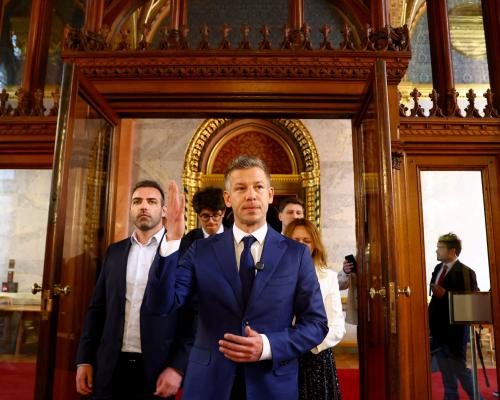
Ukrainians are rejoicing following the election of Péter Magyar in Hungary, a result seen as a significant shift in regional politics. Magyar's win marks the end of Viktor Orbán's 16-year tenure, which had seen Hungary aligned closely with Russia and often at odds with Ukraine. Oleh Kupchak, a Kyiv resident, encapsulated the sentiment, stating, "We were euphoric. Everyone was following the results closely. There were toasts." The mood in Ukraine has been buoyed by an array of jokes and memes celebrating Orbán's defeat, with many likening him to the infamous Star Wars character Jabba the Hutt.
Orbán's Departure Spurs Optimism
Orbán's administration had cultivated a reputation for being the Kremlin's most vocal supporter within the European Union, frequently launching anti-Ukrainian rhetoric. His campaign accused Ukraine of plotting against Hungary's energy security, alleging threats against him and his family. Relations had soured significantly, especially following an incident in late January when a Russian drone ignited the Druzhba pipeline, which supplies oil to Hungary. Orbán irresponsibly claimed that Ukrainian President Volodymyr Zelenskyy was intentionally delaying repairs to undermine his re-election efforts. Originally reported by The Guardian.
As the election approached, Hungarian voters were inundated with provocative advertising, including billboards portraying Zelenskyy as a beggar before the EU, juxtaposed with images of Magyar. The outgoing Prime Minister's campaign painted Magyar and his Tisza party as pro-war advocates aligned with a Brussels-backed anti-Ukrainian agenda. Such tactics only heightened the relief felt by Ukrainians at Orbán's downfall.
A Cautiously Optimistic Outlook
Ukrainian officials have received Magyar's victory with a sense of cautious optimism. Oleksandr Merezhko, head of Ukraine's foreign affairs committee, stated that the election results represent a "strategic defeat for Putin." He believes that Orbán's removal diminishes the chances of forming an anti-Ukrainian coalition in Europe, a prospect that Moscow had hoped to cultivate through leaders like Orbán in Slovakia and the Czech Republic.
Moreover, with Magyar now in charge, there's anticipation that Hungary will lift its veto on €90 billion in EU aid to Ukraine, a crucial lifeline for the war-torn nation. Hungarian opposition to proposed sanctions against Russia is expected to dissipate, possibly leading to a renewed flow of EU funds to Hungary that had been suspended due to concerns over democratic governance under Orbán's rule. Merezhko described Magyar as more "constructively minded" than his predecessor, noting the potential for a thaw in relations.
Challenges Ahead for Magyar's Administration
Despite the positive outlook, challenges remain for Magyar as he takes office. His administration must demonstrate that it will not continue Orbán's policies, particularly regarding Ukrainian relations. The new Prime Minister has publicly stated he would not oppose Ukraine's EU membership but has signaled hesitance toward fast-tracking its accession, suggesting the matter should be put to a referendum.
Additionally, the situation of Ukraine's ethnic Hungarian minority could pose complications. This community, residing in the western Zakarpattia region, has historically been a point of contention. Under Orbán, tensions were exacerbated, including incidents like the seizure of two Ukrainian armored vehicles by Hungary last month, which were documented to carry millions in cash and gold. Merezhko called this action a provocative scandal and emphasized that returning these assets would be a significant step towards mending ties.
In a gesture of goodwill, Volodymyr Zelenskyy congratulated Magyar on his victory, highlighting the importance of constructive diplomacy. He expressed Ukraine's readiness to foster cooperation with Hungary's new government. Unlike previous administrations, Magyar has acknowledged Ukraine's struggles against Russian aggression, reinforcing that it should not be coerced into territorial concessions. His previous visit to Kyiv in July 2024, shortly after a devastating attack on a children's hospital, further indicates a willingness to engage positively with Ukraine.
While some analysts caution against viewing Magyar as an unequivocal ally, there is hope that his leadership will pave the way for improved relations between the two nations. As both countries navigate this new political landscape, the focus will be on building a collaborative future amid a backdrop of historical tensions.
Originally reported by The Guardian. View original.