
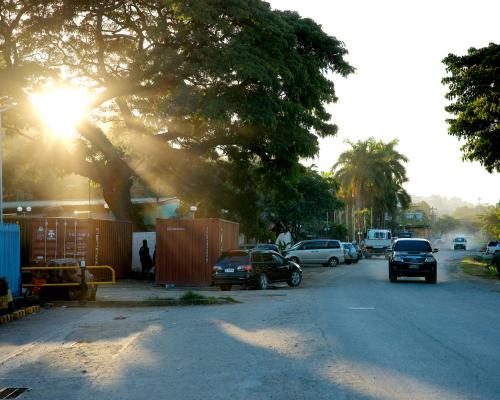
As the sun sets over Honiara, the bustling capital of the Solomon Islands, a hidden world of illicit gambling is thriving. In damp, smoky shelters across the city, residents are increasingly drawn to a fast-paced card game called Pass. For many, this underground game offers not just entertainment but a chance at financial relief amid the island nation's economic struggles.
A Teacher's Desperate Gamble
After a long day at school, Irene, a 43-year-old teacher, hops onto a minibus, her floral dress and yellow daisy in her bun marking her cheerful disposition. Just ten minutes later, she steps off and makes her way down an alley to a discreet shelter filled with plastic tables and the unmistakable scent of smoke. Here, playing cards are strewn across the floor, and the atmosphere buzzes with excitement as players gather around hidden gambling tables. Originally reported by The Guardian.
Inside, Irene joins a game of Pass, which has gained immense popularity throughout Honiara. This street card game is now a common sight, with new locations appearing regularly, despite attempts by authorities to curb the practice. Dealers shout out betting prices, drawing in players eager for a chance to win big. The game involves players being dealt seven cards, with the aim to discard them by matching or sequentially playing cards. If unable to play, they yell "pass!" The winner claims the pot, minus a fee for the dealer.
"I don't have money left, but I've asked the kids to run me some," Irene admits after a series of losses. A single mother of three, she works hard to discourage her children from gambling. "Gambling is a bad thing. Sometimes, other people who don't have money steal from mothers," she explains, while keeping a close eye on the game. However, despite her losses, she continues to play, claiming she has made SBD$500 (approximately $62; £45) in winnings that week-almost equivalent to her monthly salary of $600.
The Economic Context of Pass
Irene's story reflects the reality for many in the Solomon Islands, where a lack of formal employment drives individuals to informal gambling as a means of survival. Youth unemployment in Honiara often hovers between 12 and 15%, pushing young people to seek alternatives like Pass. For them, the game represents a slim chance at financial advancement in a challenging economic landscape.
Ben, a 19-year-old dealer, began working in the game at just 15 to help cover his school fees. He now earns SBD$500 a week, while his boss, Gordon, rakes in significantly more. "We make SBD$12,000 per week on this table," the 29-year-old reveals, noting that his three tables collectively generate SBD$30,000 weekly. For Gordon and others in the business, Pass is not merely a game; it's a lucrative enterprise that offers a financial lifeline.
For Madlyn, a 29-year-old regular player, the game serves a different purpose. "I just won!" she exclaims joyfully, embodying the social aspect of Pass. Her winnings often translate into tobacco and meals, further illustrating how the game intertwines with daily life and survival.
Authorities Struggle to Combat Gambling
Despite the thriving scene, the Solomon Islands authorities are making efforts to dismantle these illegal gambling operations. The Royal Solomon Islands Police Force (RSIPF) has launched Operation Stopem Gambling to tackle the growing popularity of Pass, citing concerns about its link to social issues such as domestic violence and crime.
Jimson Robo, an assistant commissioner at the RSIPF, emphasizes the seriousness of the issue, saying, "The issue is illegal, and police are warning the public to refrain from playing Pass." While police raids have resulted in multiple arrests, including one operation that led to 34 gamblers being apprehended, there are no records of any significant penalties being enforced.
Players, however, remain undeterred by these threats, often laughing as they joke about potential police interventions. "When the police come here, we might run away," one gambler chuckles, illustrating a collective resilience against the law.
A Game Without Borders
As the popularity of Pass continues to grow, it becomes clear that for many Solomon Islanders, the game is about more than just cards; it's about survival. John and Piwen, a married couple who run a small shop, have also embraced the gambling culture, noting that their dealers-local women-often earn more than public servants through Pass. "These ladies do the dealing, they do this [to pay] for food and for bills," John explains.
In this vibrant yet precarious environment, the allure of quick cash keeps players returning night after night. While authorities may strive to eradicate gambling, the underlying economic issues that drive individuals to seek fortune through Pass remain unresolved. As long as opportunities are scarce, the smoky shelters of Honiara will likely remain crowded with hopeful gamblers.
Originally reported by The Guardian. View original.