
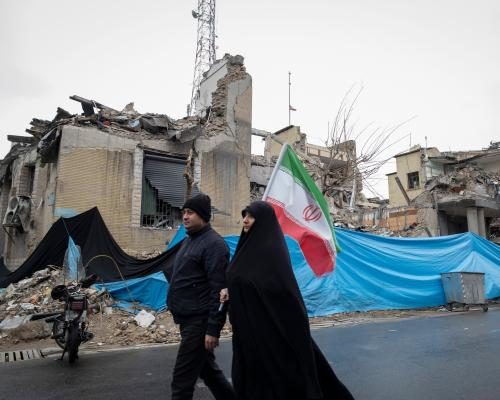
In a tense escalation of military conflict, Iran has issued a warning of retaliation following remarks from former U.S. President Donald Trump, who claimed that Military Targets On Kharg Island had been 'obliterated.' This comes as Hamas calls for restraint from Iran regarding its neighboring countries amid rising regional tensions.
Hamas Urges Iran to Avoid Regional Targets
On Saturday, Hamas released a statement urging Iran to refrain from targeting neighboring countries, even as it affirmed Iran's right to respond to perceived aggression. The organization highlighted, 'While affirming the right of the Islamic Republic of Iran to respond to this aggression by all available means in accordance with international norms and laws, the movement calls on the brothers in Iran to avoid targeting neighboring countries.' This statement follows Hamas's condemnation of the killing of Iran's Supreme Leader Ali Khamenei, which they termed a 'heinous crime.' They expressed gratitude for Khamenei's support for their cause, emphasizing that he provided crucial political, diplomatic, and military backing. Originally reported by The Guardian.
Kharg Island and the Threat to Oil Infrastructure
In related developments, Iranian state media reported that its oil infrastructure on Kharg Island remains intact despite claims from Trump regarding U.S. military actions. Kharg Island is strategically significant, serving as the export terminal for 90% of Iran's oil shipments. Following Trump's remarks, Iran's armed forces threatened to retaliate against U.S.-linked oil infrastructure if its own facilities are attacked. This situation is exacerbating concerns about global energy supplies amid the ongoing conflict, as oil and gas prices have surged due to the instability in the region.
U.S. Energy Security Initiatives Amidst Rising Prices
U.S. Interior Secretary Doug Burgum addressed an energy security forum in Tokyo, stating that the U.S. can provide 'reliable' energy supplies to the Asia-Pacific region. He emphasized that the U.S. aims to ensure energy availability for prosperity at home while also supplying allies. Burgum stated, 'We have the ability to sell energy to our friends and allies,' highlighting the importance of maintaining a 'reliable, affordable and secure' energy supply that cannot be disrupted by what he termed a 'terrorist regime.' This forum, attended by representatives from 17 countries, aimed to foster commercial agreements in the energy sector.
Escalating Military Actions and Diplomatic Tensions
Amidst the military escalations, details surrounding an attack on the U.S. embassy in Baghdad have emerged, though reports remain conflicting. Security officials indicated that the embassy complex was struck, with one source suggesting a drone attack, while another reported a missile hitting a helipad within the compound. The U.S. embassy has warned of potential attacks targeting its citizens and interests, particularly from Iran-backed groups. This follows prior strikes that killed two members of a powerful Iran-linked group in the Iraqi capital.
As the conflict continues to evolve, it has become a testing ground for contrasting approaches to military escalation. The dynamics between Trump and Israeli Prime Minister Benjamin Netanyahu have yet to yield clear strategic advantages, despite the high-profile eliminations of Iranian leaders. Iranian officials have pledged to persist in their resistance, indicating that the conflict might broaden geographically as Tehran employs a strategy of 'horizontal escalation.' This tactic aims to intensify the conflict while increasing the economic costs for Washington and its allies, particularly concerning energy supplies.
In a related note, Iraqi forces reported the downing of a drone targeting a U.S. diplomatic center near Baghdad Airport. This follows earlier missile strikes reported to have hit the U.S. embassy compound. These developments underscore the increasing volatility in the region, as each side grapples with the consequences of military actions and retaliatory threats.
As the situation unfolds, the next few weeks will likely provide critical insights into the effectiveness of U.S. military might in an increasingly fractured global landscape. With both sides poised for further actions, the potential for escalation remains high, with significant implications for regional and global stability.
Originally reported by The Guardian. View original.