
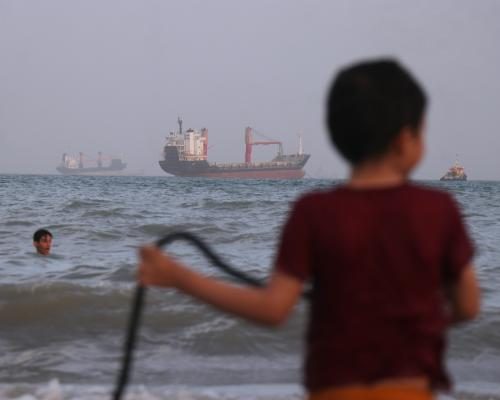
The United States has launched an initiative named "Project Freedom" aimed at guiding ships through a newly established southern route of the Strait of Hormuz, a move that has prompted a firm response from Iran. This operation, announced by former President Donald Trump on social media, seeks to assist the crews of hundreds of vessels stranded in the Gulf due to the ongoing conflict in Iran. Despite the US's intentions, Tehran insists that any ship transits must be coordinated with its armed forces, raising tensions in an already volatile region.
US Launches Project Freedom Amid Shipping Crisis
On Sunday night, Donald Trump unveiled "Project Freedom" on his Truth Social platform, framing it as a humanitarian effort to aid the crews of more than 850 vessels stuck in the Gulf since hostilities began on February 28. The initiative aims to facilitate the safe passage of these ships through Omani territorial waters, bypassing traditional shipping lanes that have become increasingly dangerous due to unaddressed mine threats. Originally reported by The Guardian.
Shipping executives have expressed cautious optimism regarding the project, but uncertainty looms over its implementation. US officials have clarified that the operation will not involve naval escorts. Instead, the US Central Command plans to support the initiative with significant military resources, including guided-missile destroyers, over 100 aircraft, drones, and a contingent of 15,000 troops. The focus is on combining diplomatic efforts with military coordination to ensure safe passage.
Iran's Stance: Coordination Essential for Transit
Reacting to the US's announcement, Iran's military leadership has made it clear that any vessels navigating through the Strait of Hormuz must coordinate with Iranian forces. Major General Ali Abdollahi stated, "We will manage the security of the strait of Hormuz with all might, and inform all commercial ships and tankers to refrain from any attempt to transit without the coordination of the Iranian armed forces stationed in the strait of Hormuz in order not to jeopardise their security." Abdollahi also warned that Iran would respond aggressively to any foreign military presence in the area.
The Iranian stance raises concerns about potential confrontations in a region already marked by high tensions. Shipping executives are wary of the implications of Iran's insistence on coordination, especially since the country has previously declared that unauthorized transit through the strait would be viewed as a violation of the ceasefire established in early April.
International Reactions to the US Initiative
The announcement of Project Freedom has drawn mixed responses from the international community. French President Emmanuel Macron emphasized the need for a coordinated reopening of the Strait of Hormuz, stating, "The only way to reopen the strait is a coordinated reopening by the United States and Iran." Macron, addressing European leaders in Armenia, expressed skepticism about the clarity of the US's military operation, indicating that France would not participate in any military actions that lack clear objectives.
The humanitarian implications of this crisis are significant, as an estimated 20,000 sailors remain trapped on various vessels, including tankers, bulk carriers, and container ships. Concerns about their welfare are mounting as the conflict continues to disrupt maritime operations in the region. Trump claimed that the US had received requests for assistance from other countries, highlighting the urgency of the situation.
The Path Ahead: Navigating Tensions in the Gulf
Trump's announcement of Project Freedom also included a pledge to use the US's "best efforts to get their Ships and Crews safely out of the Strait." He emphasized the humanitarian nature of the initiative, suggesting that any interference with the operation would be met with a strong response. Despite this optimistic rhetoric, the complex dynamics between the US and Iran raise questions about the feasibility of the project.
As the situation develops, shipping companies and international stakeholders will be closely monitoring the actions of both the US and Iran. The potential for confrontation remains high, and the success of Project Freedom will depend on the ability of all parties to engage in constructive dialogue and find a resolution that prioritizes maritime safety and security.
Originally reported by The Guardian. View original.