
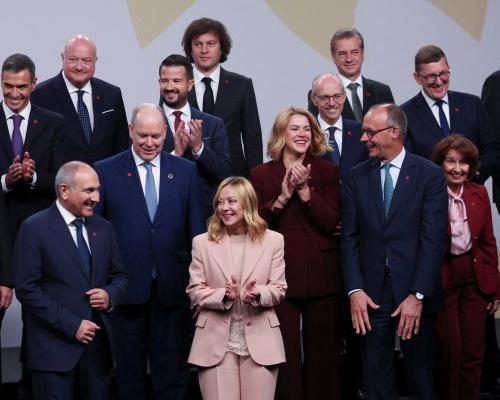
The European Union is ramping up its support for Armenia by dispatching a specialized team of experts to counter Russian propaganda and interference, marking a significant shift in the region's geopolitical dynamics. This initiative comes at a critical juncture for Armenia, which faces its first summit with EU leaders this Tuesday, following a major gathering of approximately 45 leaders at the European Political Community summit held in Yerevan. The EU's commitment to strengthening ties with Armenia comes as Russian influence wanes, particularly since the full-scale invasion of Ukraine, which has diverted Moscow's attention away from its neighboring countries.
EU Mission to Combat Foreign Interference
During the summit in Yerevan, Armenian Prime Minister Nikol Pashinyan will join EU leaders, including Ursula von der Leyen and António Costa, to formally endorse the establishment of an EU mission aimed at countering foreign interference. This mission is expected to deploy a team of 20 to 30 civilian experts for a two-year period, focusing on enhancing Armenia's capability to respond to Russian cyber-attacks, information manipulation, and illicit financial flows. The initiative is particularly timely, as Armenia prepares for parliamentary elections on June 7, which are crucial in determining the country's alignment between East and West. Originally reported by The Guardian.
In addition to the long-term mission, the EU's foreign service has announced the formation of a "hybrid rapid-response team" to address foreign interference ahead of these pivotal elections. EU foreign policy chief Kaja Kallas emphasized the urgency of the situation, stating, "Armenians are facing massive disinformation campaigns and cyber-attacks. When Armenians go to the polls in June, they alone should choose their country's future." This underscores the EU's commitment to ensuring that upcoming elections are free from external pressures.
A New Chapter in EU-Armenia Relations
The EU-Armenia summit is being hailed as a landmark event, marking a critical milestone in the relationship between Brussels and Yerevan. A senior EU official noted that it symbolizes Armenia's gradual geographical reorientation towards the West. This shift has been fueled by a growing disillusionment with Russia, particularly after Moscow's failure to provide military assistance during the conflicts in Nagorno-Karabakh in 2020 and 2023.
Since the 2018 Velvet Revolution, which emphasized democracy and the rule of law, Armenia has sought to redefine its foreign policy away from its traditional ally, Russia. Prime Minister Pashinyan has signaled an intention to adopt EU standards, and last year, Armenia's parliament passed a law expressing its desire to apply for EU membership. The EU is also engaged in discussions that could lead to visa-free travel for Armenians to the bloc for short stays, further solidifying this burgeoning partnership.
Challenges from Russia Amid EU Support
Despite this growing closeness with the EU, Armenia remains under significant pressure from Russia, which still plays a crucial role in its trade and security. Moscow has recently imposed restrictions on the sale of Armenian mineral water and cognac, recalling previous economic leverage tactics used against its neighbors. Russian President Vladimir Putin has warned Pashinyan that the future of affordable Russian gas supplies could be jeopardized if Armenia pursues deeper integration with the EU.
As Armenia navigates this complex landscape, the EU's support becomes increasingly vital. Members of the European Parliament have called for a robust international election observation mission and enhanced cybersecurity measures for electoral infrastructure. MEP Nathalie Loiseau, who helped draft a recent resolution, stated, "Faced with all those seeking to pressure Armenian voters, the country is looking to the European Union to help it hold free and fair elections." This sentiment reflects the broader hope that Armenia can move towards a more democratic and pro-Western future.
So, the EU's proactive approach to supporting Armenia amidst Russian interference represents a significant development in the geopolitical landscape of the region. As the June elections approach, the effectiveness of these EU initiatives will be closely monitored, with the potential to reshape Armenia's political alignments for years to come.
Originally reported by The Guardian. View original.