
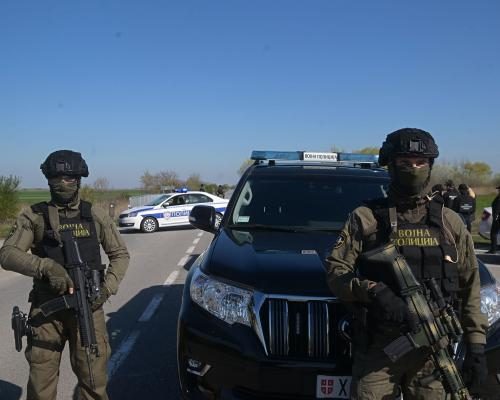
In a dramatic turn of events, Serbia has reported the discovery of powerful explosives near a pipeline that channels Russian natural gas to Hungary, raising alarms ahead of a crucial parliamentary election. The incident, occurring just a week before voters head to the polls, has led to accusations of a potential 'false flag' operation aimed at influencing the upcoming election.
Hungarian Prime Minister Viktor Orbán confirmed on Sunday that he had been informed by Serbian President Aleksandar Vučić about the explosives found near an extension of the TurkStream pipeline, which is vital for energy supplies across Central and Eastern Europe. The discovery reportedly includes two large packages of explosives with detonators, located in the northern Serbian municipality of Kanjiža, just a few hundred meters from the gas pipeline. Vučić described the situation as a significant threat to critical gas infrastructure that could have endangered many lives and caused substantial damage. Originally reported by The Guardian.
Opposition Claims of Manipulation
The timing of the incident has sparked fierce criticism from Hungary's leading opposition candidate, Péter Magyar. He accused Orbán's government of potentially orchestrating a 'false flag' operation to instill fear among voters. Magyar, representing the Tisza party, stated that he had received warnings about possible disruptions related to the gas pipeline, allegedly with Serbian and Russian involvement, just before Easter. He urged the government to refrain from spreading panic and asserted that the elections would proceed as planned, regardless of any disruptions.
"Hungarians have every reason to fear that the outgoing prime minister, following the advice of Russian agents, is attempting to instill fear in his own people through false-flag operations," Magyar stated on social media. His remarks reflect growing skepticism among the public regarding the government's narrative, especially considering that the incident unfolds as Orbán faces unprecedented challenges to his 16-year reign.
Political Ramifications and Security Concerns
The fallout from this discovery has reverberated through Hungary's political landscape. Orbán convened an emergency meeting of the defense council to address the situation and investigate the origins of the explosives. While he did not directly hold Ukraine responsible, his comments hinted at a broader narrative that links Ukraine to threats against Hungary's energy security. He stated, "Ukraine has been for years trying to cut off Europe from Russian energy."
This incident follows a series of accusations by Orbán against Ukraine, including claims that Kyiv is attempting to disrupt Hungary's energy systems. The Hungarian foreign minister, Péter Szijjártó, also pointed to Ukraine's recent actions, suggesting a connection between their alleged energy blockade and this latest explosive incident, though he stopped short of outright blaming Ukraine.
International Reactions and Speculations
Reactions from the international community and analysts have been swift. Mujtaba Rahman, managing director for Europe at Eurasia Group, described the situation as a potential setup designed to amplify fears of military action against Hungary, with Ukraine likely being scapegoated for any unrest. He noted that Brussels and EU capitals have been on alert for a possible false-flag operation by Orbán, who may be looking to leverage national security concerns to postpone the elections.
Ukraine's foreign ministry rejected any connection to the incident, asserting that it is likely a Russian false-flag operation aimed at meddling in Hungarian politics. This statement underscores the complex geopolitical dynamics at play, where accusations and counter-accusations can escalate tensions between nations.
Ákos Hadházy, a Hungarian independent MP and critic of Orbán, echoed similar sentiments, describing the news from Serbia as "completely transparent and pathetic." He suggested that despite the apparent manipulation, the government could still use this event to justify extreme measures ahead of the elections.
As Hungary gears up for the election, the implications of this incident remain unclear. Will it serve to galvanize support for Orbán's government or backfire, as voters become more skeptical of manipulation tactics? With the election looming, the political landscape in Hungary is charged, and the outcome remains uncertain.
Originally reported by The Guardian. View original.