
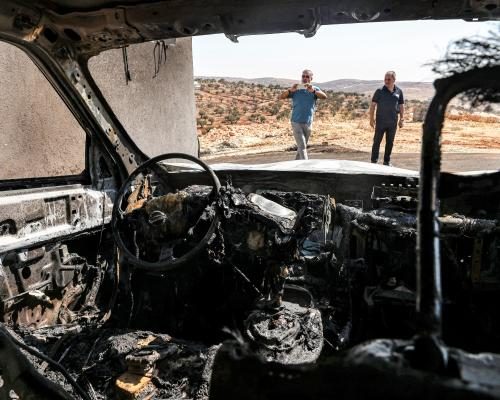
Taybeh, a small hilltop town in the West Bank, is one of the world's oldest Christian communities, yet it now finds itself under siege due to escalating attacks from Israeli settlers. The community, rooted in the ancient Greek name Ephraim, where Jesus sought refuge with his disciples, is currently fighting for its very existence amid a backdrop of historical resilience.
This town, known for its rich Christian heritage, has survived numerous challenges over centuries, including the Crusaders, the conquest by Saladin, the Ottoman Empire, and the British Empire. However, the inhabitants of Taybeh, which boasts a church built in the fifth century, express grave concerns about their future. Today, they are encircled by four substantial Israeli settlements, with numerous unofficial outposts established by messianic Jews, particularly the so-called "hilltop youth," who are known for harassing local Palestinian residents. Originally reported by The Guardian.
Pattern of Intimidation and Land Grabs
Local leaders and residents describe a relentless campaign of intimidation, which they say is part of a broader trend throughout the West Bank. Father Bashar Fawadleh, the parish priest of Christ the Redeemer church, articulated the struggles faced by Taybeh's residents: "First they kicked the Bedouin out in the last three years and put up their caravans and bring their cows and sheep." He elaborated on the settlers' actions, which have included driving livestock into the town's olive groves, crucial for the community's agricultural livelihood.
The ongoing land grabs have made it nearly impossible for Taybeh's residents to access their agricultural land. "For three years now, we have been forbidden to visit our land. We are forbidden from tending the olive trees," Fawadleh stated. The local community only feels somewhat secure to venture out when diplomats from the French and Italian consulates accompany them during the harvest season, a situation that underscores their precarious existence.
Escalating Violence and Tensions
In recent months, tensions have escalated significantly. Last July, settlers set fire to the grounds of the historic St. Peter's church, prompting outrage from local and international observers. Since then, organized groups of hilltop youth have reportedly raided Taybeh on multiple occasions, vandalizing property by setting fire to cars, slashing tires, and smashing windows. This pattern of violence culminated on March 19, when around 30 settlers took over a concrete factory and stone quarry on Taybeh's outskirts, raising the Israeli flag and holding prayers on site-an act perceived as a direct threat to the town's sovereignty.
As the Israeli government continues to pass measures that facilitate property purchases in the occupied West Bank, including Taybeh, fear among residents amplifies. This legislative environment could pave the way for further encroachment on their land. The community's unique identity as a wholly Christian town offers some protection, yet it also renders them even more vulnerable as they face increasing pressure to leave.
Declining Population and Community Support
Despite efforts from the church, which is part of the Latin Patriarchate of Jerusalem, to support small businesses and provide affordable housing, the community is witnessing a significant decline. Approximately 15 families have left Taybeh in the past two years, shrinking the population to about 1,100 residents. The exodus is primarily attributed to the increasing violence and intimidation from settlers.
Even international figures have highlighted the plight of Taybeh's Christians. After the attack on St. Peter's church, U.S. Ambassador Mike Huckabee condemned the incident as "an act of terror," calling for accountability. However, despite his condemnation, no prosecutions have been reported, and Huckabee has remained silent on subsequent attacks against Taybeh.
The ambassador's vocal support for Israel's territorial claims has drawn criticism from various quarters, including American Christians who feel that the treatment of Palestinian Christians is being overlooked. As the Christian population in the West Bank has dwindled from 5% in 1967 to roughly 1% today, the situation remains dire.
The rising religious nationalism in Israel, while primarily directed at Palestinian Muslims, has also led to an uptick in anti-Christian sentiment. The Religious Freedom Data Center (RFDC) has documented a concerning rise in such incidents, further complicating the already fragile existence of Taybeh's Christian community.
Originally reported by The Guardian. View original.