
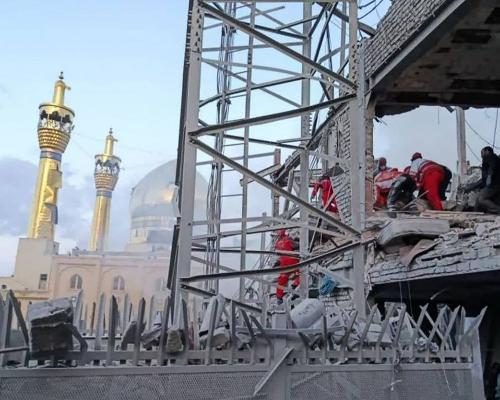
In a dramatic development, US President Donald Trump announced the successful rescue of the second pilot from an F-15 fighter jet downed over Iran on Friday. Confirming the operation on his Truth Social platform, Trump identified the rescued pilot as a colonel and highlighted the extensive efforts made by US forces to ensure his safe recovery.
"WE GOT HIM! My fellow Americans, over the past several hours, the United States Military pulled off one of the most daring Search and Rescue Operations in U.S. History, for one of our incredible Crew Member Officers, who also happens to be a highly respected Colonel, and who I am thrilled to let you know is now SAFE and SOUND!" Trump wrote. He added that the military had been monitoring the colonel's location around the clock, coordinating the operation that involved dozens of aircraft. Originally reported by The Guardian.
Details of the Rescue Operation
The operation marks a significant moment in the ongoing conflict, as it was the first instance of a US fighter jet being shot down over Iranian territory during the ongoing hostilities that began roughly five weeks ago. The first pilot was rescued shortly after the F-15E Strike Eagle was downed, making the successful retrieval of the second pilot a critical achievement for the US military.
US officials confirmed the rescue to Reuters, emphasizing the meticulous planning that went into the operation. Trump noted that throughout the operation, "not a single American" was killed, underscoring the precision of the military's efforts amid a volatile situation.
Escalating Tensions and Global Reactions
As the situation unfolds, the geopolitical ramifications of the conflict are becoming increasingly pronounced. Mohamed El-Baradei, former director of the International Atomic Energy Agency (IAEA), has publicly warned Gulf nations about the potential for further escalation. He stated, "Nothing can be done to stop this madness?" in response to Trump's aggressive posturing against Iran, which included a threat to unleash significant military action if a deal was not reached.
In a subsequent statement, Trump reiterated his stance, insisting that Iran must negotiate or face dire consequences. "Time is running out - 48 hours before all Hell will reign down on them," he declared, referencing the strategic strait of Hormuz, a vital route for global oil shipments that Iran has effectively blocked since the outbreak of hostilities.
Regional Impacts and Economic Concerns
The ongoing conflict has raised alarms regarding global energy security, particularly for nations reliant on shipments through the strait of Hormuz. South Korea's finance minister recently met with Gulf Cooperation Council envoys to discuss energy security and the safety of Korean vessels traversing the region. The ministry reported that Koo Yun-cheol sought assurances for a stable supply of critical resources, including oil and liquefied natural gas.
In a show of solidarity, the Gulf envoys labeled South Korea as a "top priority" nation, affirming their commitment to maintain communication to ensure a steady flow of essential supplies. The strait of Hormuz has historically facilitated approximately 20% of the world's oil shipments, making its stability paramount for economies across Asia.
Iran's Response to US Ultimatum
Iran's Leadership has dismissed Trump's ultimatum, with General Ali Abdollahi Aliabadi labeling it a "helpless, nervous, unbalanced and stupid action." He warned that the "gates of hell will open for you," echoing Trump's dramatic language. This back-and-forth highlights the escalating tensions and the potential for further conflict in the region.
In the latest developments, Iran reportedly launched missiles and drones targeting both Israel and Kuwait, prompting air defense systems in both nations to respond. The Iranian military's actions come in the wake of ongoing US-Israeli strikes, which have significantly impacted the geopolitical landscape.
As the situation remains fluid, the international community watches closely, aware that the ramifications of this conflict extend far beyond the immediate region. The delicate balance of power in the Middle East is increasingly at risk, with each new development raising the stakes for diplomatic negotiations and military engagements.
The ongoing crisis not only threatens regional stability but also poses risks to global economic health, particularly in energy markets. With both sides entrenched in their positions, the path forward remains uncertain.
Originally reported by The Guardian. View original.