
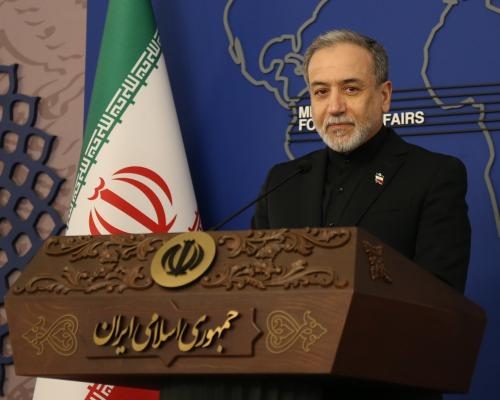
In a stark escalation of tensions, Iran's Foreign Minister Abbas Araghchi has accused certain Gulf states hosting US military forces of secretly encouraging attacks against Iran. His remarks come in response to reports suggesting that Saudi Crown Prince Mohammed bin Salman has been privately urging US President Donald Trump to intensify military action against Iran, despite publicly opposing such measures.
Allegations of Covert Support from Saudi Arabia
Araghchi's comments reflect deepening suspicions regarding Saudi Arabia's role in the ongoing conflict between the US and Iran. He specifically demanded clarity on claims that bin Salman has been in regular contact with Trump, advocating for continued strikes against Iranian forces. In a post on X (formerly Twitter), Araghchi stated, "Stances should be promptly clarified," emphasizing the humanitarian impact of the ongoing conflict, which he claims has resulted in the deaths of hundreds of Iranian civilians, including over 200 children. Originally reported by The Guardian.
The Iranian government has increasingly criticized what it perceives as a duplicitous stance from the Saudi leadership. The foreign minister's statements follow a series of US media reports indicating that bin Salman's public opposition to US military actions does not align with his private discussions with the Trump administration.
Calls for Solidarity Among Muslim Nations
Ali Larijani, secretary of Iran's Supreme National Security Council, has called upon Muslim nations in the Gulf region to reassess their positions regarding the conflict. He urged them to consider their alignment in the face of what he described as aggression against the Iranian people. Larijani stated, "Are we being asked to stand idly by while US bases in your countries are being used to attack us?" This rhetoric underscores Iran's portrayal of the hostilities as a struggle not just against the US, but against a coalition that includes Israel.
In his appeal, Larijani questioned why no Islamic nation has stood in solidarity with Iran, Highlighting a perceived betrayal among regional allies. His remarks serve to rally support for Iran, positioning the country as a defender of Islamic values against external threats.
Escalating Attacks and Military Posturing
As tensions rise, Iranian military operations have intensified. On Monday, Iran conducted drone strikes across multiple Gulf states, including Bahrain, Saudi Arabia, Qatar, and the United Arab Emirates. This marked one of the most extensive series of attacks since the conflict began, displaying Iran's growing military capabilities and willingness to project power in the region.
Additionally, Iranian officials have warned that the Strait of Hormuz, a crucial chokepoint for global oil shipments, will remain closed indefinitely to "enemies and those supporting their aggression." This statement signals Iran's readiness to leverage its strategic position in ongoing negotiations and military confrontations.
The appointment of Mohsen Rezaee, a hardliner and former commander of the Islamic Revolutionary Guards Corps (IRGC), as a military adviser to Supreme Leader Mojtaba Khamenei, further consolidates the IRGC's influence within Iran's military strategy. Rezaee has stated that there should be no ceasefire until US forces vacate their bases in the Middle East, indicating a hardline approach to US-Iran relations.
Impact of Bombardments on Iranian Civilians
The toll of the ongoing conflict has been devastating for Iranian civilians. Reports indicate that the death toll has approached 1,500, with neighborhoods in Tehran experiencing significant bombardments. The city's infrastructure has suffered under the assault, with electricity grids targeted and power outages reported across eastern Tehran. The mayor, Alireza Zakani, noted that the capital had faced approximately 13,000 separate attacks, accounting for more than half of the total assaults on Iran.
In response to these heightened hostilities, censorship within Iran has intensified, leading to widespread internet blackouts and restrictions on media outlets. This has severely limited the flow of information, complicating the public's understanding of the situation and the government's narrative.
Despite the tensions, Iran has permitted some foreign vessels to transit the Strait of Hormuz. Iranian Foreign Ministry spokesperson Esmail Baghaei confirmed that two Indian-flagged gas tankers were allowed passage after negotiations, though no comprehensive agreement has been reached regarding future transits.
As the situation continues to unfold, Iranian officials remain optimistic that international responses to US-led initiatives will bolster their position. The perceived disunity among US allies, particularly in Europe, is viewed by Iranian leaders as an opportunity to counteract American influence in the region.
Originally reported by The Guardian. View original.