
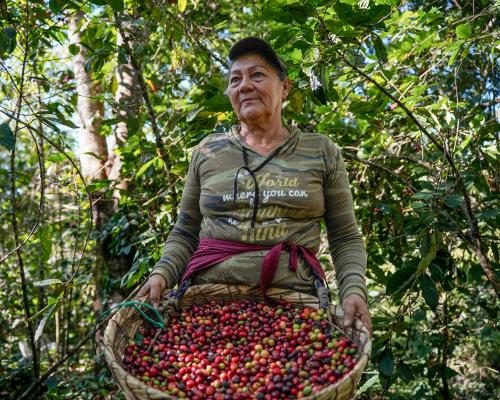
Amidst declining global coffee prices, small-scale growers in Central America are facing a daunting future. In El Salvador, Oscar Leiva watches as unpredictable rainfall disrupts traditional harvest patterns. This year's crop is not only lower in quality but also costlier to produce, reflecting a significant shift in the region's agricultural landscape.
Unpredictable Weather Patterns Threaten Coffee Harvests
Oscar Leiva stands on a hillside in western El Salvador, observing rainfall in December, a month that historically signified the beginning of the dry season. This year, however, the weather has taken a different turn. Flowering occurred prematurely, followed by a heatwave that left behind an uneven and subpar crop. For Leiva's family, coffee is more than just a product; it's a legacy intertwined with their history. His mother, Marina Marinero, recalls a time when the rains came reliably, allowing for precise planning of harvests. Today, the agricultural calendar feels obsolete. Originally reported by The Guardian.
Pruning, fertilizing, and labor hiring decisions now resemble educated guesses, with each misstep potentially resulting in financial ruin. Once a powerhouse in coffee production, El Salvador saw its output plummet from over 5 million quintales in the mid-1970s to struggling to reach 1 million quintales today. This decline stems from a confluence of factors, including climate change, economic pressures, and rural migration that has left many farms abandoned.
Market Dynamics and Financial Strain
The coffee sector in Central America is grappling with a dual crisis. On one hand, climate volatility disrupts harvests and diminishes quality, while on the other, market prices are plummeting. Rabobank forecasts that after a record high in 2025, Arabica bean prices could drop sharply due to increased production in Colombia and Brazil. As a result, many small farmers face an uphill battle as they manage rising production costs without adequate financial cushions to absorb losses.
Cecibel Romero, a researcher specializing in coffee production, emphasizes the intertwined nature of the climate and social crises impacting the sector. "There is a real climate crisis, but there is also a social crisis," she noted. Rising temperatures, erratic rainfall, and coffee rust disease have exposed the vulnerabilities of traditional production methods. When prices force producers to operate at subsistence levels, it becomes nearly impossible to invest in long-term resilience.
Honduran Coffee Producers Face Similar Challenges
In neighboring Honduras, the largest coffee producer in Central America, the situation echoes that of its Salvadoran counterpart. Juan Luis Hernández, a forest engineer with experience in environmental projects at the Honduran Coffee Institute, highlights the urgent need for adaptation. "Producers are being asked to adapt, but adaptation has a cost," Hernández stated. Effective adaptation measures, such as managing shade, restoring soil health, and monitoring diseases, require significant investment and resources, which are often scarce.
Gerardo Vásquez, a small coffee producer in Copán, manages an 8-hectare family farm and advises fellow growers. Despite his training and knowledge, he acknowledges that survival in this climate is uncertain. The cost to establish a single manzana (approximately 0.7 hectares) of coffee now amounts to about 200,000 lempiras (£5,600) over three years, with rising fertilizer prices and labor costs further squeezing profit margins. "When you add everything up," he explains, "you spend more than 3,000 lempiras (£83) just to get one quintal of parchment coffee."
Coping Mechanisms and the Future of Coffee Farming
The challenges don't stop there. Constant rain complicates drying processes, forcing some farmers to sell their coffee cherries directly from the field at much lower prices. Others are left to rely on intermediaries for cash advances, which limits their ability to negotiate better prices later. "The producer sells because he needs money that day," Vásquez said. While it offers immediate relief, it often results in merely recouping some of their expenses without realizing a profit.
Climate change is also altering the geography of coffee farming. Many farms below 1,000m altitude are becoming increasingly susceptible to heat stress, pests, and diseases, which further reduce yields and increase costs. In this challenging environment, the future of coffee farming in Central America remains uncertain.
As growers like Leiva and Vásquez navigate these complex issues, their resilience is tested daily. The fate of coffee farming in the region hangs in the balance, shaped by the dual forces of climate change and market dynamics.
Originally reported by The Guardian. View original.