
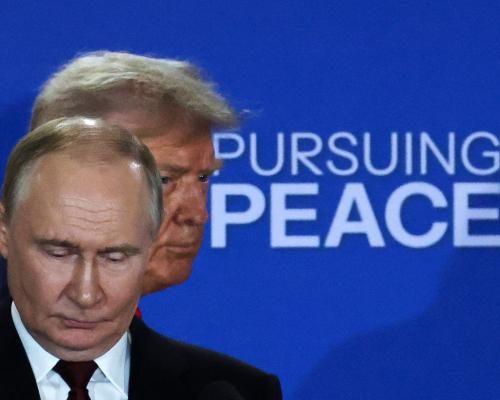
The ongoing military campaign by the United States and Israel against Iran has drawn notable comparisons to Russia's invasion of Ukraine, marked by shifting goals, ambiguous timelines, and questionable justifications. While the scale and nature of these conflicts differ, analysts point to striking similarities in rhetoric and strategic objectives.
Shifting Objectives: From Nuclear Threats to Regime Change
Initially, U.S. officials framed airstrikes against Iran as a response to the regime's pursuit of nuclear weapons. As tensions escalated, the narrative shifted to include aims like degrading Iran's missile capabilities and dismantling the military infrastructure that supports its regional proxies. Former President Donald Trump has escalated this discourse, calling for the overthrow of Iran's leadership and demanding Tehran's "unconditional surrender." Originally reported by The Guardian.
This evolution in objectives mirrors the Kremlin's shifting justifications for its invasion of Ukraine. When Russian troops crossed the border in February 2022, President Vladimir Putin claimed the mission was to "demilitarize and denazify" Ukraine, a goal interpreted by many as a push for regime change in Kyiv. Over time, as the conflict dragged on, the Kremlin began portraying the war as one focused on protecting Russian speakers in eastern Ukraine and securing annexed territories.
Language of Defense: Echoes from Both Fronts
Both U.S. and Israeli leaders have characterized their military actions against Iran as defensive. Defense Secretary Pete Hegseth stated, "We didn't start this war, but under President Trump, we are finishing it." This rhetoric echoes Putin's claim from early in the conflict: "We didn't start the so-called war in Ukraine. We are trying to finish it." Such language serves to frame their military interventions in a light that minimizes accountability and justifies ongoing actions.
Experts argue that these narratives often rely on dubious claims of imminent threats. Critics have noted that both administrations have hesitated to label their operations as acts of war. House Speaker Mike Johnson recently referred to the U.S. actions as a "limited operation," a phrase that recalls similar descriptions from the early days of the Ukraine conflict.
Expectations of Quick Success and Prolonged Conflict
Neither Putin nor Trump anticipated the extended nature of their respective conflicts. In 2022, Putin likely believed that his military campaign would swiftly replicate the rapid annexation of Crimea in 2014. Conversely, Trump entered the confrontation with Iran optimistic, buoyed by a successful operation that ousted Venezuelan President Nicolás Maduro earlier that year.
This underestimation of the complexities involved in military campaigns has had significant implications for both nations. As the Russian invasion of Ukraine has stretched into its fourth year, Putin still refrains from using the term "war," opting instead for the euphemism "special military operation." In Washington, some officials have echoed this reluctance to fully acknowledge the reality of war.
Potential Pitfalls: Learning from Ukraine's Experience
As the U.S.-Israel campaign against Iran develops, there are fears that it may mirror Russia's miscalculations in Ukraine. Reports indicate that Trump has entertained the idea of deploying elite troops to secure Iran's enriched uranium stockpiles. This recalls Russia's early attempts to seize key objectives with elite forces, which resulted in heavy losses.
Analysts like Danny Citrinowicz from the Atlantic Council warn that overly ambitious or unrealistic strategic goals can lead to a military campaign evolving into a war of attrition. He emphasizes the necessity for clear, realistic objectives that allow for measurable success and a definitive exit strategy. Without such clarity, the conflict risks dragging on indefinitely, potentially leading to greater regional instability.
As the U.S. and Israel navigate their military objectives in Iran, the parallels drawn from the conflict in Ukraine raise urgent questions about the efficacy and morality of their approach. The international community watches closely, aware that the lessons learned from one conflict could shape the course of another.
Originally reported by The Guardian. View original.