
As the war in Ukraine stretches into its fourth year, the Black Sea's fragile ecosystem faces unprecedented threats from military actions and environmental degradation. The Russian invasion has severely hindered scientific monitoring of the region, leaving experts like Dr. Jaroslav Slobodnik, director of the Environmental Institute in Slovakia, deeply concerned about the fate of the Black Sea and its biodiversity.
Impact of Warfare on Marine Life
The scientific vessel Boris Alexander, docked in the harbors of Odesa, is currently unable to assess the damage it has sustained from Russian drones and shelling. "We can only wait," says Dr. Slobodnik, highlighting the dangerous conditions that prevent comprehensive research. He notes that the biodiversity of the Black Sea is fundamentally altered, with several species seemingly disappearing due to the ongoing conflict. The war has made it nearly impossible to collect crucial data on marine life, which is essential for understanding the full extent of the ecological crisis. Originally reported by The Guardian.
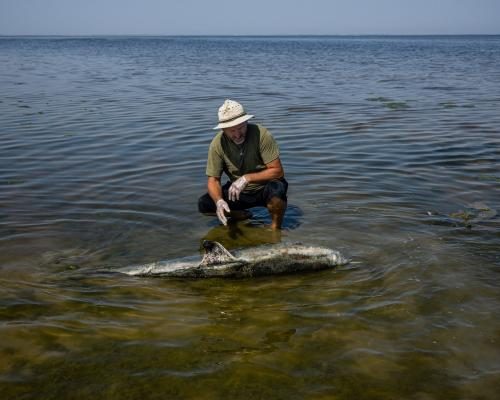
Historically, three species of dolphins thrived in the Black Sea. However, since the onset of hostilities, carcasses of poisoned dolphins have been regularly found along Ukraine's 1,729-mile coastline. In the first year of the invasion, about 125 dolphin deaths were recorded, and last year, scientists documented 49 carcasses. Dr. Slobodnik attributes these fatalities not only to oil spills and munitions but also to the acoustic disturbances caused by military sonar, which is particularly intense around the Kerch Bridge and Russian-held territories.
Pollution and Toxicity Issues
The catastrophic effects of warfare on the Black Sea were magnified by the Kakhovka dam disaster in June 2023, which was attributed to Russian sabotage. The dam's collapse resulted in extensive flooding and pollution, releasing heavy metals and toxic waste into the Black Sea. Describing it as "a toxic punch to the face of the Black Sea," Dr. Slobodnik emphasizes that the dam's destruction has compounded existing environmental issues, jeopardizing the region's ecological balance.
Before the war, Ukraine had made significant strides towards meeting EU environmental standards. In 2020, the nation proudly declared that the Black Sea was "alive" again, thanks to years of efforts to reduce pollution. Dr. Slobodnik recalls a time when the ecosystem was rebounding, thanks to decreased industrial waste and improved water quality. "It is such a unique ecosystem. I have spent most of my life watching life come back to the Black Sea," he lamented. Now, however, the war has radically changed and damaged this once-thriving aquatic environment.
Challenges in Environmental Monitoring
Viktor Komorin, a marine scientist at the Ukrainian Scientific Centre of Ecology of the Sea (UkrSCES), echoes Dr. Slobodnik's concerns, stating that the war poses irreversible risks to the Black Sea's delicate ecosystem. Notably, 82% of the sea's volume contains hydrogen sulfide, making it particularly vulnerable to climate change and organic pollution. The surface water is the only area that is oxygenated, which raises alarms about the overall health of marine life.
Despite the urgent need for research and monitoring, the damaged Boris Alexander remains docked, as deploying it would pose significant risks due to the presence of unexploded ordnance and other dangerous materials in the sea. Komorin emphasizes the difficulty of collecting reliable data in a war zone, where fewer personnel are available to report dolphin strandings and other environmental concerns.
Future of the Black Sea Ecosystem
The ongoing conflict and its repercussions on the Black Sea's ecosystem have left scientists in a state of uncertainty. Dr. Slobodnik and Komorin continue to compile a unique database of environmental DNA to gain insights into the impact of the war. However, without the ability to conduct on-site research, much remains unknown.
As the situation unfolds, the Black Sea teeters on the edge of a tipping point, with its health compromised by warfare. The ecological repercussions of the conflict could be felt for generations, raising concerns not just for local wildlife but also for the broader environmental landscape. With scientists like Dr. Slobodnik and Komorin waiting for safer conditions to gather data, the future of the Black Sea remains uncertain, and the fate of its delicate ecosystem hangs in the balance.
Originally reported by The Guardian. View original.