
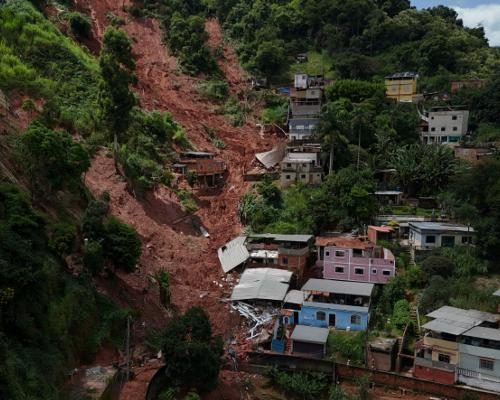
The recent catastrophic floods in Brazil's coffee-producing region of Minas Gerais have devastated communities, with scientists warning that such disasters will become more common unless fossil fuel reliance is curtailed. Over the past month, the state has witnessed extreme weather, resulting in landslides and extensive property damage. Tragically, many residents have lost their lives, while thousands have been forced to evacuate as roads transformed into torrents.
Record Rainfall and Its Consequences
Minas Gerais, a vital hub for the coffee industry, particularly in arabica beans, recorded its wettest February on record. The city of Juiz de Fora was particularly hard hit, receiving over 750mm of rainfall-three times the expected amount for the month. This deluge surpasses the previous record of 456mm set in 1988 by 65%. According to a recent analysis by the World Weather Attribution group, this extreme weather is linked to broader climate trends exacerbated by human activities. Originally reported by The Guardian.
The heavy rainfall has caused multiple landslides, with dozens of residents buried alive and many others swept away in the chaos. The impact has been devastating, with emergency services stretched thin and thousands forced to seek refuge in temporary shelters. The analysis indicates that if current fossil fuel consumption continues, the intensity of such rainfall events could escalate further.
The Human Factor: Inequality and Urban Planning
While climate change is a significant driver of these extreme weather events, researchers highlighted that socioeconomic factors also play a crucial role. The World Weather Attribution group pointed out that inadequate urban planning and the vulnerability of impoverished communities contribute to the tragic outcomes of these disasters. Many residents in Minas Gerais live in precarious conditions on steep, deforested hillsides, lacking proper drainage systems to manage heavy rainfall.
Juiz de Fora ranks among the riskiest cities in Brazil, with a high percentage of its population residing in danger zones. As the climate crisis looms larger, the need for improved urban infrastructure and more effective disaster response systems has never been more evident. Experts emphasize that local authorities must prioritize building shelters and enhancing early-warning systems to protect at-risk communities.
Global Implications for Coffee Prices
The economic fallout from these floods extends beyond Brazil's borders, with potential repercussions for coffee prices worldwide. Minas Gerais is known for its production of arabica coffee beans, and the recent extreme weather has already led to a 15-20% reduction in harvests in previous years, driving prices upward. Analysts had hoped for a return to normal output this year, but the recent rains have hindered recovery efforts and contributed to the spread of diseases affecting coffee plants.
As a result, consumers around the globe may soon face even higher prices for coffee products. British climate experts have noted that the cost of ground coffee in the UK has increased by about 25% over the last five years, primarily due to weather-related issues affecting harvests in Brazil and Vietnam, the two largest coffee suppliers. This price surge illustrates how climate change is impacting food costs far beyond the regions directly affected by natural disasters.
The Call for Urgent Action
Experts are calling for immediate action to mitigate the effects of climate change and prevent future disasters. Friederike Otto, a professor of climate science at Imperial College London, emphasized the urgency of phasing out fossil fuels, stating, "We must fight to ensure that record-shattering months, like the one Juiz de Fora just endured, don't become the norm." She highlighted the necessity of preventing every fraction of a degree of additional warming, as each delay in action increases the risks associated with extreme weather events.
Regina R Rodrigues, a professor at the Federal University of Santa Catarina, also stressed the importance of addressing these vulnerabilities as the planet continues to heat. She noted that the scale of the tragedy in Minas Gerais reveals the pressing need for Brazil's leaders to ensure that communities are not living in harm's way as climate-related events become more frequent.
The path forward involves not only addressing fossil fuel consumption but also implementing robust urban planning and disaster preparedness strategies. As the world grapples with the realities of climate change, the recent floods in Brazil serve as a stark reminder of the urgent need for collective action.
Originally reported by The Guardian. View original.