
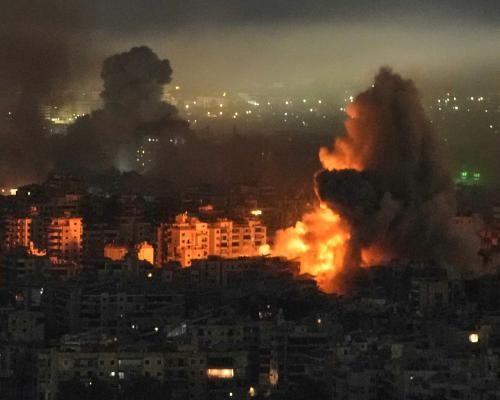
Israeli warplanes unleashed a barrage of airstrikes on Beirut's southern suburbs and southern Lebanon late Wednesday, marking a significant escalation in the ongoing conflict with Hezbollah. This assault follows a series of aggressive drone and rocket attacks launched by Hezbollah at northern Israel, injuring at least two individuals and highlighting the deepening tensions in the region.
Hezbollah's Bold Offensive Against Israel
Hezbollah initiated the latest wave of hostilities by firing volleys of rockets and deploying drones aimed at Israeli targets on Wednesday night. While most of these projectiles were intercepted by Israel's defense systems or fell harmlessly into unpopulated areas, the assault nevertheless injured two people, prompting an immediate Israeli response. The Iranian Revolutionary Guards later claimed responsibility for some of the strikes in coordination with Hezbollah, indicating a troubling new level of cooperation between the two forces. Originally reported by The Guardian.
In a statement reported by the Fars and Tasnim news agencies, the Revolutionary Guards described the operation as a "joint and integrated operation" that targeted over 50 locations throughout Israeli territory, including military installations in Haifa, Tel Aviv, and Beersheba. Dubbed "Operation Chewed Wheat," the offensive represents Hezbollah's most intense military activity since the conflict reignited ten days ago, following a prolonged period of relative quiet.
Israel's Retaliatory Airstrikes Intensify
In quick succession, Israeli warplanes retaliated with their heaviest bombardment yet of southern Beirut and its suburbs. The skies over the Lebanese capital were illuminated as airstrikes rocked the city, causing widespread panic and destruction. Reports emerged of collapsed buildings and streets filled with smoke and debris, underscoring the severity of Israel's military response.
Among the targets hit was the neighborhood of Ramlet al-Baida in central Beirut, where an airstrike claimed the lives of at least two individuals, according to local media. The Lebanese health ministry reported that at least 17 were injured in the strikes affecting the southern suburbs, with the number of casualties likely to rise as more information comes in from the affected areas.
As the situation deteriorated, Israel's military spokesperson confirmed that strikes were aimed at dismantling Hezbollah's missile launchers. Residents in southern Lebanon were warned to evacuate immediately, reflecting the gravity of the Israeli military's intentions as it vowed to act with "overwhelming force" against Hezbollah.
Rising Casualties and Displacement in Lebanon
In less than ten days of renewed conflict, Israeli airstrikes have reportedly killed at least 634 people and injured 1,586, with a staggering 816,700 families displaced in Lebanon. The ongoing violence has prompted significant humanitarian concerns, as many families have been forced to seek shelter in precarious conditions, including makeshift accommodations along the Beirut corniche.
The rapid escalation of the conflict and the resulting displacement orders have left many Lebanese citizens in dire situations. Aid organizations are struggling to keep pace with the growing needs of those affected by the violence, with many residents enduring multiple strikes in a matter of days.
Strategic Military Movements and Future Implications
Israeli officials are signaling a potential expansion of military operations against Hezbollah. A security cabinet meeting was convened Wednesday night to discuss strategies aimed at neutralizing the group's capability to launch further rocket attacks. Following this, the Israeli military ordered the redeployment of the Golani Brigade, a unit known for offensive ground operations, to bolster defenses along the northern border with Lebanon.
This strategic move raises concerns about a possible full-scale ground invasion as Hezbollah braced itself for intensified confrontations. Reports indicate that Hezbollah fighters have been engaged in skirmishes with Israeli troops at key locations in southern Lebanon, particularly around strategic high ground in the eastern regions. The group's elite Radwan force has reportedly been conducting ambush operations against Israeli incursions, indicating a heightened state of readiness.
The ongoing conflict represents a significant moment in the broader regional tensions, as both sides prepare for an uncertain future. With Israel's airstrikes continuing to escalate, and Hezbollah's resolve seemingly unyielding, the potential for further violence looms large across the border.
Originally reported by The Guardian. View original.