
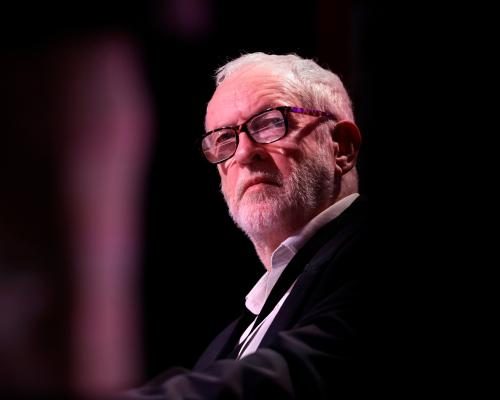
Former Labour leader Jeremy Corbyn has opened up about the harrowing experience of being the target of a coup within his own party. In a candid interview, Corbyn shared his feelings of betrayal and personal devastation, recalling the events that unfolded during the intense summer of 2016. With a wave of resignations from key allies, Corbyn found himself facing a hostile Parliamentary Labour Party that sought to oust him from his leadership position.
"Yeah, I do feel [sorry for him]," Corbyn said, referring to current Labour leader Keir Starmer, who has recently faced his own struggles within the party. "On a personal level it must be devastating. It is a horrible feeling. You suddenly realize that this person doesn't trust you at all and really doesn't wish you well at all, and you suddenly realize that any trust that was there actually disappears." Originally reported by The Guardian.
Corbyn's Leadership Crisis Begins
Corbyn's ordeal as Labour leader began on June 25, 2016, shortly after the UK voted to leave the European Union. Reports surfaced that Hilary Benn, his shadow foreign secretary, was orchestrating a mass resignation from the shadow cabinet. "That was the one that was rather rapidly brought to my attention," Corbyn recalled. He attempted to contact Benn and finally reached him at 1 a.m. "I said, this story in the Observer, is it true?" Benn confirmed the reports, prompting Corbyn to declare his position untenable. "So I said: 'That makes your position absolutely untenable, that's the end of it,'" Corbyn said.
As the news spread, Corbyn received resignations throughout the day, with a staggering total of 21 members leaving his shadow cabinet. "I was sort of ticking them off," he said, reflecting on the absurdity of the situation. "Some were blunt and rude, some pleasant. In the afternoon, I went to the allotment. I got a few resignations in the allotment. I wrote them down and made notes at home: so I could call them the potato rebel, the beetroot rebel."
A Chaotic Parliamentary Meeting
The following Monday, Corbyn faced a parliamentary Labour Party meeting that he described as "very rough, horrendous really." He recounted, "Basically, an hour of abuse thrown at me. 'You should get out of the way, you brought all this on us, you brought all this on yourself.' It was all personal and very, very abusive." Despite the barrage of criticism, Corbyn remained resolute, stating, "I was not going to budge."
The meeting culminated in a motion of no confidence against him, which passed with a vote of 172 to 40. Corbyn took the piece of paper bearing the result, folded it, and put it away in his drawer. Although the rejection was overwhelming, he believed it was essential to stand firm. "It is [overwhelming]. You think, 'Wow this is a big deal,'" he reflected.
Support Amidst the Crisis
Throughout this tumultuous period, Corbyn found strength in the unwavering support of his family. He highlighted the important role his wife, Laura Alvarez, played during the crisis. "She is from Mexico and she thinks Britain is more corrupt than Mexico - in Mexico it is just more obvious," Corbyn said. "She was really angry about the whole thing, really wound up by it. Absolute total support, as with my sons, and all of the wider family."
Corbyn also noted the encouragement he received from trade union leader Len McCluskey, who described the situation as a coup against them all. "There is only one way to go, that's fight it," Corbyn remembered McCluskey saying. Despite the intense pressure, Corbyn ultimately defeated challenger Owen Smith in a leadership contest, winning 61.8% to 38.2% of the membership vote.
Amidst the chaos, mass support for Corbyn became evident as thousands of supporters gathered outside the gates of Westminster Palace to rally behind him. In contrast, Starmer, who has faced recent challenges of his own, delivered a speech intended to unite the party but instead fueled dissent among his critics.
As Corbyn reflects on his experiences, he hints at the lessons learned for current leaders. "There's a temptation [to go into the bunker] because you're always full of advisers, and sometimes the advice is contradictory," he said, suggesting that visibility and communication are crucial in navigating political turbulence.
Originally reported by The Guardian. View original.