
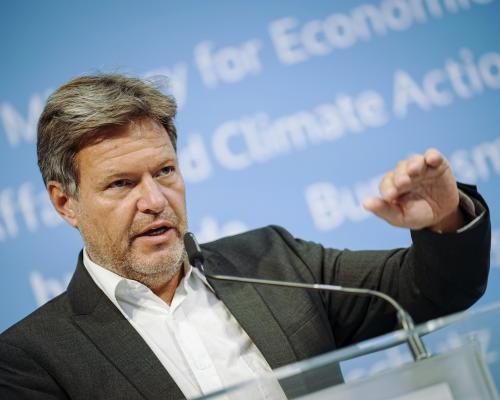
In a stark warning, Robert Habeck, Germany's former economy minister, cautioned that the political landscape has transformed dramatically since Donald Trump's return to the White House. He claims that the initial weaponization of energy in the wake of Russia's invasion of Ukraine has evolved into a broader trend of 'weaponising everything,' a shift that poses significant risks to global stability.
Energy as a Political Tool
Habeck, a member of the Green party, was instrumental in navigating Germany through an energy crisis marked by soaring prices and supply uncertainties. He argued that the misguided belief that gas would never be used as a political weapon led Germany into a precarious dependence on Russia. The construction of the Nord Stream pipelines and the sale of strategic gas reserves to Gazprom were critical missteps that weakened Germany's energy security. As Habeck noted, 'From weaponising energy - bad enough - to weaponising everything, this is the lesson I hope everyone has learned.' Originally reported by The Guardian.
The geopolitical landscape shifted further with Trump's re-election, which Habeck described as a 'second security shock' that has dramatic and far-reaching consequences. This includes the use of tariffs and technology as instruments of political leverage. The ramifications of these developments are especially pronounced as Europe grapples with a looming energy crisis, exacerbated by recent military actions involving the US and Israel against Iran.
Current Energy Crisis and Market Reactions
The situation has intensified following attacks on Iran in February, which triggered retaliatory strikes that closed the Strait of Hormuz. This vital waterway is responsible for the transit of approximately 20% of the world's oil and liquefied natural gas (LNG), leading to significant price spikes. In light of these developments, there are increasing calls in Europe for a faster transition to local clean energy alternatives. Many critics argue that the continent should have accelerated its move away from foreign fuels to bolster energy independence.
Habeck recalled the urgency he felt while scrambling to build LNG terminals and secure alternative gas supplies after the Russian invasion of Ukraine. He admitted to experiencing 'sleepless nights' worrying about the potential need to shut down factories if gas supplies ran dry. 'The gas prices now in Germany might be high,' he reflected, 'but that time there was a real threat that we don't have any gas at all.'
Debates Over Nuclear Energy and Economic Implications
Amid these crises, Habeck faced scrutiny over his decision to delay the shutdown of Germany's last nuclear power plants in 2022. Critics, particularly from the opposition Christian Democrats, argued that the economy ministry should have conducted a more comprehensive review of nuclear energy's role in Germany's energy landscape. A parliamentary inquiry last year failed to yield a definitive conclusion on the matter.
'I personally wouldn't have had any problems using [the reactors] for some years longer, if that would have been the end,' Habeck said. He expressed concerns that some opposition parties were using the nuclear debate as a 'Trojan horse' to reopen discussions on the phaseout law, potentially jeopardizing the burgeoning market for renewable energy. In 2022, renewables accounted for 60% of Germany's electricity production, with coal and gas making up the remainder.
Challenges in the Renewable Transition
While the war in Ukraine spurred the EU to expedite the permitting processes for wind and solar energy projects, analysts argue that efforts to reduce energy demand and waste have been sluggish. Germany implemented several short-term measures to conserve gas, including lowering thermostat settings in public buildings to 18°C. However, these policies, labeled 'Habeck's heating hammer' by aggressive media campaigns, have faced public ridicule.
Despite these challenges, Habeck believes that the resistance to clean heating technologies, like heat pumps, has hindered progress. He acknowledged that his narrow focus on preventing gas shortages led him to overlook the public's frustration with rising inflation and governmental intrusions into daily life. Furthermore, he noted the pushback from gas company executives, who, despite recognizing the urgency of climate change, remain bound by their corporate interests.
As the political landscape continues to evolve and the Greens faced electoral setbacks, Habeck's reflections on Germany's energy strategy and the broader implications of political weaponization serve as a cautionary tale for future governance.
Originally reported by The Guardian. View original.