
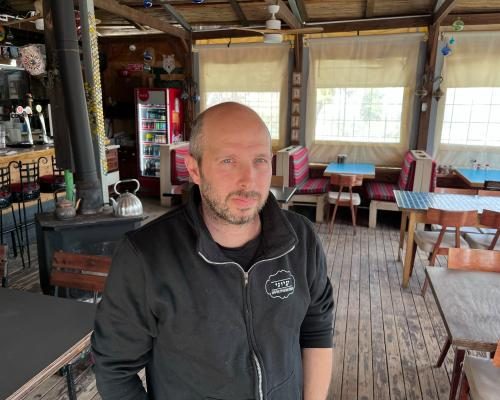
Residents of Metula, the northernmost town in Israel, are grappling with the aftermath of a challenging night marked by air raid sirens and missile interceptions from Hezbollah, a militant group based in Lebanon. As military officials declared a temporary lull in attacks, the community is trying to maintain a semblance of normalcy despite the ongoing conflict.
Challenging Circumstances and Community Resilience
On Thursday morning, locals at the Bela café in Metula shared their experiences of the previous night, which they described as "difficult." Although the sirens had ceased just hours before, the atmosphere remained tense, with military aircraft flying overhead and the sound of missile interceptions echoing in the distance. Miry Menashe, the co-owner of the café, emphasized the importance of keeping the establishment open during these trying times. "The people of Metula don't run away from rockets," she stated. "We want to keep a bit of sanity for us, for the residents, for our soldiers." Menashe, 41, noted that soldiers frequently visit the café, seeking a place to unwind amid the chaos. Originally reported by The Guardian.
Residents like Shragan Shatil, 77, who has lived in Metula for 29 years, expressed their frustrations. "Last night was tough. The last days have been the toughest. It was very bad," he said, reflecting on the constant tension. Shatil believes the conflict will persist until external influences decide its fate, stating, "It will end only when Mr. Trump decides." Despite the hardships, the community strives to navigate life under the shadow of conflict.
Hezbollah's Escalating Attacks and Israeli Response
The situation escalated dramatically as Israeli military officials reported that Hezbollah launched approximately 200 rockets and missiles in a single attack, coinciding with a barrage of missiles from Iran. This coordinated assault marked a significant increase in hostilities, with Hezbollah labeling it "Operation Chewed Wheat," a reference to a Quranic verse about defeating enemies. While there were no fatalities from the recent attacks, the damages to property were extensive, adding to the toll of the ongoing war.
In response, Israeli forces retaliated with airstrikes targeting multiple locations in southern Lebanon, including the suburbs of Beirut. The conflict has had severe humanitarian consequences, with at least 634 people reported killed in Lebanon due to Israeli strikes, and over 1,586 injured. Nearly one million people have been displaced as a result of the escalating violence, raising concerns about the long-term impact on both sides.
Calls for a Stronger Military Offensive
In the face of ongoing threats from Hezbollah, many residents of northern Israel are urging the government to take decisive action. Yaakov Selavan, deputy mayor of the Golan regional council, articulated a sentiment shared by many in the region. He stated that residents expect the military to "finish the job [with Hezbollah] once and for all" and suggested that forces should advance as far north as the Litani River, approximately 20 miles (30 km) into Lebanon.
This push for a stronger military stance is fueled by the fear and uncertainty that have gripped northern Israel since the onset of this conflict. Following the deadly Hamas raid into southern Israel earlier this month, the Israeli government has faced increasing pressure to neutralize the threats posed by Hezbollah and Iran. Daniel Dorfman, a local restaurant owner, expressed a similar sentiment, insisting that Hezbollah must be disarmed. "I don't know how. Clearly the Lebanese government don't have the power to do it," he said, emphasizing the need for action against what he described as the "head of the octopus" of terrorism in the region.
Impact on Local Economy and Daily Life
The ongoing conflict has severely impacted the local economy, particularly in northern Israel, where many communities were just beginning to recover from previous rounds of fighting and the COVID-19 pandemic. Selavan highlighted that businesses are struggling, stating, "The economy is frozen. We are dependent on tourism. It was just coming back before the war, even international tourism. Now that has gone." The rising tensions have forced many residents to evacuate, further straining the already fragile economic conditions.
As the situation continues to unfold, the people of Metula and surrounding areas remain resilient. They hold on to hope for a return to normalcy, even as the threat of conflict looms large. Life in this northern town is a testament to the enduring spirit of its residents, who refuse to be defined by the violence surrounding them.
Originally reported by The Guardian. View original.