
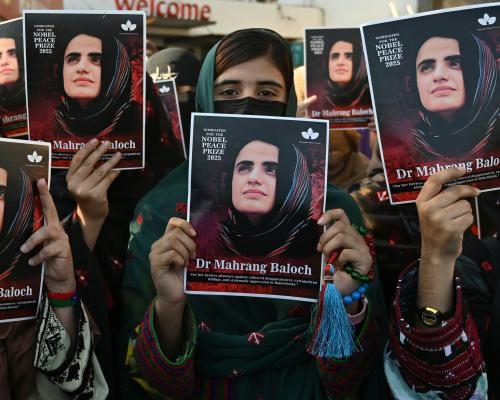
As the clock strikes 9 PM, a solitary figure sits in a cramped cell in Central Jail Huda, Quetta, reflecting on a year spent in isolation. This is the reality for a Baloch activist, now 30, who has dedicated her life to advocating for the rights of the Baloch people amid relentless government oppression. She shares her experience of confinement, the emotional toll of isolation, and the ongoing struggle for justice in a region plagued by human rights violations.
Life in Solitary Confinement
For a year, the activist, a prominent member of the Baloch Yakjehti Committee (BYC), has endured the harsh conditions of solitary confinement, marked by an absence of human contact and minimal resources. "The silence has a weight to it, something that presses in on you the longer you sit with it," she writes, describing her 20-square-metre cell, which is sparsely furnished with just a cot and a commode. The government's fear of her political influence is palpable, as she and two other activists are isolated from other prisoners. In a system designed to break spirits, these measures only strengthen her resolve. Originally reported by The Guardian.
Initially, she managed to maintain her sanity through books and political studies, but a severe back condition has limited her physical activity. Diagnosed with a slipped disc and radiculopathy after being hospitalized in February, she is forced to confront the physical ramifications of her confinement. Despite these challenges, she adheres to a strict routine to keep a semblance of normalcy and connection to the outside world.
The Cost of Activism
While she battles her own confinement, the activist Grapples with the relentless targeting of her family. "My cousin Salal Baloch was forcibly disappeared," she recalls, highlighting the pervasive threat faced by those who speak out against injustice in Balochistan. Tragically, her 19-year-old cousin, Saifullah Baloch, was also abducted in March, leaving the family in a state of despair. Her brother lives under constant surveillance, facing harassment from the counter-terrorism department, while her sister's advocacy for their release has resulted in charges against her.
These experiences serve as grim reminders that their struggle is not just personal but indicative of a broader, systemic issue affecting the Baloch population. Each enforced disappearance and instance of state violence reinforces her belief in the necessity of their fight for justice and equality.
Resistance Amid Oppression
The activist reflects on how the state's repression has, paradoxically, solidified their determination. "I know our detention is a punishment for demanding our rights. It has strengthened my resolve and confirmed the justice of our cause," she asserts. Despite the brutality faced by fellow activists-such as Beebow Baloch, who was beaten during a transfer-none have surrendered their principles. Instead, they draw strength from their commitment to peaceful resistance, firmly rooted in the belief that justice can only emerge from nonviolent action.
On the night of their arrest, police violence claimed the lives of a peaceful activist and two bystanders, illustrating the risks inherent in their advocacy. Such events underscore the urgent need for awareness surrounding the ongoing atrocities in Balochistan, where enforced disappearances and extrajudicial killings have become tragically commonplace.
A Call for Global Awareness
As the BYC documents over 1,200 cases of enforced disappearances in just 2025 alone, the activist stresses the importance of global attention on the situation. She argues that conflating peaceful movements with armed groups is a tactic intended to undermine legitimate demands for rights. "When a state turns its power against human rights groups and peaceful political actors, it reveals not strength, but weakness," she believes. This sentiment fuels her conviction that their peaceful protests are essential for the future of Balochistan, where nonviolent political engagement should thrive within the framework of democracy.
Despite the hardships, her faith in the resilience of the Baloch people remains unshaken. The struggle for justice is far from over. She recognizes that her purpose is not only to seek justice for herself but to advocate for the prosperity and dignity of all Baloch families. The fight continues, driven by a collective spirit that refuses to be silenced.
Originally reported by The Guardian. View original.