
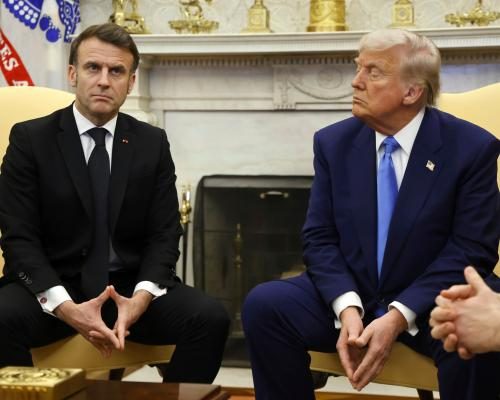
Donald Trump has launched a scathing attack on European nations, particularly the United Kingdom and France, for their refusal to participate in military actions against Iran. His comments come as tensions escalate over the ongoing conflict, which has dramatically impacted global oil prices and transatlantic relations.
On his Truth Social platform, the former president directed his ire at governments concerned about rising fuel costs, urging them to 'go get your own oil' from the Gulf, a statement that has led to further spikes in oil prices. Trump's remarks reflect broader frustrations within the U.S. administration regarding Europe's hesitancy to engage in military operations, even as the conflict continues to wreak havoc on the global economy. Originally reported by The Guardian.
Europe's Growing Resistance to U.S. Military Actions
Recent developments suggest a shift in Europe's approach to the conflict. France has taken a stand by blocking Israeli aircraft carrying military supplies from traversing its airspace, while Italy denied U.S. bombers permission to land in Sicily. Spain has already refused to allow U.S. access to its military bases and airspace, with Spanish Defence Minister Margarita Robles stating that the U.S. and Israel cannot dictate terms without the support of their allies.
Trump's criticism of France was particularly pointed, as he noted that the country has been 'VERY UNHELPFUL' in the conflict. This sentiment was echoed by U.S. Secretary of Defense Pete Hegseth, who reiterated the need for countries to prepare to secure vital waterways like the Strait of Hormuz, although experts regard such plans as risky and impractical. The strait is a crucial chokepoint for global oil shipments, and any attempts to control it could lead to severe international repercussions.
Impact on Global Oil Markets and Domestic Concerns
The fallout from the conflict has been felt globally, with oil prices surging as the situation escalates. Average U.S. gas prices have now exceeded $4 per gallon for the first time in four years, and the Irish Taoiseach, Micheál Martin, has labeled the current oil supply shock as 'probably the worst ever.' As these economic pressures mount, Trump faces the possibility of domestic backlash for his handling of the situation.
Negotiations with Iran have not yielded the desired results, as Tehran's leadership appears resolute in its stance. Iranian President Masoud Pezeshkian stated that Iran possesses the 'necessary will' to conclude the conflict, provided that certain guarantees are established to prevent its recurrence. Amid this backdrop, military actions continue, with reports of blasts in Riyadh and attacks on oil tankers in the Persian Gulf, highlighting the escalating violence.
Escalation of Military Actions and Humanitarian Concerns
As the conflict intensifies, Israel has expanded its military operations in Lebanon, signaling plans for a more permanent presence in the region. Israeli Defense Minister Israel Katz announced that the military intends to occupy significant portions of southern Lebanon, extending control up to the Litani River, approximately 30 kilometers (20 miles) into Lebanese territory. This move raises concerns about the humanitarian impact on local populations, as Katz indicated that they would block the return of Lebanese residents to their homes.
The international community is grappling with the implications of U.S. and Israeli military strategies, especially as accusations of war crimes loom over potential attacks on civilian infrastructure. With the death toll rising above 3,000, the focus is shifting to the broader economic ramifications of the conflict, particularly for nations already struggling with inflation and cost-of-living crises.
Trump's warnings about the need for decisive action have added to the urgency, as he stated that if a ceasefire isn't reached 'shortly,' the U.S. would consider expanding its military offensive, which could include targeting Iran's power stations and freshwater facilities. Such actions have been deemed likely violations of international law, further complicating the situation.
With European nations now taking more assertive stances against U.S. military actions, the dynamics of international relations are shifting. The ongoing conflict poses significant challenges for global stability, and as oil prices continue to rise, the repercussions are likely to be felt far beyond the immediate region.Originally reported by The Guardian. View original.