
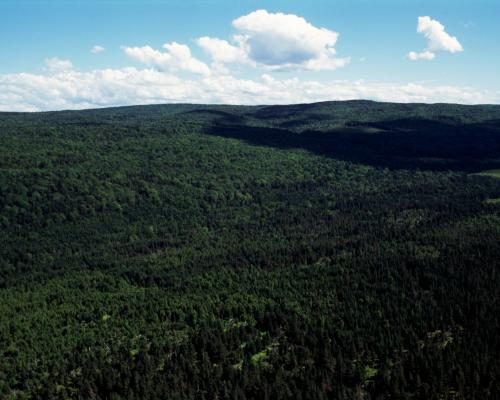
In a landmark ruling, a Nova Scotia judge has deemed the provincial government's ban on accessing wooded areas during last summer's wildfires unconstitutional. The ban, which imposed a staggering C$25,000 fine for violations, was criticized for its vague definitions of what constituted 'the woods.' Justice Jamie Campbell's decision emphasizes the importance of individual rights, even in emergencies, stating that the order defied commonsense.
Background of the Ban Amid Wildfire Crisis
Last summer, Nova Scotia faced one of its worst wildfire seasons on record. As flames engulfed vast areas, Premier Tim Houston addressed the public with an urgent plea: stay away from the woods. What began as a request quickly escalated into a strict prohibition, where any resident hiking in the forest could face a fine exceeding C$25,000, a figure that eclipses half the average annual salary in the province. While the intent behind this ban was to safeguard lives and property, confusion arose over what exactly the government meant by 'the woods.' Originally reported by The Guardian.
The ban encompassed not only traditional forests but also rock barrens, scrubland, and marshes. Surprisingly, areas devoid of trees were included if there was evidence they had once supported forest growth. This left many residents perplexed as they navigated their daily lives, unsure of whether they were in or out of bounds.
Legal Challenge and Court Ruling
One resident, Jeffrey Evely, an army veteran, decided to challenge the ban directly. After notifying bylaw officers of his plans, Evely entered a wooded area in Cape Breton, subsequently receiving a fine of C$28,872.50. With support from the Justice Centre for Constitutional Freedoms (JCCF), Evely contested the fine in court. On April 17, Justice Jamie Campbell ruled in Evely's favor, stating that the ban infringed upon the mobility rights of Nova Scotians, a right protected under Canada's Charter of Rights and Freedoms. Campbell highlighted that while the government acted quickly during a crisis, it failed to consider the implications of restricting individual freedoms.
Justice Campbell pointed out that the vagueness of the term 'woods' rendered the ban nearly impossible to interpret, making it a challenge for residents to comply. He noted that while the government's intentions were rooted in public safety, the execution of such a sweeping ban was not grounded in commonsense.
The Government's Response and Industry Concerns
In defending its actions, Premier Houston stated, "I did what I thought was necessary as premier to support our firefighters, to keep people safe, to keep property safe, and that was the woods ban." He justified the ban as an appropriate measure amid the chaos of the wildfire crisis, aimed at preventing a repeat of the disastrous season.
However, the ruling has raised questions about government overreach. The JCCF's legal counsel, Marty Moore, remarked that the decision serves as a cautionary tale for future government actions that may infringe upon individual rights. He emphasized that the case reflects broader themes of governmental overreach seen during pandemic restrictions. Moore noted the historical roots of such rights, tracing back to documents like the Magna Carta and the Charter of the Forest.
Implications for Future Emergency Regulations
This ruling has far-reaching implications for how government regulations are implemented in emergencies. The court recognized the urgency of the wildfire crisis but asserted that individual rights must be protected to prevent erosion that could impact everyone. The decision serves as a reminder that even in moments of crisis, the balance between public safety and personal freedoms must be carefully navigated.
As Nova Scotia continues to grapple with the realities of climate change and its associated risks, the ruling may prompt a reevaluation of how emergency bans are crafted and enforced. The government may need to develop clearer definitions and guidelines that respect individual liberties while still addressing the pressing need for public safety.
Moving forward, the case is likely to deter similar overreaching measures from being enacted in crises, as it underscores the necessity for government actions to be reasonable and respect the rights of individuals. Nova Scotia, known for its vast, beautiful woodlands, will undoubtedly continue to face challenges in managing its natural resources amid an evolving climate landscape.
Originally reported by The Guardian. View original.