
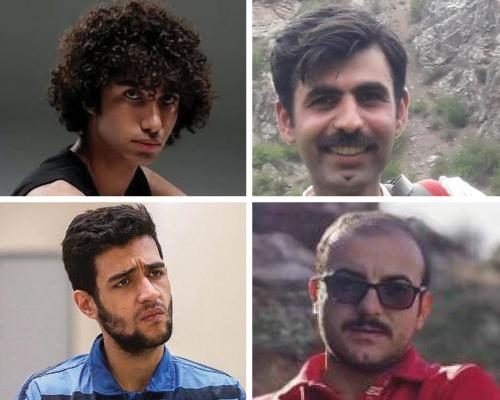
As Iran grapples with a turbulent political landscape exacerbated by war, the regime's brutal crackdown has escalated, leading to a surge in executions. In the last month alone, 16 individuals, including political prisoners and protesters, have been hanged. Among the victims was Babak Alipour, a 34-year-old law graduate, who documented the harrowing tales of those around him before he met a similar fate.
Stories of the Condemned
From his confinement in Rajai Shahr prison in Karaj, Babak Alipour communicated poignant messages about his fellow inmates. Among them was 69-year-old Behrouz Ehsani, a figure who maintained a remarkable composure despite the dire circumstances surrounding their imprisonment. Alipour also spoke of Mehdi Hassani, a 48-year-old father who, during hospital visits, would request Alipour convey his well-being to his three children. Despite facing execution after three years on death row, Alipour's spirit remained resilient. Originally reported by The Guardian.
On March 12, he recorded a defiant video with a smuggled phone, declaring, "Dictators have come, been overthrown, died, and been killed, and now it is the turn of Khamenei-the-son's dictatorship." His words referenced the anticipated succession of Mojtaba Khamenei as supreme leader following Ali Khamenei's demise. Tragically, just two weeks later, on March 31, Alipour was executed alongside his cellmate, Pouya Ghobadi, a 32-year-old electrical engineer, at Ghezel Hesar prison.
The Brutality of the Regime
The Iranian government has ramped up executions, with eight political prisoners and eight protesters hanged in a single month. The youngest victim, 18-year-old Amirhossein Hatami, was executed on April 2 after reportedly being coerced into a confession regarding alleged involvement in a Revolutionary Guard Corps base attack during January protests. Just days later, 24-year-old Amirali Mirjafari, a student and computer technician, was similarly executed for his alleged role in the protests.
Human rights activists report that 11 more political prisoners currently remain on death row, with ages ranging from 23 to 68. This wave of executions comes amid increasing international scrutiny and allegations of war crimes committed by the regime, which has intensified its repression rather than easing it.
A Family Torn Apart
Reza Younesi, a 45-year-old professor at Uppsala University in Sweden, has watched his family suffer under the regime's brutality. His brother, Ali, a 26-year-old astronomy student, has been imprisoned for six years, while their father, Yousef, was arrested three years ago. Recently, Younesi learned that his father had disappeared within the prison system, only to resurface transferred to the same facility as his son.
Younesi expressed deep concern for his family as the war unfolds, stating, "This is like a horrible, brutal regime that we are talking about. When there is a war, they become even more brutal. So they can do more or less anything to prisoners, as they know that the international society, international human rights organization, they cannot do much, and even if they say anything, no one pays attention." He believes the regime's primary threat lies not in external forces but in its own citizens, prompting these executions as a tool to instill fear.
The Regime's Strategy of Fear
Mahmood Amiry-Moghaddam, director of Iran Human Rights, noted that the recent surge in political executions is unprecedented. Historically, most executions in Iran have been for non-political crimes such as drug offenses. He emphasized that the regime's current strategy aims to instill fear among the population, as the political costs of executing protesters are considerably lower in the context of ongoing conflict.
On March 28, former President Donald Trump claimed to have influenced Tehran's decision not to execute eight women, highlighting the international community's potential impact on the regime's actions. However, reports indicate that the threat of further executions remains, with the Iranian government seemingly undeterred by the global outcry.
As the conflict and internal tensions continue, the situation in Iran raises alarming questions about human rights and the future for those imprisoned under the regime's harsh policies.
Originally reported by The Guardian. View original.