
In a significant meeting this week in Brussels, the UK and EU trade negotiators, Maroš Šefčovič and Nick Thomas-Symonds, displayed a united front, indicating a potential thaw in relations after years of tension. Their discussions emphasized the urgent need for a more ambitious approach to resetting the complex relationship between the UK and the EU, with both sides acknowledging the frustration over slow progress.
Šefčovič, the European Commissioner for Trade, addressed Members of Parliament (MPs) and Members of the European Parliament (MEPs) at the EU-UK Parliamentary Partnership Assembly (PPA), advocating for a comprehensive reboot of the negotiations. He reminded attendees that the Swiss-style deal previously offered to former Prime Minister Boris Johnson remains an option. This overarching agreement could facilitate a more dynamic and efficient alignment in regulations, allowing for quicker negotiations and implementation of deals. Originally reported by The Guardian.
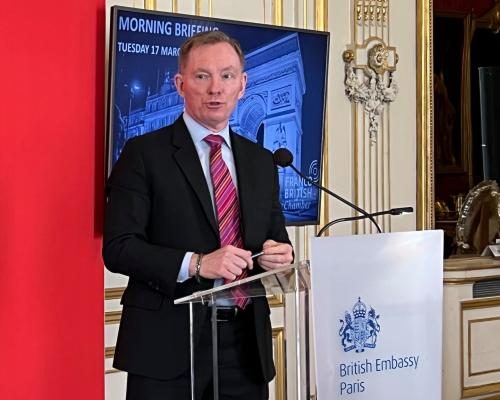
In contrast, UK Trade Minister Chris Bryant, who took office in September, expressed his dissatisfaction with the "piecemeal" approach that had characterized the negotiations. During a visit to Paris, he emphasized the necessity of broadening the scope of discussions. "I think we need to lift our eyes to the distant horizon and think in a much bigger, more ambitious way about what is possible," he stated, underlining the importance of sectoral regulatory alignment that could enhance exports in areas such as medical devices and chemicals.
Reiterating Bryant's sentiment, UK Chancellor Rachel Reeves later in London noted that there is a "strategic imperative for deeper integration between the UK and the EU." This call for greater ambition coincides with a growing movement within the Labour Party, as London Mayor Sadiq Khan urged party members to advocate for rejoining the EU in the upcoming general election.
Unfortunately, the reset talks are already showing signs of stagnation as discussions remain mired in unresolved issues from last year's agreements. The focus has shifted to critical areas like youth mobility, agricultural trade, energy, and defense, but significant hurdles remain. The EU's demand for home fees for EU citizens attending UK universities has led to a standstill in youth mobility negotiations.
One source involved in the discussions revealed, "There is a strong political will for a deal from the EU member states, but this issue has become very thorny." Progress has indeed slowed, and while regular talks continue, they have become increasingly bogged down by these contentious issues.
Another area of concern is the sanitary and phytosanitary (SPS) agreement, which is vital for trade but has also seen painfully slow negotiations. Bryant spoke to MEPs in Brussels before addressing French businesses in a lavish Parisian ballroom. He highlighted that while the UK may have been slow in negotiations, the EU has also faced delays. Notably, despite an agreement to begin talks on SPS last May, the European Commission only received a mandate from member states in November.
"If we can get from one in ten British businesses exporting to two in ten or three in ten, like the French or the Germans, it would radically transform our economic opportunities in the UK. That's precisely the job I'm fixated on from the beginning," Bryant explained. His focus on a more structured approach aims to streamline negotiations that have become fragmented.
He cautioned against continuing the current fragmented strategy, which has resulted in lengthy discussions over individual deals. "Rather than this piecemeal, oh let's do [a deal on] SPS, let's do tuition fees, let's do [the student exchange program] Erasmus, it takes forever and gets bogged down," Bryant noted, advocating for a more concentrated strategy.
Mutual recognition of professional qualifications and compromises for touring artists are just a few of the pressing issues on the table. Additionally, discussions about tuition fees for British students whose parents moved to the EU before Brexit are urgent, as the deal for home fees is set to expire in 2028.
Šefčovič, in his address, reiterated that a Swiss-style overarching deal, which Switzerland negotiated to encompass multiple sectors, remains an option for the UK. He underscored that such a deal could lead to faster and more efficient negotiations, provided both sides are willing to compromise and aim for greater integration.
As discussions continue, the pressure for an ambitious reset of UK-EU relations intensifies. Both sides face the challenge of overcoming longstanding issues while remaining open to innovative solutions that could usher in a new era of collaboration.
Originally reported by The Guardian. View original.