
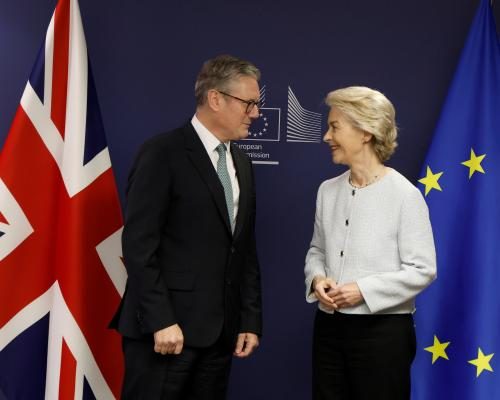
In a significant shift in policy, UK ministers are preparing to introduce legislation that may allow Britain to adopt European Union single market rules without the usual parliamentary vote. This move is part of Prime Minister's initiative to strengthen ties with the EU following the ongoing geopolitical tensions stemming from the conflict in Iran. Sources indicate that the new legislation might face backlash from critics who fear it undermines the sovereignty of the UK.
Legislation to Facilitate EU Alignment
The proposed bill is designed to reshape the UK's relationship with the EU fundamentally. It aims to enable the UK to align dynamically with EU regulations in areas where agreements already exist. This includes provisions related to food and drink trade deals and emissions trading, which would allow the government to implement evolving single market rules swiftly, if deemed in the national interest. Originally reported by The Guardian.
Critics have raised concerns about the implications of using so-called Henry VIII powers, which enable ministers to enact laws without comprehensive parliamentary scrutiny. These powers, named after the 1539 law allowing the monarch to govern by decree, could lead to a situation where MPs are merely rubber-stamping new agreements without meaningful debate. As a result, the government could potentially adopt EU regulations across various sectors, including automotive and agricultural policies, with minimal oversight.
Economic Implications Amidst Political Tensions
Ministers argue that the proposed legislation will not only boost trade but also mitigate the financial repercussions of the Iran conflict, which has strained the UK's special relationship with the United States. The Office for Budget Responsibility has cautioned that Brexit will reduce long-term productivity by 4% and decrease both exports and imports by 15% relative to remaining in the EU. In light of this, the government believes that closer alignment with the EU could infuse billions into the UK economy, helping to alleviate the cost-of-living crisis exacerbated by current geopolitical tensions.
One government insider stated, "We expect a fight in this area from those who were in favour of leaving the EU on the harshest terms. They will scream treason, but the reality is that all international agreements involve shared rules." This sentiment echoes the pragmatic approach some ministers advocate as they navigate the complexities of post-Brexit trade relationships.
Parliamentary Dynamics and Opposition Concerns
The new bill is expected to be introduced before summer, but its passage may not be smooth. While it is unlikely to be voted down in the House of Commons, opposition parties are preparing to confront the government's plans. Critics argue that the lack of parliamentary debate over regulatory changes amounts to a form of "integration with the EU by stealth." Professor Anand Menon, director of the think tank UK in a Changing Europe, emphasized, "Changes to UK regulations should be debated in parliament and thrashed out by politicians. The danger is you're doing integration with the EU by stealth."
Despite these criticisms, ministers maintain that the proposed bill will simplify business operations by cutting red tape. The government plans to implement agreements on sectors such as food and drink, automotive, and security information sharing more expediently. Any disputes regarding new regulations would be settled by an independent tribunal, steering clear of decisions made by EU courts.
Navigating the Brexit Fallout
The ongoing discussions around the bill come at a time of heightened scrutiny of the UK's post-Brexit strategy. With upcoming Elections in Scotland, Wales, and England in May, parties like Nigel Farage's Reform UK are focusing on immigration and net-zero policies. However, sources cite that the government is ready to confront hardline Brexit advocates who oppose any adjustments to align with EU standards.
As negotiations progress, the government is acutely aware of the necessity of the UK's trading relationship with the EU, which accounted for almost half of all UK trade in 2024. Acknowledging the cost of living penalties resulting from barriers at the border, ministers assert that making deals to eliminate these obstacles is a sensible approach to undoing some of the economic damage caused by Brexit.
Ultimately, the introduction of this legislation represents a complex balancing act for the UK government. They aim to enhance economic access while maintaining political control, a challenging trade-off that continues to define the post-Brexit landscape.
Originally reported by The Guardian. View original.