
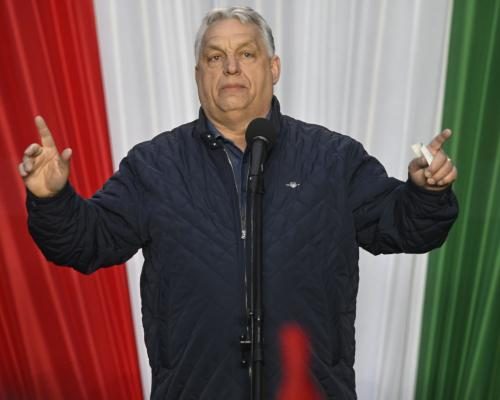
Hungarians are casting their votes in a crucial parliamentary election that could mark the end of Viktor Orbán's 16-year reign. As the longest-serving leader in the European Union, Orbán is facing an unprecedented challenge from Péter Magyar, a former member of his own Fidesz party. This election not only has the potential to reshape Hungary's domestic policies but also its relationships with major powers like the EU, Moscow, and Washington.
Orbán's Declining Popularity
As the election day approached, polls indicated that Orbán was trailing behind Magyar, who leads the center-right Tisza party. This is a notable shift, given Orbán's long-standing dominance in Hungarian politics. His tenure has been marked by significant changes, including the reformation of electoral laws to benefit his party and the establishment of a media landscape heavily influenced by Fidesz loyalists. Many analysts see Magyar's rise as a reflection of public discontent with Orbán's government. Originally reported by The Guardian.
Globally, right-wing leaders have rallied behind Orbán. Recently, JD Vance made a two-day visit to Budapest, where he expressed his desire to assist Orbán's campaign. U.S. President Donald Trump has also publicly endorsed Orbán, stating via social media that he would leverage U.S. economic strength to support Hungary if Orbán secures another term. This international backing has added a unique dynamic to the election, intertwining Hungarian politics with broader global movements.
Domestic Issues Take Center Stage
While Orbán has focused on external threats, particularly the war in Ukraine, Magyar's campaign has zeroed in on domestic concerns. His pledges include combating corruption, mending strained ties with the European Union, and addressing the decline of public services. Magyar has been highly active, holding up to six rallies daily as he travels across Hungary to engage voters directly. His approach has resonated with many, as evidenced by polling that often places his party ahead.
Yet, despite Magyar's momentum, uncertainties loom. Analysts caution that undecided voters and those living abroad could still sway the outcome. Moreover, allegations of vote-buying and other irregularities have raised concerns about the integrity of the electoral process.
The Stakes for Orbán's Administration
For many Hungarians, this election is a referendum on Orbán's political strategy, which has been described as an attempt to create a "petri dish for illiberalism." The prime minister's administration has been characterized by its efforts to suppress dissent, control media narratives, and consolidate power. As Orbán faces scrutiny both domestically and internationally, questions surrounding his ties to Moscow have also emerged. Allegations of Russian interference and audio recordings suggesting that a minister shared sensitive EU information with Russia have fueled suspicions about the government's integrity.
During a rally in Székesfehérvár, Orbán's supporters expressed unwavering loyalty. Cecília, a 78-year-old voter, proclaimed, "I'm so happy to be here. He's the best leader in the world." This marks the fifth time she has voted for Orbán, who she predicts will win "with a supermajority." Others, however, expressed a mix of hope and anxiety about the results. Sándor, 69, remarked on the tense atmosphere surrounding the polls, stating, "When it comes to polls, it depends on who does them, but the situation does seem tense. I'm worried for him."
The Race for the Future of Hungary
As election day unfolds, the atmosphere in Hungary is charged with anticipation and tension. The outcome will not just affect domestic policy but will also resonate across Europe and beyond. Orbán's supporters view him as a bulwark against external threats, while opponents argue that his governance has eroded democratic norms.
Richárd, a 27-year-old who attended a recent rally, expressed a desire for change, noting, "For 16 years, Fidesz has been campaigning on hatred and fear. While Tisza has been trying to express hope at all of their events." As the votes are counted, the world will be watching closely to see whether Hungary will continue along its current path or chart a new course under Péter Magyar's leadership.
Originally reported by The Guardian. View original.