
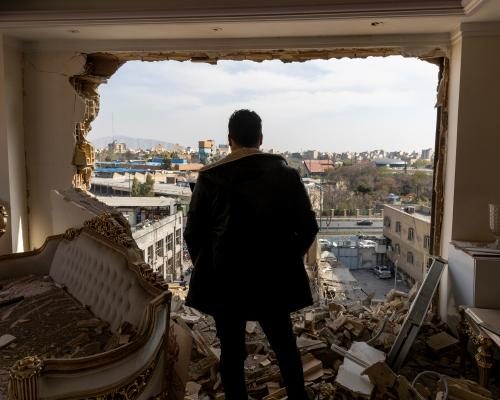
As tensions escalate in the Middle East, former President Donald Trump expressed surprise over Iran's recent attacks on Gulf nations, while the UK is exploring options to enhance maritime security in the Strait of Hormuz. The UK Ministry of Defence is looking into deploying minehunting drones, which could help counter Iran's influence in this critical waterway that carries around 20% of the world's oil daily.
Trump Calls for Increased Maritime Protection
In an interview with NBC News, Donald Trump stated his astonishment at Iran targeting US allies in the Gulf region, calling these nations "terrific" and noting that they were "shot at unnecessarily." His remarks come as Iran has launched numerous missiles and drone strikes against the United Arab Emirates (UAE) and other Gulf states. Trump described this tactic as the "biggest surprise" of the ongoing conflict, emphasizing the unexpected nature of Iran's aggression toward regional partners who have long been aligned with the United States. Originally reported by The Guardian.
Meanwhile, the UK is reportedly considering deploying minehunting drones from the Royal Navy's Mine and Threat Exploitation Group, which is currently stationed in the Middle East. The Sunday Times first reported this development, highlighting the UK's intent to secure shipping routes through the Strait of Hormuz. However, details regarding the number of drones available for deployment remain unclear.
UAE Faces Unprecedented Attacks from Iran
The UAE has borne the brunt of Iranian attacks, with Minister for International Cooperation Reem Al Hashimy describing the situation as "almost unhinged." In an interview with Australia's ABC News, she noted that Iran had targeted the Emirates with over 1,800 missiles and drones, more than any other nation involved in the conflict. Despite the UAE's air defense systems intercepting a significant majority of these projectiles, the scale of the attacks has been alarming.
Al Hashimy characterized the Iranian strategy as "unprecedented," expressing her surprise at Tehran's irrational approach toward Gulf states. She stated, "We've borne the brunt of most of the missiles and drone attacks, and it's really quite surprising for us that Iran has taken such an irrational path to fight the Gulf states and act in this quite unlawful, quite unacceptable manner." This sentiment reflects a growing concern among Gulf nations over their safety as hostilities escalate.
US Evacuates Non-Essential Personnel from Oman
In response to the worsening situation, the US State Department has ordered the evacuation of non-emergency government employees and their families from Oman, citing safety risks. This directive was issued on Friday and underscores the increasing volatility in the region. Such moves by the US indicate a heightened concern for the safety of American personnel in the Gulf amid ongoing tensions with Iran.
Trump reiterated the need for allied countries to step up maritime security in the Strait of Hormuz, emphasizing that the US would coordinate with other nations to maintain safety in this critical area. He stated, "The United States of America has beaten and completely decimated Iran, both Militarily, Economically, and in every other way, but the Countries of the World that receive Oil through the Hormuz Strait must take care of that problem themselves." His comments reflect a growing expectation that Gulf nations will play a more active role in their defense.
Escalating Conflict and Casualties
As the conflict continues to escalate, reports from Lebanon indicate that Israeli strikes have resulted in significant casualties. The Lebanese health ministry reported that since the beginning of the war, 826 individuals have been killed, including 65 women and 106 children. The ministry's statements also highlighted the tragic loss of 31 paramedics, emphasizing the human cost of the ongoing violence.
In a separate incident, an Israeli airstrike reportedly killed 12 medical staff members at a clinic in the southern town of Burj Qalaouiya, further underscoring the dire humanitarian situation. Concurrently, Iranian media reported casualties from a US and Israeli strike on a factory in Isfahan, which killed at least 15 workers. This factory was involved in producing essential goods, illustrating the widespread impacts of the conflict on civilian life.
As tensions persist, Iran has issued evacuation Warnings for three major ports in the UAE, claiming that the US has used these locations as bases for attacks on Iranian targets. This claim underscores the complexities and dangers that Gulf nations face as they navigate their relationships with both the US and Iran.
With the situation rapidly evolving, the international community watches closely, as the potential for further conflict looms large. The strategic importance of the Strait of Hormuz and the ongoing military actions by both Iran and its adversaries could have significant implications for global oil supply and regional stability.
Originally reported by The Guardian. View original.