
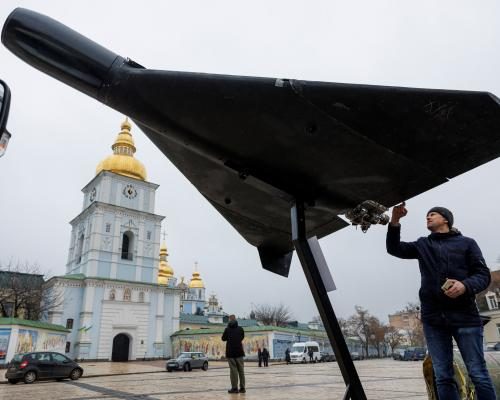
Ukrainian President Volodymyr Zelenskyy confirmed on Sunday that experts from Kyiv will be dispatched to the Middle East next week to assist in countering drone threats. This move comes as Ukraine seeks to secure US air defense missiles in exchange for its knowledge on drone warfare, particularly against Iranian-made drones utilized by Russia.
Ukraine's Urgent Need for Air Defense
Ukraine is currently grappling with a critical shortage of PAC-3 air defense ammunition, which is supplied by the U.S. The ongoing conflict in the Middle East raises concerns for Kyiv, as a prolonged war could further hinder the flow of these essential military supplies. Zelenskyy emphasized the urgency of the situation during a press conference, stating, "It is too early to say anything else at this stage," regarding his country's role in supporting the U.S. and its Gulf allies. He added, "I think that next week, when the experts are on site, they will look at the situation and help." Originally reported by The Guardian.
The implications of this collaboration extend beyond immediate military needs. As the conflict in the Middle East develops, the potential for shared defense strategies could lead to stronger ties between Ukraine and its allies in combating drone warfare.
Joint Arms Production Discussions with the Netherlands
During his visit to Kyiv, Zelenskyy met with Dutch Prime Minister Rob Jetten, where they discussed the possibility of joint arms production. This collaboration is particularly important as the Netherlands has been a significant contributor to the PURL program, which facilitates European purchases of U.S. weaponry for Ukraine. To date, the Netherlands has contributed approximately $870 million to this initiative.
Zelenskyy highlighted Ukraine's unique experience in countering the Iranian-made Shahed drones that are being used against Gulf nations. "We would very much like this to be an opportunity for both sides," he said, stressing the importance of collaborative defense efforts. He noted that they had delved into specific details regarding investments and production volumes during their discussions.
Global Arms Dynamics and Ukraine's Role
As the world grapples with evolving military threats, the demand for Ukraine's drone defense technology could lead to new partnerships. However, this could also mean that Ukraine may face a shortage of drones for its own defense needs in an increasingly competitive market, according to Shaun Walker, a correspondent for The Guardian. The urgency of providing assistance to allies while securing resources for itself presents a complex challenge for Kyiv.
Moreover, Zelenskyy made it clear that Ukraine is willing to share its expertise in drone warfare with the U.S. and Gulf partners, stating, "We are ready to help, and expect that our people will also receive the necessary support." This reciprocal approach underscores Ukraine's strategic positioning as a key player in international defense discussions.
Escalating Military Preparedness in Europe
Recent reports indicate a significant rise in global weapons flows, with Europe experiencing a surge of nearly 10% in imports over the last five years. This increase is attributed to European nations bolstering their military capabilities in response to perceived threats from Russia, especially following the war in Ukraine. According to the Stockholm International Peace Research Institute (SIPRI), Europe has now become the largest recipient of arms globally, although current import levels have not yet reached those seen during the Cold War.
Mathew George, director of SIPRI's Arms Transfers Programme, noted that European nations are actively buying weapons not only to support Ukraine but also to enhance their own military readiness. This shift in global arms dynamics reflects a changing geopolitical landscape where countries are increasingly viewing collaboration as essential for national security.
On the ground, Russia's defense ministry reported on Sunday the interception of 234 drones across central and southern Russia in a nine-hour operation, including six drones targeting Moscow. Fortunately, no damage or casualties were reported during this period, highlighting the ongoing military tensions and the continuous threat posed by unmanned aerial vehicles.
As Ukraine prepares to send its drone experts to the Middle East, the outcome of this mission could have far-reaching implications for regional stability and international defense cooperation. The next few weeks will be crucial in determining how these dynamics unfold, particularly as the global military landscape continues to evolve.
Originally reported by The Guardian. View original.