
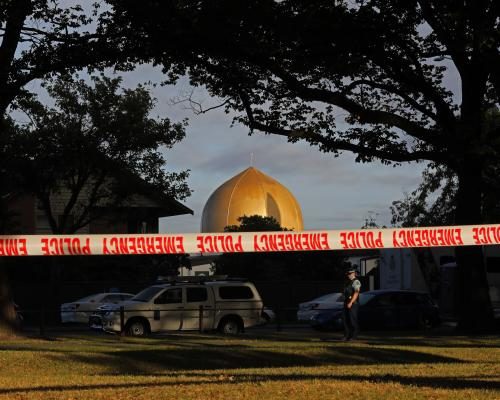
The Christchurch mosque attack of March 15, 2019, which left 51 people dead, continues to resonate in Australia as legal cases involving extremist content emerge. A recent conviction of a 14-year-old boy in South Australia for possessing terrorist propaganda underscores the lingering influence of the Australian perpetrator's actions. This ongoing issue raises essential questions about how Australia addresses the roots of far-right extremism within its borders.
Young Offenders and Extremist Material
In a notable case, a South Australian boy, just 14 years old, was sentenced in 2025 for downloading over a dozen videos related to the Christchurch attack. Along with these videos, he possessed the shooter's manifesto, showcasing a disturbing trend of youth engagement with extremist content. This is not an isolated incident; just two years earlier, another 16-year-old faced sentencing for multiple terrorism offences linked to sharing violent content, including imagery from the Christchurch massacre on social media platforms like Discord. Originally reported by The Guardian.
As a journalist focused on tracking these troubling developments, it's disheartening to see how the Christchurch terrorist's propaganda continues to permeate Australia. The legal system is grappling with the aftermath, yet the societal response remains muted. The judge overseeing the 14-year-old's case remarked on the concerning nature of such material's accessibility and the implications for youth radicalization.
Australia's Disconnection from Its Own Extremism
Despite the significant legal ramifications stemming from the attack, Australia has largely sidestepped a comprehensive reckoning regarding the roots of the Christchurch attack. The perpetrator, an Australian national, was sentenced in New Zealand to life imprisonment without parole for his crimes. However, the responses within Australia have been limited, lacking an official inquiry or royal commission akin to what New Zealand has undertaken.
Rita Jabri Markwell, a legal advisor to the Australian Muslim Advocacy Network, points out that while Australians are deeply concerned about the Christchurch tragedy, government leaders have failed to facilitate a collective grieving process. "To grieve what happened, together, is so important because it validates our shared humanity," she stated, emphasizing the need for a national conversation about the hate that facilitated the attack.
Extremist Ideologies Persisting Online
The propagation of extremist content isn't confined to Australia. In the United States, court records reveal that the Christchurch attacker's manifesto and associated propaganda continue to influence far-right groups. For instance, Dallas Humber, a leader of the white supremacist organization Terrorgram, was charged in 2024 for her role in glorifying similar extremist acts, including the Christchurch attack.
Hank Teran, CEO of Open Measures, highlights the ongoing threat posed by the ideologies underpinning the Christchurch attack. He notes that the narrative of the "great replacement" conspiracy theory fuels these extremist beliefs, creating a dangerous pipeline that can lead to real-world violence. "That typically requires some proactive education amongst parents and community stakeholders to understand the intricacies of some of these complicated communities," Teran advised, advocating for a holistic approach to combatting this pervasive threat.
A Call for Accountability and Change
Jabri Markwell insists that Australia must confront the reality of how the Christchurch terrorist's radicalization occurred within its own borders. "A lot of the hate that he developed happened in Australia," she remarked, noting that the normalization of such views happens over years, not in isolation. There has yet to be accountability for the role that political rhetoric and societal attitudes played in fostering an environment conducive to radicalization.
As Alaa Elzokm OAM, the imam of Elsedeaq Heidelberg mosque in Melbourne, prepares to travel to Christchurch for a commemoration of the attack, he will engage with the Sakinah Community Trust, which comprises widows, mothers, and daughters affected by the tragedy. This act of remembrance serves as a poignant reminder of the lives lost and the ongoing struggle against hate.
In the wake of these continuing challenges, it is clear that Australia must take more decisive action to address the roots of extremism and the societal factors that allow such ideologies to flourish. Recognizing the past is essential to building a future where all communities can feel safe and valued.
Originally reported by The Guardian. View original.