
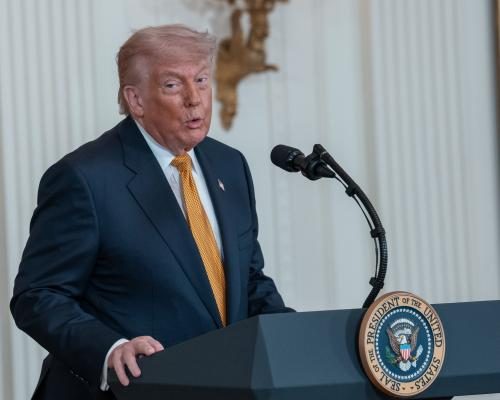
In a surprising turn of events, former President Donald Trump abruptly suspended "Project Freedom," an initiative aimed at securing safe passage through the Strait of Hormuz, just one day after its announcement. The decision has sparked skepticism and ridicule from Iranian officials, who view it as yet another example of U.S. miscalculation in Middle Eastern geopolitics. The situation has left approximately 2,000 commercial vessels stranded in the Gulf as diplomatic negotiations grapple with ongoing tensions.
Saudi Arabia's Role in Project Freedom's Collapse
Trump's rapid reversal on "Project Freedom" has raised eyebrows, particularly regarding its coordination with Saudi Arabia. Reports indicate that the operation was halted after Riyadh barred the U.S. military from utilizing its bases or airspace. NBC News initially reported that Saudi officials were upset about not being informed prior to the announcement. This lack of communication is seen as critical, especially given the backdrop of regional instability following Iranian attacks on oil facilities in Fujairah, one of the UAE's emirates. Originally reported by The Guardian.
Some Saudi commentators argue that the suspension of U.S. operations followed the attack, which the U.S. downplayed by not responding. This incident highlighted Riyadh's concerns about Washington's willingness to engage in military actions without consulting its allies, emphasizing a significant disconnect in U.S. policy. In a broader context, the abrupt end to Project Freedom underscores a lack of preparedness and coordination that could have serious implications for regional stability.
Iran's Response to the U.S. Proposal
In the aftermath of the suspension, Iran's parliamentary speaker and chief negotiator, Mohammad Bagher Ghalibaf, took to X to mock the failed initiative, stating, "Operation Trust Me Bro failed." This dismissal reflects Tehran's skepticism towards U.S. intentions and its ongoing negotiations. The U.S. proposal, which is under review by Iranian officials, outlines 14 points that aim to establish a more permanent end to the conflict than the current ceasefire.
Iran's response to the U.S. plan has been lukewarm at best, with officials characterizing it as an American wishlist rather than a serious negotiating document. The Iranian proposal, submitted just days prior to the U.S. initiative, demands significant concessions, including the lifting of U.S. sanctions and the early release of some of its estimated $100 billion in frozen assets worldwide. The release of these assets is seen as essential for alleviating Iran's struggling economy and facilitating meaningful discussions.
Challenges in U.S.-Iran Negotiations
With both countries seemingly at an impasse, the complexities of the negotiation process are compounded by a lack of trust. Trump has insisted there was "never a deadline" for Iran to respond, a statement likely aimed at mitigating pressure as he prepares for an upcoming meeting with Chinese President Xi Jinping. However, Iran remains wary of U.S. negotiating tactics, particularly given the background of the current U.S. team, which includes Jared Kushner and Steve Witkoff-both of whom lack extensive experience in nuclear negotiations.
The addition of Nick Stewart, a strategist from the pro-Israel Foundation for the Defense of Democracies, to the U.S. negotiation team has further exacerbated Iranian distrust. Tehran perceives these figures as provocateurs aligned with Israeli interests, complicating the potential for constructive dialogue. The current Iranian leadership, characterized by its hardline stance, has become increasingly skeptical of U.S. overtures, particularly in light of past experiences.
Looking Ahead: Prospects for Peace
The future of U.S.-Iran negotiations remains uncertain as both sides navigate a complex web of interests and historical grievances. While Iran is keen to avoid outright rejection of the U.S. proposal, it is equally determined to shape the terms of any potential discussions. The Iranian regime's hardline figures, hardened by external pressures, are now less predictable and more cautious than in previous negotiations.
As both nations continue to assess their positions, the potential for diplomatic breakthrough seems tenuous at best. The stakes are high, and with the backdrop of regional tensions and economic challenges, both sides face significant pressure to find a way forward. The coming weeks will be critical in determining whether dialogue can be re-established or if the situation will continue to deteriorate.
Originally reported by The Guardian. View original.