
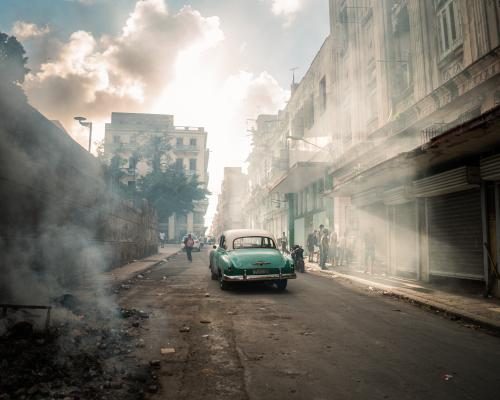
Thick smoke chokes the streets of Havana as the US oil blockade continues to cripple fuel supplies, leading to an alarming build-up of rubbish in the Cuban capital. Carlos Blanco, a local chef, describes the scene: "I saw a mist. But it wasn't mist - it was smoke," he says, referring to the toxic fumes rising from piles of uncollected waste. With the blockade now in its fourth month, Havana's rubbish trucks are significantly limited, resulting in a public health emergency exacerbated by the lack of essential services.
Fuel Shortages Lead to Waste Accumulation
As fuel scarcity grips the island, authorities have responded by rationing petrol, which has drastically reduced waste collection services. Less than half of Havana's rubbish trucks are operational, prompting many frustrated residents to discard their household waste onto the streets. In an attempt to manage the crisis, the government has instituted 122 temporary waste collection points across the city, where controlled incineration of rubbish has been authorized. However, this measure poses health risks, as burning waste releases harmful substances into the air. Originally reported by The Guardian.
Alexis González Inclán, a sanitation department official, defended these actions, stating, "They are not ideal from an environmental standpoint, but they serve to mitigate risks to public health and urban order." While the authorities seek to control the situation, the reality on the ground is grim: informal rubbish fires are prevalent, and residents like Yani Cabrera express their concerns about the smoke's dangers. "I use this [mask] when there is a lot of smoke.. I'm worried because this is dangerous," she said, highlighting the pervasive anxiety about air quality in the area.
Health Risks from Uncollected Waste
The failure to manage waste properly has led to a surge in health-related issues among residents. Francisco Castillo, who lives in a dilapidated house in central Havana, laments the situation: "Since there is no proper oversight and no collection, the result is an epidemic of flies, rats, waste and foul odours." He recalls that rubbish trucks used to arrive weekly, but now they come only once a month, allowing refuse to accumulate dangerously. This accumulation breeds not only insects but also disease.
Authorities warn that as Cuba approaches the rainy season, uncollected rubbish piles could escalate the risk of mosquito-borne illnesses. The Aedes aegypti mosquito, known for spreading diseases like chikungunya and dengue fever, thrives in stagnant water found in discarded containers. Castillo himself suffered from chikungunya earlier this year, recalling the intense pain that left him unable to walk: "I was really, really sick for a few days."
Impact on Children and Vulnerable Populations
Dr. Maria Salvador, a physician, has seen a troubling rise in hygiene-related illnesses linked to poor waste management, particularly among children. "At the hospital, we've seen an increase in hygiene-related illnesses and gastrointestinal issues," she notes, with hepatitis cases rising sharply among young patients. The doctor emphasizes that children are particularly vulnerable to these health threats due to their natural curiosity and tendency to explore their surroundings.
In many neighborhoods, children can be seen playing near informal waste sites, blissfully unaware of the dangers lurking in the trash. Meanwhile, dogs rummage through refuse, and some residents scavenge for items to sell. The lack of proper waste collection is not just an inconvenience; it poses a direct threat to public health.
Struggling to Cope Amid Blockade Challenges
With the blockade disrupting access to necessary resources, even pest control has become a challenge. Diego Sanchez, a fumigation company owner, explains that the rising costs of petrol and chemicals have made it increasingly difficult to manage pest populations effectively. As residents cope with the consequences of the blockade, many feel a sense of despair. "We have to try to survive and hang in there because things aren't getting any better," Cabrera said, capturing the sentiment of many Havana residents.
As the situation continues to deteriorate, the Cuban government faces immense pressure to address the rubbish crisis and its associated health risks. The people of Havana are left to navigate this dire reality, caught between a worsening public health crisis and the ongoing effects of the US oil blockade.
Originally reported by The Guardian. View original.