
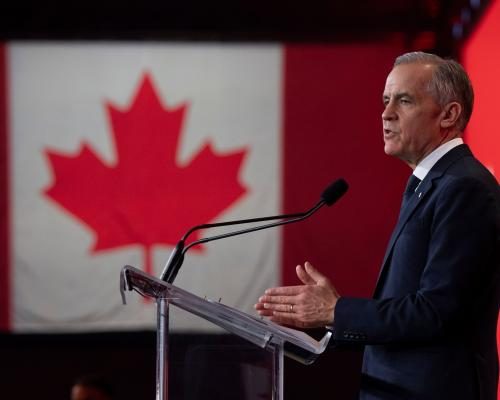
As Canada approaches critical byelections, Prime Minister Mark Carney is on the verge of transforming his minority government into a majority. The Liberal Party is expected to secure victories in at least two key byelections, bolstered by an unprecedented wave of defections from rival parties. Carney's efforts to consolidate power have enhanced his image as a pragmatic leader, adept at navigating the complexities of contemporary politics.
Byelection Results Could Seal the Deal
On Monday evening, the results of three byelections are set to play a pivotal role in determining the future of the Liberal Party's dominance in Parliament. Two of these races are situated in districts considered safe for the Liberals, while the third is anticipated to be tightly contested. If the Liberals successfully capture all three seats, they will solidify their command over the House of Commons. Originally reported by The Guardian.
Recent months have witnessed a remarkable trend of floor crossings, with Marilyn Gladu, a Conservative MP, becoming the fourth member to join Carney's ranks. Lori Idlout, previously a member of the New Democratic Party (NDP) from Nunavut, has also aligned herself with the Liberals. Additionally, Ontario's NDP deputy leader is expected to secure a byelection seat in Toronto with relative ease. This series of defections has raised eyebrows and sparked debates within political circles regarding the implications for party values and stability.
Carney's Reputation as a Pragmatic Leader
Mark Carney's ability to navigate political turbulence has positioned him as a leader capable of uniting diverse political factions during a time of heightened partisanship. Scott Reid, a political adviser and former communications director for ex-Prime Minister Paul Martin, remarked, "Pulling people from such diverse political origins at a time when the prime minister is vulnerable while leading a minority parliament is almost unprecedented." This unique approach is seen as a response to the political climate shaped in part by the disruptive influence of Donald Trump.
Reid noted that Trump's contentious relationship with Canada has led many politicians to shift away from strict partisanship, opting instead for a more nationalist approach to governance. He stated, "Trump gave rise to Carney and his unique talents. Now, we're watching another effect of Trump on our politics: a desire for stability. The perception is Carney is a wartime leader." This framing suggests that Carney is effectively consolidating a "union government" amid a backdrop of political instability.
Internal Tensions Within the Liberal Party
While Carney's maneuvering has garnered support, it has not come without controversy. Critics within the Liberal Party have raised concerns about the ideological implications of welcoming defectors who may not align with the party's historical values. For instance, Gladu's track record includes support for the "freedom convoy" during the pandemic, alongside her anti-abortion stance, which contrasts sharply with the party's established pro-choice platform.
Supriya Dwivedi, a columnist and former adviser to Justin Trudeau, expressed skepticism about the party's direction, suggesting that Carney's leadership lacks a clear ideological foundation. She stated, "Guys, maybe we should all re-read Values [Carney's 2021 book]. It's possible we all missed the part where Carney said we don't need to actually have any." Carney, however, has defended his new colleagues, asserting that their diverse experiences enrich the party and contribute to its goals, emphasizing that there would be no shift in core Liberal values.
Conservative Party's Struggles Amid Defections
The Conservative Party, led by Pierre Poilievre, has faced mounting challenges as defections continue to chip away at its ranks. Poilievre criticized Carney's strategy, accusing him of pursuing a "costly Liberal majority that voters denied him" and calling for Gladu to face voters again in a byelection. This criticism underscores the growing discontent within the Conservative Party, even as Poilievre recently navigated a leadership review.
Reid articulated the gravity of the situation for Poilievre, stating, "If you had said to me two years ago that Pierre Poilievre is going to lose a federal election despite having a 25-point lead.. you've just described a political dead person." The ongoing defections signal potential instability within the Conservative Party, further complicating Poilievre's leadership as more members contemplate shifting allegiance to the Liberals.
As byelection results loom, the political landscape in Canada remains dynamic. Carney's strategic alliances and the unfolding drama within the Conservative Party will likely shape the future of Canadian governance. Should the Liberals secure the anticipated victories, Carney's position as a decisive leader will be further solidified.
Originally reported by The Guardian. View original.