
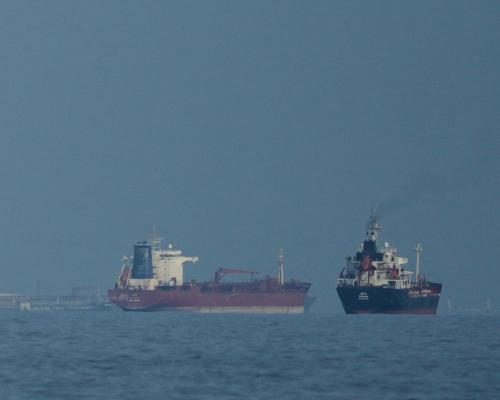
President Donald Trump announced plans for a blockade of the Strait of Hormuz following unsuccessful ceasefire talks with Iran. This strategic waterway, which facilitates the transit of approximately 20% of the world's oil, is at the center of escalating tensions between the US and Iran. Since February 28, US and Israeli forces have conducted extensive military operations against Iranian targets, leading to significant casualties among Iranian leadership. In retaliation, Iran has effectively closed access to the strait, heightening global oil prices and raising fears of inflation.
Trump's Blockade Announcement and Its Implications
On Sunday, Trump expressed his intentions through social media, stating, "The United States Navy, the Finest in the World, will begin the process of BLOCKADING any and all Ships trying to enter, or leave, the Strait of Hormuz." He accused Iran of "WORLD EXTORTION" and threatened severe consequences for any attacks on US vessels, asserting that those responsible would be "BLOWN TO HELL!" This sweeping declaration, however, was later moderated by the US Central Command (Centcom), which clarified that the blockade would specifically target ships transiting Iranian ports while allowing vessels headed to allied Gulf states to pass freely. Originally reported by The Guardian.
Centcom indicated that the blockade would commence at 10 am ET (2 pm GMT). While Trump indicated that US allies were interested in supporting the operation, the UK has refused to participate, and Australian Prime Minister Anthony Albanese stated that his country was not invited to join the blockade.
Negotiation Challenges and Strategic Goals
The threat of a blockade appears to be intertwined with the complex negotiations surrounding the reopening of the Strait of Hormuz. Reports suggest that Iran has expressed a desire to maintain control over this critical waterway post-conflict, proposing a toll of up to $2 million for each ship that passes through. Such a plan has been labeled an infringement on "freedom of navigation" by Trump and other world leaders.
Despite Trump's claim that the reopening of the strait is not solely his responsibility, the pressure is mounting for a resolution that averts further economic turmoil stemming from its closure. Should Trump's strategy prove effective, he aims to diminish Iran's leverage in negotiations, potentially reopening the strait and stabilizing oil prices.
Operational Details of the Blockade
The US military has not disclosed extensive operational details regarding the blockade, such as the number of warships involved or potential aerial support. Experts suggest that the US Navy might employ tactics that involve threatening vessels to alter their course. If such warnings prove ineffective, the US could resort to deploying armed boarding parties to take control of non-compliant ships.
Dana Stroul, a former senior Pentagon official, remarked, "Trump wants a quick fix. The reality is, this mission is difficult to execute alone and likely unsustainable over the medium to long-term." The challenge of implementing a blockade raises concerns about its feasibility, particularly in maintaining the operation without escalating military conflict.
Potential Impact on Global Oil Prices
The blockade poses significant implications for global oil markets. Experts indicate that the blockade could drive oil prices higher, though the extent of the increase will depend heavily on its execution and the responses from Iran. Kevin Book, managing director of research at ClearView Energy Partners, noted that reduced oil volumes typically lead to tighter markets and higher prices. He emphasized that Iranian or Houthi reprisals against alternative shipping routes could further escalate costs.
By blocking vessels carrying Iranian oil, Trump aims to cut off a vital revenue stream for the Iranian regime. However, this action could also disrupt the supply chain, leading to a short-term spike in oil prices. Following Trump's announcement, US crude oil prices surged by 8% to reach $104.24 per barrel, while Brent crude also experienced a notable increase.
In the wake of ongoing military operations and diplomatic standoffs, the Strait of Hormuz remains a focal point of international tension, with the potential to significantly impact global economic stability. As the situation develops, market observers will closely monitor both the implementation of the blockade and Tehran's subsequent actions.
Originally reported by The Guardian. View original.