
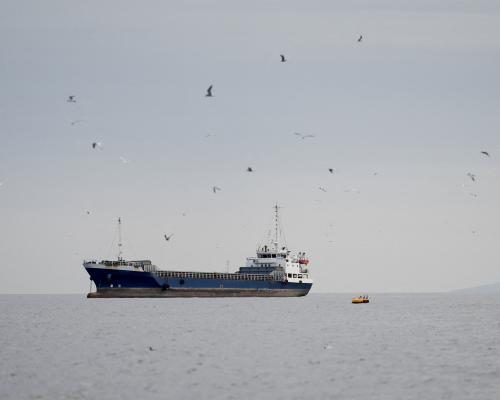
The ongoing tensions in the Middle East took a new turn this weekend as Iran issued a stern warning against the United States' proposed blockade of the Strait of Hormuz. Following President Donald Trump's announcement on his social media platform, Truth Social, that the U.S. would initiate a blockade, all maritime traffic through this vital waterway came to a standstill. According to Lloyd's List Intelligence, two vessels that were departing the strait turned around immediately after the announcement, illustrating the immediate impact of Trump's declaration. While some traffic had resumed in the days leading up to the announcement-three supertankers laden with oil successfully navigated the strait on Saturday-the situation has escalated rapidly.
Trump's Bold Statements on Blockade
President Trump has made it clear that he is unyielding in his stance on Iran and the Strait of Hormuz. He stated, "I don't care if they come back or not," referring to potential negotiations with Iran, after talks in Pakistan concluded without an agreement. His comments indicate a shift towards a more aggressive posture, as he suggested that the U.S. Navy would begin blockading the strait and interdicting vessels that had paid tolls to Iran. The blockade is set to start at 10 AM ET on April 13, according to U.S. Central Command (Centcom). Originally reported by The Guardian.
In a lengthy post on Truth Social, Trump emphasized, "BLOCKADING any and all Ships trying to enter, or leave, the Strait of Hormuz" would be the new directive. He further accused Iran of failing to uphold its promise to keep the strait open, which, he claimed, was causing "anxiety" across the globe. With oil prices already reacting to the news, U.S. crude rose by 8% to $104.24 a barrel, while Brent crude saw a 7% increase to $102.29.
Iran's Response and Ceasefire Violations
The Iranian Revolutionary Guard quickly responded to Trump's blockade announcement, warning that any military vessels approaching the Strait of Hormuz would be viewed as a violation of the existing ceasefire. This warning underscores the fragility of the current situation, which had seen a brief lull in hostilities following earlier agreements between the U.S. and Iran.
As the tension mounts, the geopolitical stakes have risen significantly. Oil prices surged in early trading, reflecting market concerns about potential supply disruptions. Additionally, Australia's share market reacted negatively, showing sharp declines as investors processed the implications of the U.S. blockade. Australian Prime Minister Anthony Albanese stated that his government had not been approached to support the blockade, emphasizing the need for continued negotiations between the U.S. and Iran.
Trump's Critique of Pope Leo XIV
In a separate but related development, Trump also directed his ire at Pope Leo XIV, branding him as "weak on crime and terrible for foreign policy." This critique followed the pope's call for peace and negotiation regarding the U.S.-Iran conflict, as he described the "delusion of omnipotence" fueling the ongoing violence. Trump, who has often used his social media platform to express his views, posted that Leo should refocus on his papal duties rather than engage in political matters.
The pope presided over a prayer service at St. Peter's Basilica as U.S.-Iran talks unfolded, emphasizing the need for diplomatic resolution. Although he did not mention Trump specifically, his comments appeared to target the U.S. military's approach to the conflict.
Future Implications of the Blockade
As the U.S. prepares to implement its blockade, analysts are raising concerns about the broader implications for global oil markets and regional stability. With Trump reportedly considering the resumption of limited military strikes in Iran, the likelihood of escalating conflict looms large. His warning that he could "take out Iran in one day" should hostilities resume sends a clear signal of his administration's readiness to escalate military involvement.
The situation remains fluid as both sides weigh their next moves. With the U.S. asserting its military presence in the region and Iran responding defiantly, the potential for a significant escalation in tensions is high. The international community is watching closely, as the outcome of this standoff could have far-reaching effects on global stability and economic conditions.
Originally reported by The Guardian. View original.