
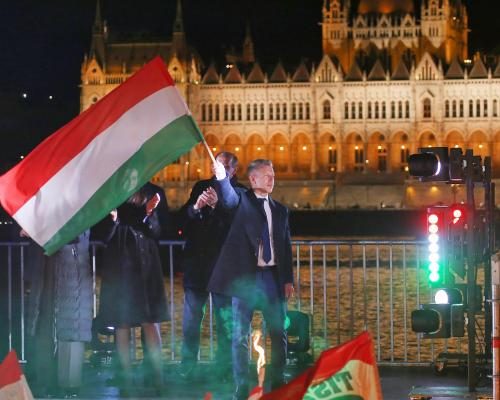
In a historic election held on April 12, 2026, Péter Magyar of the Tisza party secured a decisive victory over long-standing Prime Minister Viktor Orbán, marking a potential turning point for Hungary's political landscape. With nearly all votes counted, Magyar's party is projected to win 138 seats in the new parliament, while Orbán's Fidesz party garnered just 55 seats. This shift grants Magyar the critical two-thirds majority needed to initiate sweeping reforms, effectively dismantling the foundations of the Orbán era.
International Praise and Support for Magyar
The political ramifications of Magyar's win are already being felt beyond Hungary's borders. Slovak Prime Minister Robert Fico and Czech Prime Minister Andrej Babiš, both allies of Orbán, quickly extended their congratulations. Fico, who has aligned closely with Orbán in opposing Ukraine over Russian energy imports, expressed his eagerness for 'intensive cooperation with the new Hungarian prime minister' in a post on Facebook. He also thanked Orbán for his tenure, signaling a willingness to maintain ties with Hungary despite the electoral shift. Originally reported by The Guardian.
Babiš took a slightly different approach, urging Magyar not to disappoint the electorate. "Facing such a strong opponent as Viktor Orbán was never easy, yet Magyar earned the trust of the majority of Hungarians and carries great hopes and expectations," Babiš commented, emphasizing the importance of collaboration between leaders chosen by the people.
Germany Welcomes the Change
German Chancellor Friedrich Merz also lauded Magyar's victory, calling it 'a good day' for democracy. He highlighted the election as a strong statement against right-wing populism, suggesting that Hungary's choice would resonate throughout Europe. Merz emphasized that the decision-making process within the European Union concerning issues like Russia would likely become more straightforward as a result of this electoral outcome. He commended the resilience of Hungarian society to withstand external attempts to influence the electoral process, further affirming the importance of democratic integrity in the face of foreign interventions.
"This win demonstrates that our democratic societies are evidently much more resilient against Russian propaganda and further external interference in such elections," Merz said, reflecting on the significance of the electoral result in a broader context.
Potential for Major Reforms Ahead
As Hungary awakens from a night of celebrations that lasted until the early hours, the implications of Magyar's victory are becoming clearer. With the Tisza party attaining a two-thirds majority, the new government is poised to implement substantial changes to Hungary's laws and governance structure. Political analyst András Bíró-Nagy of Policy Solutions remarked, "If they have the constitutional super-majority, this is when he can do a change of regime, and not only a change of government." He believes this could lead to addressing both the economic and political challenges that have characterized Orbán's administration.
This newfound legislative power could enable Magyar's government to tackle issues ranging from judicial independence to media freedom, areas that have come under scrutiny during Orbán's tenure. The electoral outcome also raises questions about the future of Hungary's foreign policy, particularly regarding its relationships with Russia and Ukraine.
Awaiting Further Reactions and Developments
Today, all eyes will be on Magyar as he is expected to hold a press conference to outline his plans for the new administration and provide further insights into his vision for Hungary. There is also anticipation surrounding the reports from international observers who monitored the election, which could shed light on both the electoral process and the overall democratic integrity of the event.
Interestingly, reactions from prominent figures in the United States have been notably absent. Following their pre-election commentary, both Donald Trump and JD Vance have not publicly commented on the results, prompting speculation about their views on the electoral shift in Hungary.
The significance of Péter Magyar's victory cannot be overstated. As Hungary embarks on this new chapter, the political landscape in the country, and potentially across Europe, is set to undergo transformative changes.
Originally reported by The Guardian. View original.