
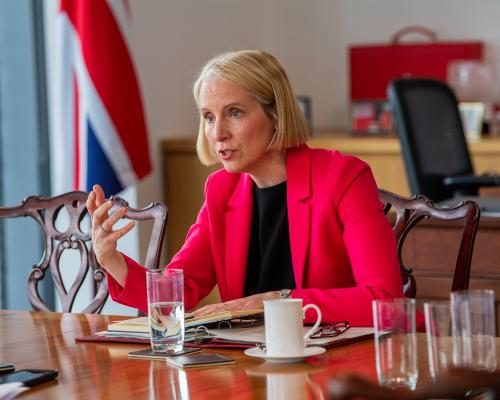
In a bold move to enhance biodiversity and promote sustainability, Labour's environment secretary, Emma Reynolds, has unveiled an ambitious plan to transform government-owned land into nature-friendly spaces. This initiative, set to be confirmed in the coming weeks, aims to repurpose prisons and military ranges for environmental restoration, showcasing Labour's commitment to ecological improvement ahead of the elections.
Innovative Greening Projects on Government Land
One of the cornerstone proposals involves establishing tree nurseries at prisons, which would not only aid in reforestation efforts but also contribute positively to the welfare of inmates. Reynolds emphasized the dual benefits of this initiative, which seeks to engage prisoners in meaningful work while fostering a greener environment. Additionally, military ranges would be revitalized into heathland and peat bogs, promoting biodiversity and serving as essential habitats for various species. Originally reported by The Guardian.
Reynolds highlighted that these enhancements would include the construction of "green bridges" across land owned by the Department for Transport. These bridges would facilitate wildlife movement around roads and railways, reducing fatalities and supporting ecosystems. Furthermore, the initiative may encourage the installation of solar panels on government buildings, integrating renewable energy sources into public infrastructure.
Restoration of Natural Habitats Amidst Political Pressure
As Labour faces increasing pressure from the Green party in the lead-up to elections, Reynolds's announcement serves as a strategic response to critics who argue that the party has prioritized economic growth over environmental concerns. "These are decisions that we are making, that I am making now, that will have an impact for generations and generations to come," she stated, underscoring the long-term vision behind these projects.
The proposed restoration of peatlands and the construction of stone dams on military sites aim to mitigate flooding while preserving vital ecosystems. By enhancing these natural habitats, the government hopes to strike a balance between military training needs and environmental sustainability.
Labour's Commitment to Biodiversity and Critique of Opponents
Reynolds, who returned to Parliament in 2024 after losing her seat in 2019, replaced Steve Reed as environment secretary during a cabinet reshuffle last September. She has been vocal about Labour's commitment to biodiversity, citing plans to reintroduce native species like beavers and golden eagles as evidence of the government's dedication to restoring natural environments.
In her criticisms of the Green party under the leadership of Zack Polanski, Reynolds suggested that their current focus on economic inequality detracts from urgent environmental issues. She pointed to local objections from Green parties regarding solar farms and infrastructure projects necessary for expanding renewable energy. "They are not prepared to take any of the sometimes difficult decisions that we need to take as a country to put in place green infrastructure," she asserted, emphasizing Labour's proactive stance on environmental policies.
Concerns Over Reform UK and Environmental Policies
Reynolds expressed apprehension regarding the environmental policies proposed by Reform UK, particularly under the leadership of Nigel Farage. She warned that some of Reform's plans, including the controversial idea of fracking for onshore gas, would be deeply unpopular among the public. Citing the experiences of former Conservative minister Steve Baker, who faced backlash for his pro-fracking stance, Reynolds highlighted the unpopularity of such initiatives.
While Labour is poised to drop previous commitments to ban imports of foie gras and furs, Reynolds defended this strategic pivot by emphasizing the broader benefits of a revamped trade agreement with the EU. The focus, she argued, should be on alleviating the burdens imposed by the previous government's Brexit deal, which has caused significant challenges for businesses exporting to the EU.
"The prize is big," she reasoned, advocating for a reduction in administrative hurdles that have hindered trade and caused uncertainty for businesses. Through these efforts, Labour aims to strike a balance between economic viability and ecological responsibility, ensuring that future generations inherit a healthier planet.
Originally reported by The Guardian. View original.