
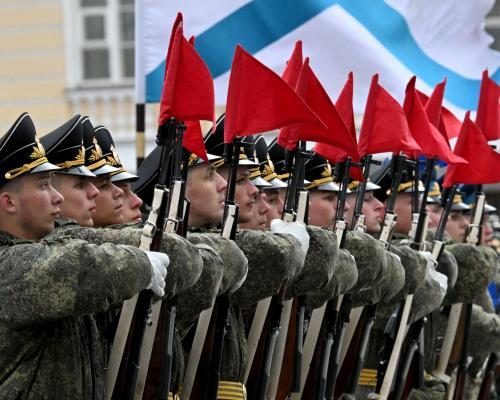
Russia's annual Victory Day parade, commemorating the Soviet triumph over Nazi Germany, will take place on May 9 without any military hardware for the first time in nearly two decades. This unprecedented decision comes amid escalating concerns about potential long-range attacks from Ukrainian drones, prompting the Russian defense ministry to announce that no armored vehicles or missile systems will parade through Red Square.
The Kremlin cited "the current operational situation" as the reason behind this significant alteration to the traditional celebration. Additionally, cadets from military schools and youth military institutions will also be absent from the event, reflecting broader security concerns. A statement from the Kremlin on Wednesday indicated that "Ukrainian terrorist activity" was behind the changes. Originally reported by The Guardian.
Security Concerns Drive Changes to the Parade
Military analysts and bloggers in Russia have suggested that the Kremlin is worried about the vulnerability of its military equipment to Ukrainian drone strikes. Ruslan Leviev, an independent analyst, discussed these fears with TV Rain, stating, "Equipment is vulnerable even during the preparation stage, as columns park and rehearse outside Moscow on open training grounds that are easy to hit with drones." He added that targeting soldiers in the city center, where tourists gather, poses a greater challenge.
Since Russia's full-scale invasion of Ukraine in 2022, the scale of the Victory Day celebrations has diminished notably, with fewer military displays and a reduction in foreign dignitaries attending. This year's parade marks a continuation of that trend, following last year's 80th anniversary celebration, which saw a significant military display including tanks and rocket launchers, along with the attendance of at least 27 foreign heads of state.
Victory Day and Its Symbolism for Russia
Victory Day has long held a central place in Russian national identity, particularly under President Vladimir Putin's leadership. Over his 25-year tenure, the annual celebration has transformed into a showcase of military prowess and a vehicle for state propaganda. However, since the onset of the war in Ukraine, the Kremlin has adapted the narrative surrounding this day, using it to justify the ongoing conflict.
As Ukrainian long-range drones continue to strike Russian territory with increasing frequency, the implications for domestic security are profound. The attacks have primarily focused on industrial and military targets, resulting in significant disruptions, such as the recent drone strikes on oil facilities. In Tuapse, for example, repeated drone assaults on a major oil refinery caused massive fires, releasing toxic black rain and prompting local authorities to advise residents to stay indoors.
Ukraine's Drone Strikes Target Russian Infrastructure
Ukrainian forces have demonstrated their capability to strike deep within Russian territory, with President Volodymyr Zelenskyy recently highlighting the precision of these attacks. "We will continue to extend these ranges," he wrote on social media, noting that targets had been successfully hit from over 930 miles (1,500 km) away. Zelenskyy emphasized that each strike is aimed at crippling Russia's military logistics and oil exports.
Despite these drone strikes, analysts caution against overstating the economic ramifications of such attacks. Recent surges in oil prices, driven by tensions in the Middle East, have helped maintain Russia's energy revenues at elevated levels, allowing the Kremlin to continue generating substantial income even as some of its refineries come under attack.
The Future of Russia's Military Celebrations
The decision to forgo military displays at the upcoming Victory Day parade illustrates a significant shift in how Russia approaches its national celebrations amidst the ongoing war. The Kremlin's focus on security indicates a heightened sensitivity to the potential risks posed by Ukraine's capabilities, underscoring the ongoing conflict's impact on Russia's domestic and international standing.
As the anniversary of Victory Day approaches, many will be watching closely to see how the absence of military hardware will affect the atmosphere of the event. The choice to prioritize security over spectacle marks a notable departure from years past, reshaping the narrative of national pride and military strength that has been a hallmark of this celebration.
Originally reported by The Guardian. View original.