
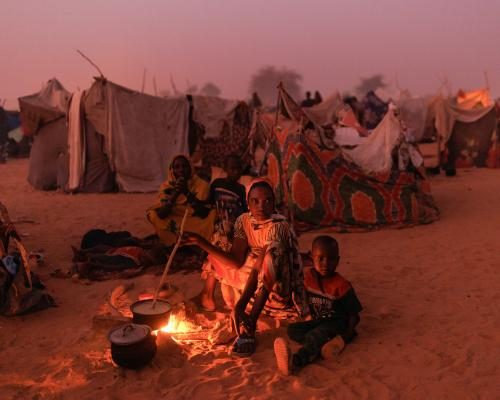
The ongoing conflict between the US and Israel against Iran has led to significant disruptions in global oil prices, directly impacting humanitarian aid access for vulnerable populations worldwide. Aid organizations are now advocating for the establishment of a "humanitarian corridor" through the Strait of Hormuz, which serves as a crucial passage for shipping essential supplies. Bob Kitchen, vice president for emergencies at the International Rescue Committee (IRC), emphasized the urgent need for discussions on creating such corridors to facilitate the movement of aid stuck in key hubs, like Dubai, which has left 20,000 people in Sudan without necessary supplies.
Escalating Transportation Costs Threaten Aid
Since the conflict escalated in February, oil prices have seen dramatic fluctuations, peaking at nearly $120 a barrel-up from about $60 at the beginning of the year. This spike is largely due to the US and Iran's back-and-forth blockades of the Strait of Hormuz, which has severely restricted the number of cargo ships traversing this vital route. The IRC reported that shipping disruptions have left $130,000 worth of supplies stranded in Dubai, highlighting the dire situation for many communities reliant on aid. Originally reported by The Guardian.
In regions like Nigeria and Ethiopia, the rising costs of oil rations mean emergency operations are being hampered. Kitchen noted that limited generator usage in health clinics could lead to dire consequences. "In certain parts of hospitals, we'll have to close off the electricity to keep more important things running [if this continues]," he warned. Aid agencies are rapidly depleting their budgets, struggling to cope with the rising expenses associated with fuel and transportation.
Impact on Global Food Security
Cecile Terraz, director at the International Federation of Red Cross and Red Crescent Societies, stated, "The reality here is that it's 100% sure that the increase of oil price is affecting the lives of people and also our operations." The soaring oil prices have resulted in 45 million additional people potentially facing hunger, compounding the existing crisis where 318 million were already food insecure before the onset of hostilities.
Save the Children estimated that every $5 increase per barrel of oil costs the organization an extra $340,000 monthly in shipping expenses. This translates to one month of aid for nearly 40,000 children. If oil prices stabilize around $100 for the remainder of 2026, they could incur an additional $27 million in costs this year alone, further straining their operations.
Challenges in Specific Regions
Yemen, grappling with over a decade of conflict, has seen shipping costs rise by up to 20%, while food prices have surged by 30%. With nearly half the population in need of assistance, any increase in logistical costs directly impacts the ability to deliver aid. Similarly, in Somalia, the cost of importing critical medications for malnourished children has tripled since the conflict began. Robyn Savage, Care's humanitarian director, emphasized that reduced medication availability means fewer children can receive essential treatment.
Meanwhile, in Myanmar and Afghanistan, the repercussions of rising oil prices are equally dire. The cost of a basic basket of goods in Myanmar has increased by 19%. In Afghanistan, the price of food transport has tripled, forcing aid organizations to reroute supplies through multiple countries to avoid the blocked Strait of Hormuz. John Aylieff, the WFP's Afghanistan country director, lamented that Afghan children are suffering due to these logistical challenges, with many at risk of starvation.
Funding Cuts Compound the Crisis
The situation is exacerbated by significant cuts in foreign aid from the US and European nations. The US slashed its foreign assistance by 57% in 2025, while the UK's aid reached its lowest level since 2008. Countries like Norway, Germany, and France have also reduced their aid budgets, leaving humanitarian organizations scrambling to fill the gap. The World Food Programme (WFP) estimates that the increased oil prices will prevent them from reaching approximately 1.5 million people in the coming months.
As humanitarian agencies navigate these unprecedented challenges, the call for a humanitarian corridor through the Strait of Hormuz has never been more urgent. Without immediate action and increased cooperation among nations, the lives of millions hang in the balance.
Originally reported by The Guardian. View original.